













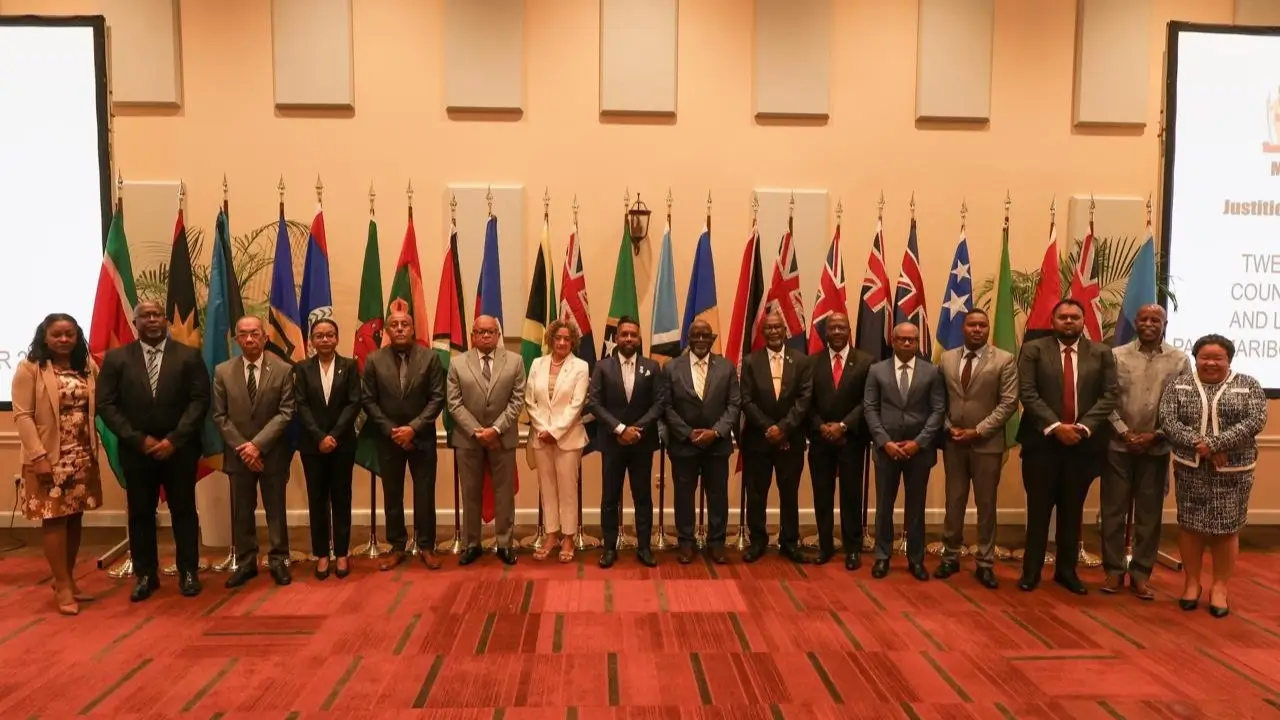
SURINAME — Firearms trafficking is strengthening gangs and fueling violent crime across the Caribbean, Suriname’s justice and security minister warned, calling for faster implementation of a regional weapons-control framework and closer cooperation to disrupt cross-border criminal networks.
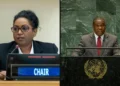
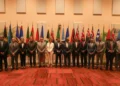
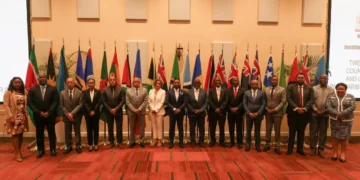
Harish Monorath, chair of the Caribbean Community’s Council for National Security and Law Enforcement, known as CONSLE, delivered the warning as ministers and senior law enforcement officials met in Suriname on Nov. 10–11.
According to a Nov. 12 statement from the CARICOM Secretariat, Monorath said criminal groups were exploiting borders, ports and maritime routes to move weapons, drugs and other illicit goods.
“Across the Caribbean, firearms remain a significant enabler of violent crime and gang activity,” he said.
He described criminal networks as increasingly organized, sophisticated and transnational, arguing that individual governments cannot adequately confront the threat on their own.
His proposed response centers on identifying the sources of illegal firearms, tracing their movement and improving the exchange of intelligence so authorities can disrupt the networks supplying them.
Regional response to firearms trafficking targets supply networks
Monorath said advancing the regional firearms agenda would be one of three priorities during Suriname’s chairmanship of CONSLE.
That work will focus on stronger firearms tracing, enhanced intelligence-sharing among member states and deeper cooperation involving police, customs, immigration, coast guard and prosecutorial authorities.
The emphasis extends the response beyond recovering weapons after crimes. Monorath called for agencies to work together to identify where illegal guns originate and how they move across jurisdictions.
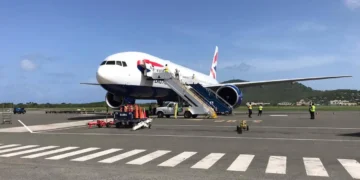
Ports of entry are also a focus of firearm-related investigations in St Lucia. In May, police reported that an investigation following the alleged discovery of concealed firearm magazines at Hewanorra International Airport led to searches and multiple firearm-related charges. Those charges were allegations, rather than findings of guilt.
In Suriname, authorities launched a digital firearms register earlier in 2026 with support from the CARICOM Implementation Agency for Crime and Security, known as CARICOM IMPACS, the Secretariat said.
The system is designed to improve firearms monitoring and tracing and give investigators additional tools to address gun-related crime.
Firearms roadmap faces uneven implementation
Monorath urged governments to accelerate the Caribbean Firearms Roadmap, the regional framework intended to curb the illicit proliferation of firearms and ammunition by 2030.
Adopted in 2020 by CARICOM states and the Dominican Republic, the roadmap connects regional priorities with national measures against illegal weapons and armed violence.
A United Nations account of the roadmap’s November 2025 midpoint review reported that 13 participating countries had developed national action plans.
The review identified improvements in firearms legislation, law enforcement capacity and regional intelligence coordination. However, progress remained uneven, with limited funding, political transitions and inconsistent data reporting hindering implementation.
The UN also highlighted consequences beyond policing, including pressure on public health systems and harm to investment and business growth.
Those findings provide context for Monorath’s call to move more quickly on a framework already adopted across the region.
Security council coordinates regional action
CONSLE brings together ministers designated by CARICOM member states to coordinate regional security policy and complement national security strategies.
Its responsibilities include promoting intelligence-sharing, cooperation in criminal matters and coordinated responses to serious crime and security crises. It also provides policy direction to CARICOM IMPACS and supports partnerships with other countries and international agencies.
The council was incorporated into the Revised Treaty of Chaguaramas through a protocol opened for signature in March 2009.
At the Suriname meeting, ministers discussed practical responses to shared security challenges. The Secretariat’s release outlined the chair’s priorities but did not specify new implementation deadlines or funding commitments.
Suriname’s stated agenda now places weapons tracing, intelligence exchanges, and cooperation across enforcement and prosecution agencies at the center of its firearms work during the chairmanship.