












Over the past year, something particularly unsettling appears to be happening among us St Lucians in the diaspora. Many of us who were once fiercely proud of our country, who passionately participated in national discussions, defended St Lucia internationally and took a genuine interest in its development, are quietly withdrawing.
There was a time when those of us living in Toronto, London, Baytown Texas, or New York and the tri-state, or the rest of the Caribbean would tune in to St Lucian radio stations before listening to our local news. We knew more about what was happening in Castries than what was happening in the cities where we lived. We followed parliamentary debates, called into talk shows and spent hours discussing our country’s affairs with other St Lucians abroad.
Increasingly, many among us seem to have lost interest. National developments that would once have elicited strong reactions from us barely warrant a comment today. There has been no grand declaration of abandonment, just silence. And that’s the frightening part.
And 2026 may well represent a tipping point.
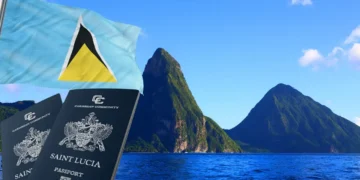
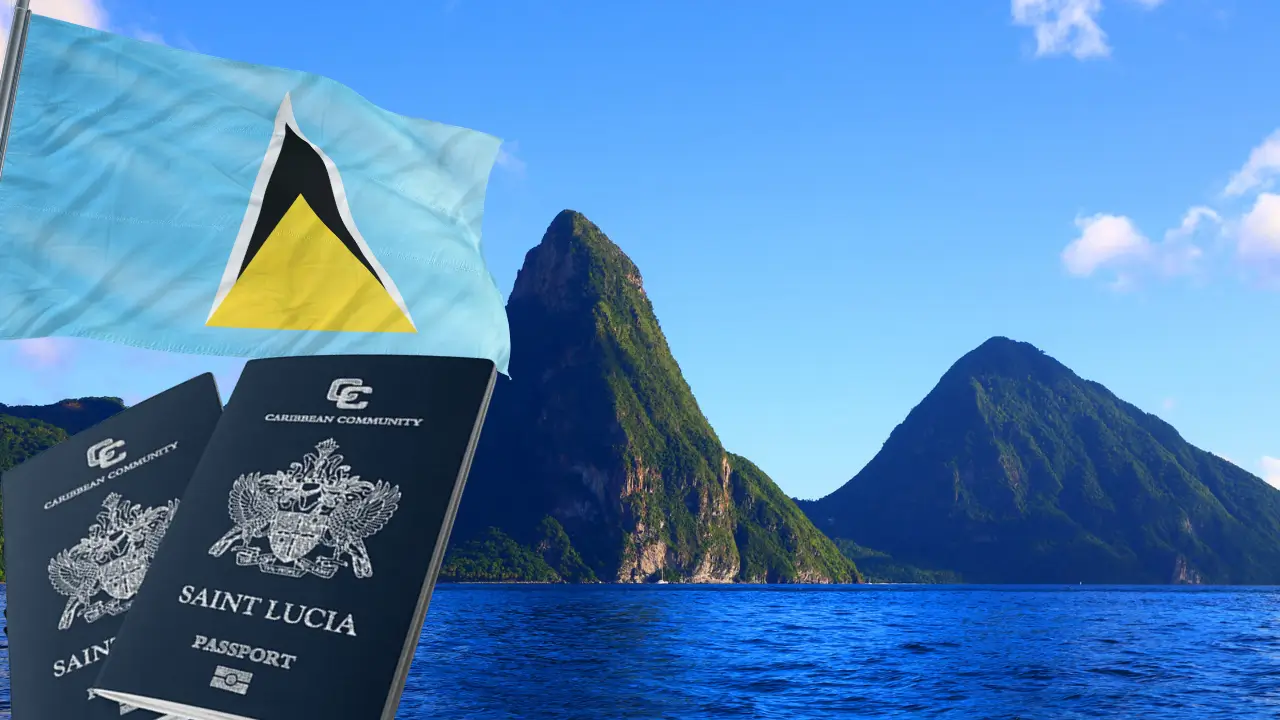
The loss of visa-free access to the United Kingdom and Ireland, coupled with uncertainty surrounding continued visa-free access to the Schengen Area, has raised uncomfortable questions about the international standing of St Lucia and the value of our citizenship.
For generations, we carried our St Lucian passports with pride. Today, many of us are questioning the wisdom of monetising citizenship when ordinary St Lucians stand to lose privileges we enjoyed long before the Citizenship by Investment Programme existed.
There was a time when acquiring foreign citizenship was primarily about securing economic opportunities and establishing permanent roots abroad. Increasingly, for some of us, it may also represent a form of insurance against the consequences of decisions made by our own country.
Those of us who have acquired Canadian, British or American citizenship may be personally insulated from some of these developments, but that does not diminish our disappointment in watching the international privileges associated with our nationality erode.
Then there is St Jude Hospital. Seventeen years after the original hospital was destroyed by fire, St Lucians are still waiting for the full transition from a sporting stadium to a permanent hospital. An entire generation of St Lucian children has been born and raised while successive governments have attempted to rebuild a single hospital.
For those of us living abroad who have spent decades working and saving with the intention of eventually retiring in St Lucia, the state of healthcare is a very practical consideration. So too is the level of violent crime. The prospect of spending our retirement years worrying about personal safety or whether we can access adequate medical care is enough to make some of us reconsider plans we have held for much of our adult lives.
Add to this the recurring water shortages, rising food costs and questions surrounding the management and utilisation of citizenship revenues. We are entitled to wonder why, despite our country’s access to substantial new sources of revenue, so many of the problems we left behind remain unresolved.
Many of us have been having these same conversations for twenty or thirty years. We have watched governments change, heard promises made and remade, and witnessed successive administrations blame their predecessors for problems that continue to outlive them all. At some point, we grow tired of having the same conversations.
Living abroad also changes what we consider acceptable. Those of us who work within healthcare systems, financial institutions, government departments and other professional environments overseas have firsthand experience of how differently things can be done. We know that functioning public services are not beyond the reach of a small country and that accountability need not depend on which political party is in office. Barbados is a great example right on our backyard.
Yet when we bring these perspectives into national discussions, we are often reminded that we do not live in St Lucia. Our opinions are dismissed on the grounds that we are disconnected from local realities, sometimes by the very people who would readily welcome our financial contributions.
It is a peculiar relationship. We are celebrated when we send money home, contribute to charitable causes, promote the island or return for Carnival. Our value becomes considerably more contentious when we begin asking difficult questions about our country’s development.
The irony is that St Lucia has spent decades exporting some of its brightest minds, only to sometimes dismiss the knowledge and experience we have acquired elsewhere!!!
The nature of political discourse has also contributed to this apparent withdrawal. It has become increasingly difficult for us to discuss any national issue without the conversation descending into toxic rhetoric. Legitimate concerns about healthcare, crime or public expenditure can quickly become debates about our political allegiance rather than the substance of the concerns we are raising.
The December 2025 general election, which returned the St Lucia Labour Party with an overwhelming parliamentary majority, may also have prompted some among us to reassess our involvement in national affairs, even as others welcomed the outcome.
Regardless of the electoral result, our country’s longstanding development challenges remain. They require serious discussion that extends beyond the defence of any particular administration.
For those of us who have established careers, businesses and professional reputations abroad, there is little incentive to spend our evenings embroiled in hostile exchanges on Facebook over matters that we have limited ability to influence. St Lucians at home have made up their minds about what they are willing to tolerate, celebrate, defend, and excuse!!
Our lives elsewhere are demanding and, in many instances, fulfilling. Eventually, we begin to question why we are devoting so much of our time to a country that appears unreceptive to our perspectives.
Perhaps the most consequential development, however, is that our adopted countries have become home in a way that many of us never originally intended.
Many of us emigrated with the expectation that we would eventually return. We built houses in St Lucia, purchased land, maintained bank accounts and spent years planning for a future back home. Some of us continued to refer to St Lucia as home even after spending more years abroad than we had ever lived on the island.
But our children have grown up elsewhere. Our grandchildren are being born elsewhere. We have established careers, accumulated wealth and become respected members of communities in countries that we once considered temporary places of residence.
Our attachment to those countries has been earned through decades of lived experience.
When we consider where to invest our savings, where to retire or where our children will have the best opportunities, St Lucia is increasingly having to compete with the countries in which we live. The assumption that we will eventually return simply because we were born on the island can no longer be taken for granted.
Nor should the continued flow of remittances be interpreted as evidence that our relationship with St Lucia remains intact. When we support our elderly parents in Vieux Fort or pay the school fees of our nieces and nephews in Castries, we are fulfilling family obligations rooted in love. It says very little about whether we have confidence in the future of St Lucia.
The country may continue to receive our remittances long after it has lost our emotional allegiance.
Economist Albert Hirschman’s 1970 work, Exit, Voice, and Loyalty, provides an interesting framework for understanding what may be happening among us. Hirschman examined how people respond to deteriorating conditions within organisations and institutions. They can leave, exercise their voice in an attempt to bring about improvement, or remain loyal despite their dissatisfaction.
Many of us physically exited the country decades ago but retained our loyalty and continued to exercise our voice. Emigration did not end our involvement in national affairs. In some instances, distance made us even more patriotic.
What appears to be happening now is that some among us who left physically are finally leaving emotionally and intellectually.
St Lucia has long grappled with brain drain, but there is another dimension to this phenomenon that receives considerably less attention. The first brain drain occurs when we leave our country. The second occurs when we stop thinking about how we can help it! And for many of us, we are on the verge of giving up!
Those of us working in medicine, finance, engineering, law, technology, education, business and public administration across the world possess considerable collective experience. Many among us occupy senior positions within institutions and organisations whose expertise could be of enormous benefit to our small developing country. Our value extends well beyond the foreign currency we send home. We have access to professional networks, investment opportunities, international markets and specialised knowledge that St Lucia would otherwise have to pay considerable sums to acquire.
Some of us have spent our entire professional lives solving precisely the kinds of problems that St Lucia continues to struggle with.
Yet St Lucia cannot indefinitely rely on our patriotism to persuade us to contribute our expertise, particularly when we have other opportunities to put that expertise to use.
The economic consequences of our disengagement are difficult to quantify. How does the country calculate the value of businesses that were never established because some of us decided against returning? How does it account for the investments we directed elsewhere, the professional expertise we never shared or the international connections we never leveraged?
None of these losses will appear in the national budget. They represent opportunities that our country may never even know it had.
There is also a generational dimension to this that St Lucia ought to be concerned about. Those of us who are first-generation emigrants have memories of growing up on the island. We remember our beaches, our communities, our schools, our childhood friendships and the St Lucia of our youth. Much of our patriotism is rooted in those experiences.
Our children and grandchildren do not have the same memories. For many of them, St Lucia is somewhere their parents or grandparents came from, a place they occasionally visit on holiday.
Their connection to the island will depend considerably more on what St Lucia represents today and what it can offer them in the future. We cannot expect them to inherit our nostalgia, much less our sense of obligation to a country in which they have never lived.
If those of us who still have a deeply personal connection to St Lucia are becoming disengaged, what will become of the country’s relationship with subsequent generations of its diaspora?
National pride cannot survive on nostalgia alone. Beautiful beaches, Carnival, cultural celebrations and memories of childhood can sustain our affection for our country, but they cannot indefinitely compensate for a lack of confidence in its future.
Of course, not all of us in the diaspora are disengaging. There is no comprehensive survey establishing the extent of this withdrawal or definitively identifying its causes. Nevertheless, the apparent silence among those of us who were once deeply invested in our country’s affairs warrants attention.
There is something worth recognising about those among us who continue to criticise our country. However uncomfortable our criticisms may be, we are still paying attention. We still have expectations. We presumably still believe that things can be better.
It is when we become indifferent that our country ought to be concerned.
Perhaps St Lucia’s greatest loss in 2026 will not be our visa-free access to the United Kingdom. Perhaps it will be the gradual loss of our emotional allegiance to the country of our birth. Passports can potentially regain privileges. Hospitals can eventually be completed. Infrastructure can be repaired. Governments can change. Persuading us to care again after we have spent years caring, advocating, contributing and hoping, and have subsequently discovered how much more peaceful our lives are when we no longer do so, may prove considerably more difficult.
Our first exodus was visible. It could be measured in migration statistics, departing flights and the loss of skilled workers.
Our second exodus is happening quietly, without any of us having to pack a suitcase. By the time St Lucia recognises what it has lost, many of us who were once fiercely proud St Lucians may have become entirely comfortable with loving our birthplace from a distance, without feeling any responsibility for its future.
(Minerva holds two master’s degrees, one in Economic Development and Innovation and the other in Tourism and Hospitality Management. She is also a Certified Economic Developer (Ec.D.) and a senior tourism and economic development professional based in Canada.)