


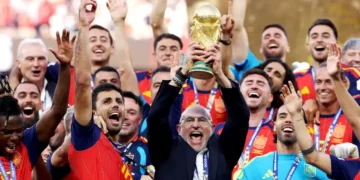







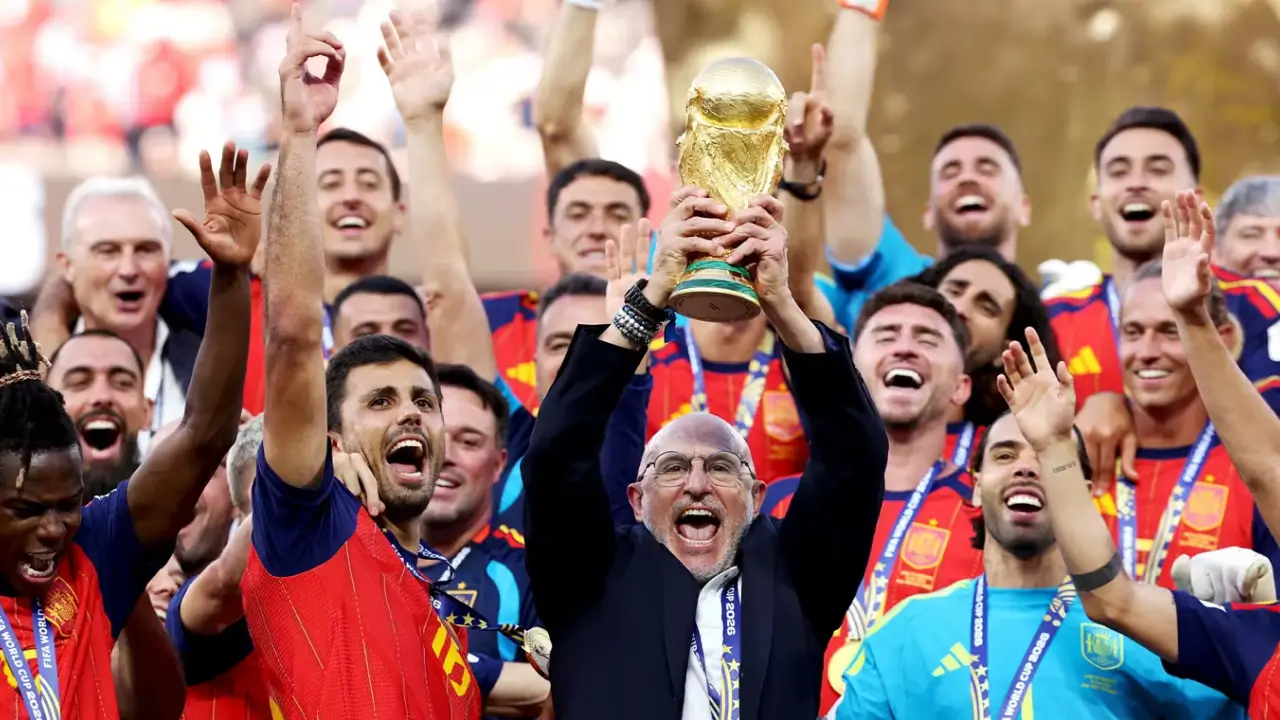
EAST RUTHERFORD, N.J. — The 2026 FIFA World Cup Final ended with Spain reclaiming football’s biggest prize after substitute Ferran Torres scored in extra time to secure a 1-0 victory over defending champion Argentina at New York New Jersey Stadium on July 19.
Torres struck in the 106th minute to deliver Spain’s second men’s World Cup title and its first since 2010, according to FIFA’s official match report. The result also ended Argentina’s attempt to become the first men’s team since Brazil in 1962 to successfully defend the trophy.
Spain completed the tournament unbeaten after building its title run around possession, pressing and a defense that conceded only once in eight matches. Argentina goalkeeper Emiliano Martínez kept his team within reach of the trophy, but the defending champions produced little attacking threat before Torres finally broke the deadlock.
Spain controlled the 2026 FIFA World Cup Final
Spain controlled the final without turning its territorial advantage into an early goal.
Luis de la Fuente’s team moved the ball patiently through midfield and repeatedly forced Argentina into a compact defensive shape. Argentina appeared content to limit space, disrupt Spain’s rhythm and wait for opportunities to counterattack through Lionel Messi and its supporting forwards.
Those opportunities rarely materialized.
Argentina became the first team to go through the opening 90 minutes of a men’s World Cup final without recording an attempt at goal. Spain, meanwhile, continued generating pressure but struggled to find the clinical finish needed to beat Martínez.
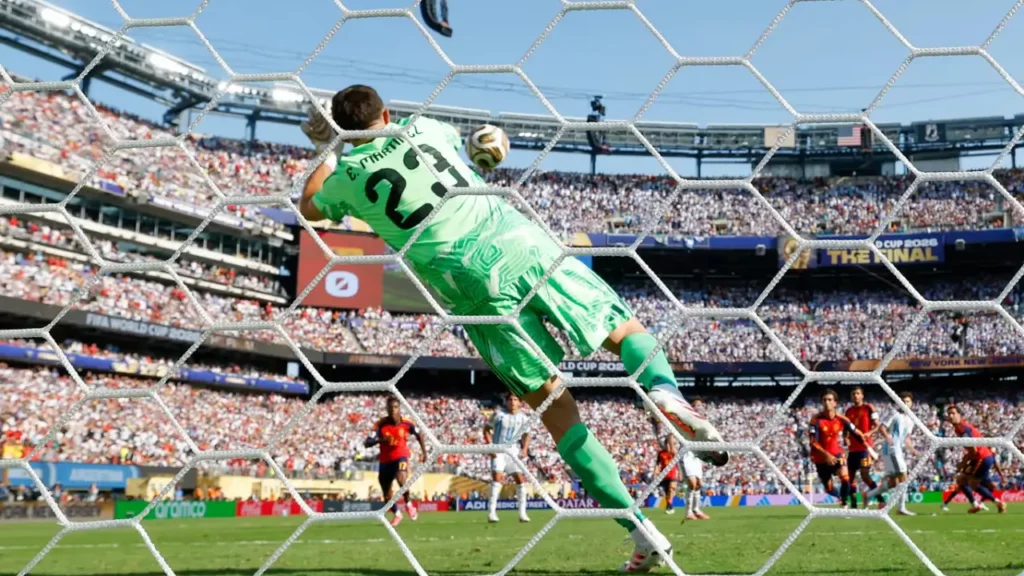
The Argentine goalkeeper produced a World Cup final-record 12 saves and was the main reason the match remained scoreless through regulation. Spain took the first 20 attempts of the contest and nine of the opening 10 corner kicks, reflecting the extent of its control.
Argentina’s defensive approach frustrated Spain, but it also left Lionel Messi isolated and gave the defending champion little opportunity to relieve pressure.
Lionel Messi, playing in his third World Cup final, was unable to influence the match as he had during Argentina’s earlier tournament run. Spain denied him space between the lines and prevented Argentina from developing sustained possession in dangerous areas.
Enzo Fernández dismissal changes the final
Argentina’s challenge became more difficult in second-half stoppage time when midfielder Enzo Fernández received his second yellow card.
Fernández was dismissed after a foul on Spain defender Pau Cubarsí, leaving Argentina to play the entirety of extra time with 10 men.
Spain immediately attempted to use the additional space, increasing its pressure while Argentina dropped deeper to protect the scoreless draw.
The breakthrough arrived in the 106th minute.
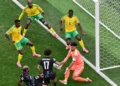
Ferran Torres, who entered during the second half, reacted quickest to a loose ball inside the penalty area and drove a left-footed finish beyond Martínez and under the crossbar.
The goal was Torres’ first of the tournament and Spain’s 20th attempt of the final. It also transformed a tense tactical contest into a desperate final period for Argentina.
Spain’s substitutes made the decisive difference. Torres provided the finish, while Nico Williams added energy and directness after entering the match.
Argentina registered its first attempt during the second half of extra time as it searched for an equalizer. One of its final openings came after a Lionel Messi corner took a favorable bounce toward substitute Giuliano Simeone, but his effort sailed over the crossbar.
Spain then managed the remaining minutes to preserve the clean sheet and confirm its return to the summit of men’s international football.
Spain’s defense delivers a historic title
Spain’s championship was built as much on defensive control as attacking talent.
De la Fuente’s team conceded one goal across eight matches, setting a record for the fewest goals allowed by a men’s World Cup champion. Goalkeeper Unai Simón and a defense that included Pau Cubarsí consistently denied opponents clear opportunities throughout the competition.
Spain’s possession also served as a defensive weapon.
By controlling the ball for long periods, the champions reduced the number of chances opponents could create and dictated where matches were played. That approach proved particularly effective against Argentina, which was unable to establish sustained attacking rhythm during the final.
Spain outshot Argentina 20-2 in the championship match, with none of Argentina’s attempts on target.
The championship extended Spain’s unbeaten run to 38 matches, comprising 29 victories and nine draws. The victory also moved Spain beyond Italy’s previous 37-match unbeaten streak as the longest by a European men’s national team.
Spain’s path to lifting the trophy was forged throughout the knockout stage, beginning with the Round of 32 at the 2026 FIFA World Cup, where the expanded tournament format started separating contenders from the rest of the field. Spain carried that momentum through each elimination round, combining tactical discipline, squad depth and defensive consistency before ultimately claiming the world title in East Rutherford.
The victory also made Spain the first nation to simultaneously hold the men’s and women’s FIFA World Cup titles following the Spanish women’s triumph in 2023.
De la Fuente, 65, became the oldest coach to guide a team to the men’s World Cup championship. His success followed Spain’s UEFA Euro 2024 title and reinforced the country’s return as one of international football’s dominant powers.
New generation drives Spain’s victory
Spain’s title also highlighted a generation capable of sustaining the country’s success beyond the 2026 tournament.
Rodri controlled the midfield throughout the competition and received the Golden Ball as the World Cup’s best player. His positioning, distribution and ability to set the pace gave Spain the foundation for its possession-based approach.
Cubarsí received the Best Young Player award after emerging as a central figure in Spain’s defense.
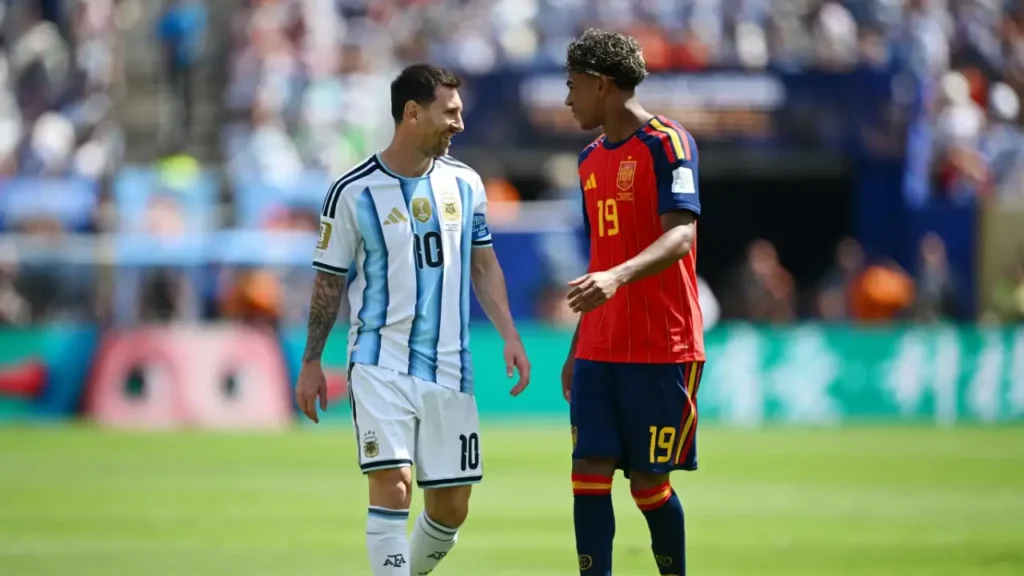
Lamine Yamal entered the final as one of the tournament’s most closely watched players, although Argentina limited his impact during the championship match. His performances during Spain’s wider campaign still reinforced his position among the leading young players in world football.
Williams and Ferran Torres demonstrated Spain’s depth by changing the final from the bench. Their influence showed that De la Fuente could turn to players outside his starting lineup without weakening the team’s structure or attacking threat.
Simón earned the Golden Glove after anchoring Spain’s record-setting defense.
France forward Kylian Mbappé claimed the Golden Boot as the tournament’s leading scorer, completing an individual awards list that recognized both Spain’s collective success and the competition’s most productive attacker.
Argentina’s title defense falls short
Argentina entered the final seeking consecutive World Cup championships after its victory in Qatar in 2022.
The team reached the championship match through resilience, experience and several decisive moments from Messi and his supporting cast. However, the late comeback that carried Argentina past England in the semifinal did not materialize against Spain.
Martínez delivered an exceptional performance, repeatedly denying Spain and keeping Argentina in contention until extra time. Without his saves, the match could have been decided much earlier.
Argentina’s defensive resistance was undermined by its lack of attacking ambition and Fernández’s dismissal.
Messi, 39, has indicated that the 2026 tournament would be his final World Cup. He completed the competition with another run to the championship match, but Spain prevented him from adding a second consecutive title to his international record.
Argentina coach Lionel Scaloni said after the match that the team accepted the defeat while remaining proud of its tournament.
Post-match confrontation draws FIFA action
The tension did not end with the final whistle.
Players from both teams became involved in a confrontation as Spain’s substitutes entered the field to celebrate. The incident included pushing and shoving before coaches and officials intervened.
FIFA later opened disciplinary proceedings involving several players and an Argentine team official.
Argentina midfielder Leandro Paredes faces three assault counts, while Nahuel Molina faces two. Molina, Thiago Almada, Argentine official Roberto Ayala and Spain midfielder Gavi also face allegations of unsporting behavior.
FIFA said the respondents would be allowed to present their positions before its Disciplinary Committee issues decisions.
The proceedings remain unresolved.
Expanded World Cup closes after 104 matches
The final was the 104th match of the first 48-team men’s World Cup.
The tournament was staged across the United States, Canada and Mexico and produced more than 300 goals, the highest total in competition history. The increase reflected the expanded field and larger match schedule.
The format gave more nations access to the sport’s largest stage while extending the tournament from the group phase through an additional knockout round.
Spain emerged from that expanded field as the competition’s most consistent team.
Its final victory did not come through an attacking spectacle. It came through patience, control, defensive discipline and one decisive finish from a substitute.
Torres’ extra-time goal ensured that Spain’s new generation left North America with the trophy and that Argentina’s reign as defending champion ended one victory short of history.
For Spain, the 2026 FIFA World Cup Final marked a return to the pinnacle of men’s football and established a second championship team 16 years after the country first lifted the trophy.