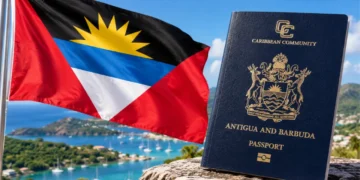
















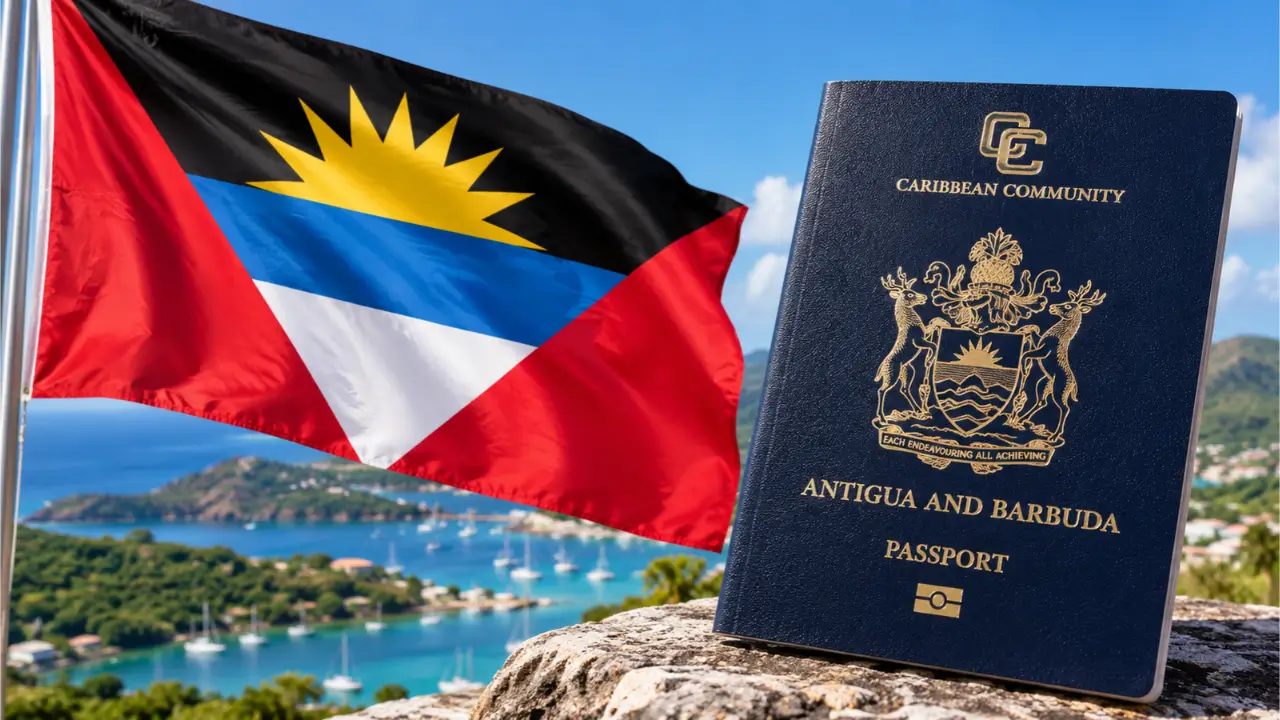
ST. JOHN’S, Antigua and Barbuda — Antigua and Barbuda is considering suspending its Citizenship by Investment Programme (CIP) as early as November 12, 2026, to protect visa-free access to Europe’s Schengen Area, potentially placing it on a different policy path from St Lucia, whose government has maintained that it wants to preserve its own programme despite mounting European Union pressure.
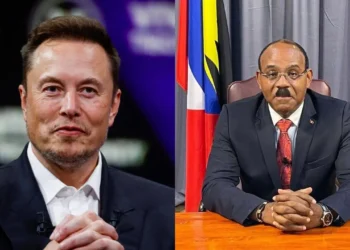
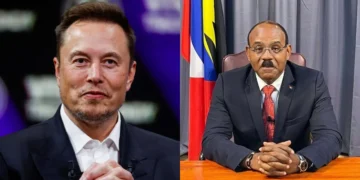
Prime Minister Gaston Browne disclosed the possibility on Saturday, October 24, saying preliminary Cabinet discussions had favored suspension, although no final decision had been announced.
The proposed Antigua CIP suspension comes as the European Union presses five Eastern Caribbean countries to phase out their citizenship investment programmes by June 1, 2028, citing security concerns associated with granting citizenship in exchange for qualifying investments.
Browne has also called for an emergency meeting of Organisation of Eastern Caribbean States (OECS) leaders during the week beginning October 26, seeking a coordinated regional response to the European demands.
The developments place Caribbean governments at a critical crossroads, balancing substantial investment revenue against the possibility that ordinary citizens could lose visa-free access to European destinations.
EU Pressure Pushes Antigua CIP Suspension Into Focus
Browne’s latest remarks suggest Antigua and Barbuda may be moving toward a more immediate response to European pressure after previously expressing reservations about abandoning its citizenship investment programme.
According to reporting by the Antigua Observer, the prime minister indicated that November 12 was an important deadline for governments to demonstrate their commitment to suspending the programmes.
He also suggested Antigua and Barbuda could move toward suspension by that date, although the precise implementation arrangements remain unclear.
The distinction is significant because a commitment to suspend a programme does not necessarily mean that all applications would immediately stop being processed.
Any formal suspension would require clarification of its scope, effective date and treatment of applications already under review.
Antigua and Barbuda has relied on its CIP to attract foreign investment and support government development priorities.
Browne has said the programme generated more than EC$1.4 billion over approximately 11 years, illustrating its financial importance to the country.
He has also cited projected CIP inflows of approximately EC$157 million for 2026, raising questions about how the government would replace that revenue if the programme were suspended.
The potential shift follows an earlier government position that the country could not abandon such a significant source of financing without credible alternatives.
St Lucia Leaders Defend Continued Operation of CIP
While Antigua and Barbuda considers suspending its Citizenship by Investment Programme, St Lucia’s government has repeatedly defended its decision to maintain the initiative despite growing international scrutiny.
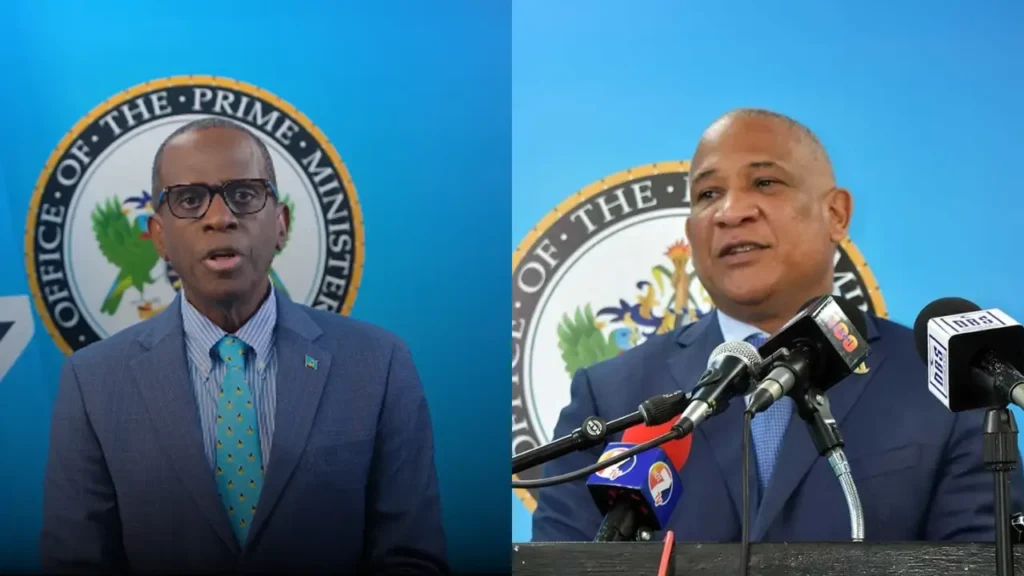
Prime Minister Philip J. Pierre stated in March that his administration had no intention of terminating the programme, emphasizing its importance to national development and government financing.
Investment Minister Dr. Ernest Hilaire reinforced that position on March 24, declaring that St Lucia would continue operating its CIP while engaging international partners over regulatory concerns.
Hilaire acknowledged that investment citizenship programmes carry inherent vulnerabilities but maintained that criminal misuse should not be regarded as evidence that the system itself was fundamentally flawed.
He said St Lucia relies on internationally recognized due diligence firms based in Europe and the United Kingdom to screen applicants, with no local firms conducting those background checks.
Defending the programme’s economic importance, Hilaire argued that small island developing states have limited access to grant financing and must identify alternative sources of revenue for essential public investments.
“No one is giving us grants to build our roads, our schools, or our hospitals,” Hilaire said.
He also emphasized that the government remained prepared to engage international partners while safeguarding its economic interests.
“We will always be willing to listen and work with our partners to resolve any issues,” Hilaire said. “But we have a responsibility to take care of our people and our country, and we will continue to do so.”
His comments, previously reported in St Lucia Will Keep CIP Despite Concerns, reinforce the government’s publicly stated commitment to maintaining the programme.
However, Pierre subsequently acknowledged in September that the European Union remained firm in its demand for the eventual elimination of Caribbean citizenship investment programmes.
He emphasized the need to protect St Lucia’s financial interests while seeking a negotiated outcome.
Pierre has indicated that CIP revenue accounts for approximately 10% of government revenue, making the programme a significant consideration in fiscal planning.
St Lucia has not publicly announced a change to its position following Browne’s latest remarks, leaving uncertainty over whether the government will reconsider its approach as the November 12 deadline approaches.
EU Demands Caribbean CIP Phaseout by June 2028
The European Commission has requested that five Eastern Caribbean countries operating citizenship investment programmes phase them out by June 1, 2028.
The countries are Antigua and Barbuda, Dominica, Grenada, St Kitts and Nevis, and St Lucia.
European authorities have raised concerns that investor citizenship programmes could allow individuals from countries normally subject to visa requirements to obtain passports that provide visa-free access to the Schengen Area.
The European Union’s revised visa suspension framework identifies the operation of investor citizenship programmes as a potential ground for suspending visa-free travel privileges.
The framework does not automatically terminate visa-free access when a country operates such a programme. Any suspension would require action under the applicable EU procedures.
The European Commission has also questioned whether improvements to background checks and other regulatory safeguards sufficiently address the broader security risks it associates with investment citizenship.
Caribbean governments have responded by introducing enhanced due diligence procedures, strengthening cooperation and pursuing regulatory reforms.
However, the EU’s request for an eventual phaseout indicates that those measures have not resolved the underlying disagreement.
On September 24, Pierre and Browne met European Commissioner for Internal Affairs and Migration Magnus Brunner in New York to discuss the future of the programmes.
The discussions also involved Eastern Caribbean Central Bank Governor Timothy Antoine and OECS Director General Didacus Jules.
Regional representatives emphasized the economic importance of CIP revenue and the need for solutions that recognize the development challenges facing small island economies.
No publicly announced agreement emerged from those discussions to withdraw or extend the June 2028 phaseout request.
What Is at Stake for Caribbean Passport Holders?
The dispute carries consequences beyond government revenue because the possible loss of visa-free travel privileges could affect ordinary Caribbean citizens.
Nationals of the affected countries currently benefit from visa-free access for qualifying short visits to the Schengen Area, which includes 29 European countries.
That access generally permits eligible travelers to visit for up to 90 days within a 180-day period, subject to applicable entry conditions.
If the European Union suspended those arrangements, affected citizens could face additional visa application requirements, fees and processing delays.
Such restrictions could affect people travelling for tourism, business, family visits and other short-term purposes.
Importantly, any nationality-wide visa restriction could extend to citizens who acquired nationality by birth or descent, not merely those who obtained citizenship through investment.
For St Lucia, the debate follows the United Kingdom’s decision in March 2026 to introduce visa requirements for St Lucian nationals.
British authorities cited concerns involving asylum claims, immigration pressures and the country’s citizenship investment programme in explaining the policy change.
The UK decision is separate from the EU’s Schengen visa framework, and the two should not be treated as a single coordinated measure.
Nevertheless, both developments have placed greater attention on the international travel consequences of citizenship investment policies.
The EU has not announced that the five Eastern Caribbean countries have already lost their Schengen visa-free privileges as a result of the phaseout request.
Economic Consequences Could Extend Across the Caribbean
Citizenship investment programmes have become an important source of financing for several Eastern Caribbean economies, providing governments with resources that can support infrastructure, public services and development projects.
A suspension could affect new investment applications, approved real estate developments, authorized agents and other businesses associated with the programmes.
The financial consequences would depend on whether governments impose temporary suspensions, restrict new applications or permanently terminate their programmes.
For Antigua and Barbuda, Browne’s reported revenue figures demonstrate the scale of financing potentially affected.
For St Lucia, Pierre’s assessment of CIP revenue as a significant component of government finances underscores the difficulty of replacing those funds without adjustments elsewhere in the budget.
However, the economic importance of the programmes must be considered alongside the potential consequences of losing visa-free access to Europe.
Restrictions on international travel could introduce new costs for citizens and businesses, particularly those with established commercial or family connections in European countries.
The disagreement therefore presents governments with competing economic and diplomatic considerations rather than a straightforward choice between investment revenue and travel access.
Emergency OECS Talks Could Shape Next Steps
Browne’s call for an emergency meeting of OECS heads of government during the week beginning October 26 could provide an opportunity for regional leaders to establish a common position before the reported November 12 deadline.
A coordinated approach could help governments clarify their commitments, seek further negotiations and address the economic consequences of any proposed suspension.
However, the five countries may not necessarily adopt identical policies, given differences in their revenue dependence, development priorities and domestic circumstances.
Attention will now focus on whether Antigua and Barbuda formally approves a suspension, how the European Union responds and whether St Lucia and other affected countries announce changes to their existing positions.
For St Lucia, the central unresolved issue is whether its government can negotiate arrangements that preserve investment financing while protecting citizens’ Schengen travel privileges.
The outcome of the proposed regional discussions, together with any formal decisions before November 12, will help determine the next stage of the dispute ahead of the EU’s June 2028 phaseout deadline.