











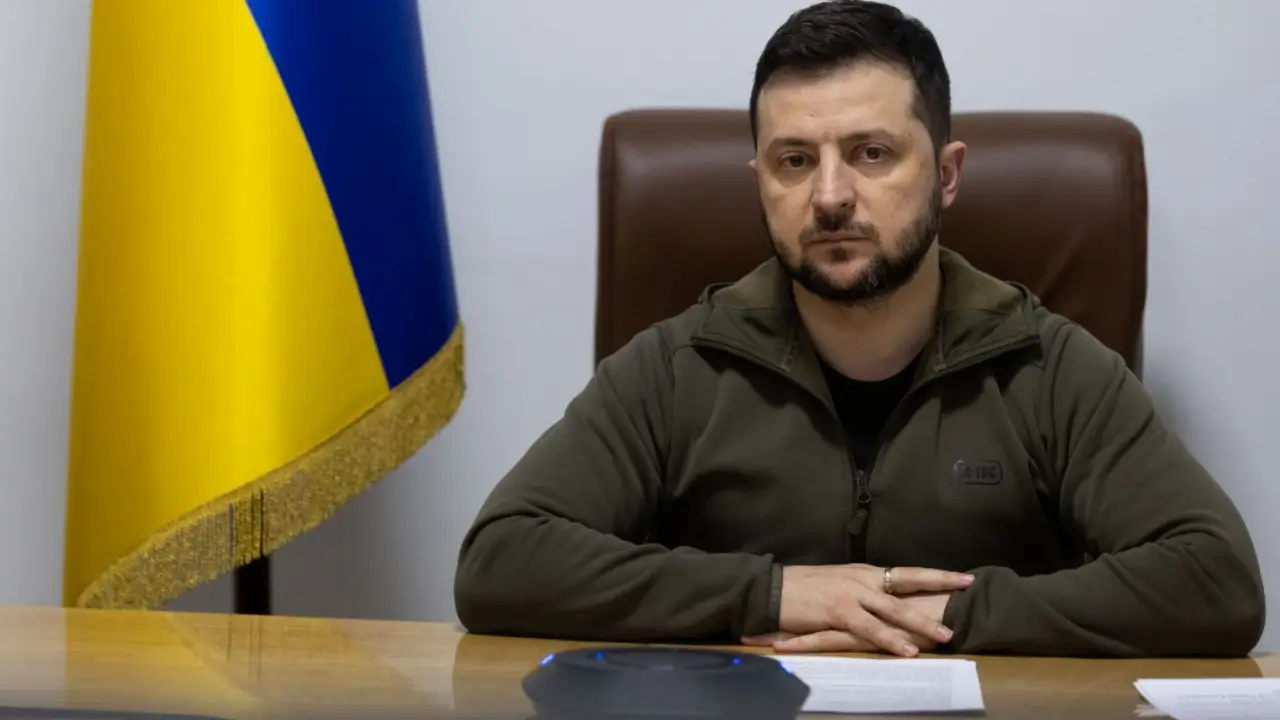
KYIV, Ukraine — EU associate membership became the fault line in a sharp diplomatic exchange Friday when President Volodymyr Zelenskyy wrote directly to the European Union’s top leaders, rejecting a German-backed framework that would bar Ukraine from voting on matters affecting its future.
The letter, obtained by Reuters and sent late on May 22, was addressed to European Council President António Costa, European Commission President Ursula von der Leyen, and Cypriot President Nikos Christodoulides, who holds the rotating chair of the EU Council.
Germany’s EU Associate Membership Proposal
German Chancellor Friedrich Merz had proposed earlier this week that Ukraine participate in EU meetings, the European Commission, and the European Parliament, but without voting rights in any of those bodies. Merz presented the arrangement as a constructive middle path between Ukraine’s current candidate status and full accession, and argued the framework could also support efforts to bring the four-year-old war with Russia to a close.
Zelenskyy pushed back sharply. A country present in EU institutions but stripped of the right to vote, he wrote, would be a country without genuine standing. “It would be unfair for Ukraine to be present in the European Union, but remain voiceless,” the president stated. “The time is right to move forward with Ukraine’s membership in a full and meaningful way.”
He also drew a direct comparison to earlier EU enlargement rounds, noting that past candidate countries were given time to integrate without having their rights curtailed during the process. “We fully understand that European integration does not happen overnight,” Zelenskyy wrote, adding that Ukraine had made substantial progress on democratic and economic reforms despite wartime conditions.
Orbán’s Exit Reshapes the Calculus
Zelenskyy pointed to a significant shift in EU politics as grounds for urgency. The removal of Hungarian Prime Minister Viktor Orbán following elections last month eliminated the most consistent veto on Ukraine’s accession progress. Budapest had for years blocked the opening of formal negotiation clusters, and Brussels is now targeting June for the launch of the first of six negotiation areas, known as “fundamentals,” with the remaining clusters to follow through the rest of the year.
Ukraine hopes to open all six clusters within two months, a timeline that reflects both the pressure of active conflict and Kyiv’s assertion that it has met the required reform benchmarks.
Kyiv’s Position Not Monolithic
Ukraine’s response to the Merz proposal has not been entirely uniform. Foreign Minister Andrii Sybiha neither endorsed nor explicitly rejected the framework, restating Kyiv’s core position without closing off dialogue. Deputy Prime Minister for European and Euro-Atlantic Integration Taras Kachka went further, saying Ukraine had no objection to the element of the proposal that would allow participation in EU institutional work ahead of formal membership, a signal that parts of the German framework remain under consideration even as Zelenskyy draws a hard line against a voteless seat.
Zelenskyy framed Ukraine’s position as a matter of proportionality rather than obstruction. Ukraine, he argued, was absorbing the full weight of Russian military aggression on behalf of a continent that would otherwise face that threat directly. “We are defending Europe fully, not partially, and not with half-measures,” he wrote. “Ukraine deserves a fair approach and equal rights within Europe.”
The European Commission has welcomed Merz’s proposal as evidence of strong member-state commitment to enlargement, though officials have also indicated that any innovative solution must respect the merit-based structure of the existing accession process. How EU leaders respond to Zelenskyy’s letter is expected to shape the agenda at upcoming European Council discussions on enlargement.