















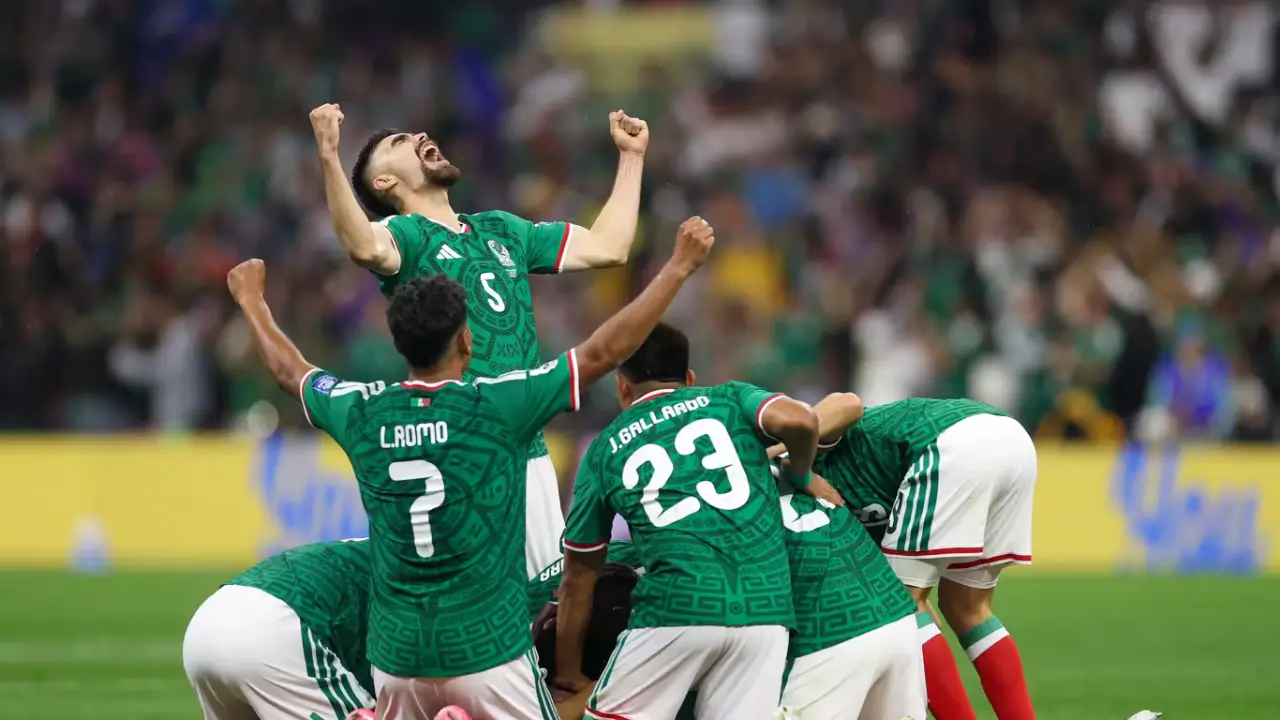
MEXICO CITY, Mexico — Mexico’s World Cup knockout drought ended Tuesday when Javier Aguirre’s side defeated Ecuador 2-0 at Estadio Azteca, securing the country’s first men’s World Cup knockout-stage victory since 1986. Julián Quiñones scored in the 22nd minute and Raúl Jiménez doubled the lead nine minutes later, giving the co-hosts control of a match that tested their composure as much as their quality.
The breakthrough came on a Round of 32 match day that also sent France and Norway into the Round of 16. France swept Sweden aside 3-0 at MetLife Stadium behind two goals from Kylian Mbappé, while Norway edged Côte d’Ivoire 2-1 after Erling Haaland delivered a late winner. For Mexico, the result carried added weight, lifting a pattern of knockout-stage disappointment that had followed the national team across four decades.
How Mexico ended its World Cup knockout drought
Mexico’s breakthrough began with urgency but was sustained by discipline. Ecuador created an early scare when a shot struck the woodwork, but Mexico responded by taking control of the tempo and using the energy inside Estadio Azteca to press the visitors into mistakes.
Quiñones opened the scoring in the 22nd minute, giving Mexico the early advantage it needed to settle into the match. Jiménez then struck in the 31st minute, turning a tense knockout contest into one Mexico could manage on its own terms.
The timing of the goals mattered. In previous World Cup knockout exits, Mexico often found itself chasing matches or losing control during decisive moments. Against Ecuador, Aguirre’s side reversed that pattern by building a first-half cushion and protecting it with maturity, remaining compact and forcing Ecuador to search for lower-percentage chances rather than pushing recklessly for a third goal.
Reuters reported that the result marked Mexico’s first men’s World Cup knockout victory since 1986, when the country also hosted the tournament. That history gave Tuesday’s win an emotional force that extended beyond the scoreline, reviving belief among supporters that this generation of players may finally be capable of moving past the limits that have defined recent World Cup campaigns.
Ecuador entered the match with confidence after a group-stage run that included a dramatic result against Germany, but the South American side struggled to reproduce that intensity once Mexico established control.
Moisés Caicedo and Enner Valencia had moments of influence, but Ecuador lacked the sustained pressure needed to unsettle Mexico’s back line. The visitors were forced into wider areas too often, finding few clear openings inside the penalty area.
Ecuador’s night ended with a further setback when defender Piero Hincapié was shown a red card in stoppage time after a VAR review. By then, Mexico had already done the essential work.
Quiñones and Jiménez have now combined for both of Mexico’s goals in this knockout run, giving Aguirre a proven attacking pairing heading into the Round of 16. Their efficiency, scoring from two of Mexico’s limited chances rather than requiring a high volume of attempts, reflects the disciplined, low-risk approach that has carried the team through its toughest knockout test in decades.
Mbappé powers France’s perfect run
France produced the day’s most convincing performance, defeating Sweden 3-0 in East Rutherford, New Jersey, and preserving a perfect record through four World Cup matches. Mbappé scored twice and Bradley Barcola added the other goal as Didier Deschamps’ team again demonstrated why it remains among the leading title contenders.
The match stayed balanced during the opening stages, with Sweden enjoying spells of possession and looking for chances to test France in transition. France gradually began to stretch the match through quick combinations and direct running, and Mbappé broke the deadlock shortly before halftime after Sweden had spent much of the first half trying to stay compact.
Barcola doubled the lead early in the second half, forcing Sweden to open up and creating more space for France to exploit. Mbappé later added his second, closing out another commanding French display. His brace pushed his career World Cup finals total to 18 goals, moving him closer to the all-time men’s World Cup scoring record.
Michael Olise was central to France’s attacking rhythm, operating between Sweden’s midfield and defense and repeatedly finding pockets of space to connect France’s forward line. That variety is one of France’s clearest strengths. Even when opponents focus on containing Mbappé, France can still create through Barcola, Olise, Ousmane Dembélé and midfield runners arriving late, a balance that makes Deschamps’ side difficult to contain over a full match.
The victory also reinforced why Deschamps’ side remains among the tournament’s clearest title contenders. France has now advanced through four matches without conceding defeat, and the margin of victory has grown from one round to the next as the squad’s attacking rotation deepens.
Sweden exits after a respectable tournament that included qualification from the group stage and flashes of attacking quality, but against France’s depth, speed and decision-making in the final third, the Scandinavian side could not maintain defensive resistance long enough to threaten an upset. The result sends France into a Round of 16 meeting with Paraguay, which advanced after eliminating Germany, a matchup that carries added intrigue given France’s momentum against a side that has already shown it can disrupt a traditional power.
Haaland sends Norway into the last 16
Norway’s path was far less comfortable. Côte d’Ivoire pushed Norway into one of the tighter matches of the Round of 32 before Haaland scored the decisive goal in the 86th minute, sending Norway through and continuing one of the tournament’s most productive individual campaigns. Tuesday’s win also gave Norway its first men’s World Cup knockout-stage victory in the country’s history.
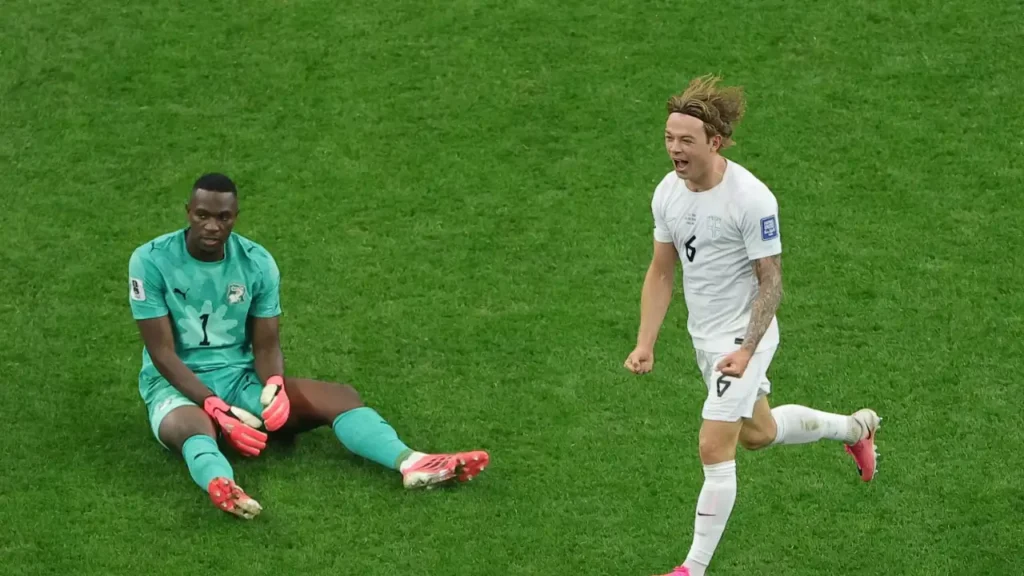
Norway’s success has been built around a clear attacking identity. Martin Ødegaard drops into deeper positions to collect possession, draw pressure and release runners into space, while Haaland attacks central defenders with timing, power and directness. That pattern again proved decisive on Tuesday.
Côte d’Ivoire competed well for long stretches, using the pace of its wide players to trouble Norway and prevent the match from becoming one-sided. Norway’s patience gave it a late opening, and with extra time approaching, Haaland delivered again to turn a dangerous match into a landmark victory.
For Norway, the result strengthens the case that the team can be more than a one-player story. Haaland remains the headline figure, but Ødegaard’s control, Norway’s vertical passing and its improved defensive organization have helped the team become one of the tournament’s more balanced sides. The reliance on the Ødegaard-to-Haaland pipeline has now produced decisive contributions in consecutive knockout matches, and opponents have yet to find a consistent way to disrupt it.
Côte d’Ivoire leaves the tournament with credibility despite the defeat, having reached the knockout stage for the first time in its history and pushed Norway until the closing minutes against one of Europe’s strongest teams.
Round of 32 pressure reshapes the tournament
The day’s results showed three different ways to survive the knockout stage. Mexico advanced through emotional control, first-half finishing and defensive discipline. France advanced through attacking depth and elite execution. Norway advanced through patience, structure and a decisive late goal from one of world football’s most dangerous forwards.
Those contrasts matter as the tournament moves deeper into the knockout rounds. The group stage rewards consistency across three matches, but the knockout stage exposes mistakes immediately. One missed chance, one defensive lapse or one moment of individual quality can decide a campaign.
For Mexico, the next challenge is handling the pressure created by success, since ending the knockout drought raises expectations around a team playing with home support and renewed national belief. For France, the question is whether its attacking depth can keep overwhelming opponents as the quality of opposition rises in the Round of 16. For Norway, the priority will be proving it can keep winning when future opponents design their defensive plan specifically around stopping Haaland.
The Round of 32 continues Wednesday in New York time with three further knockout matches. England enters as the favorite against a Democratic Republic of Congo side enjoying its best World Cup run in history, Belgium looks to build on a five-goal performance in its group-stage finale against a dangerous Senegal team, and the United States faces Bosnia and Herzegovina with recent upsets involving Germany and the Netherlands serving as a reminder that the knockout stage offers no guarantees. Each winner will join France, Norway and Mexico in a Round of 16 field that is now half complete, with every remaining nation one defeat away from elimination.