













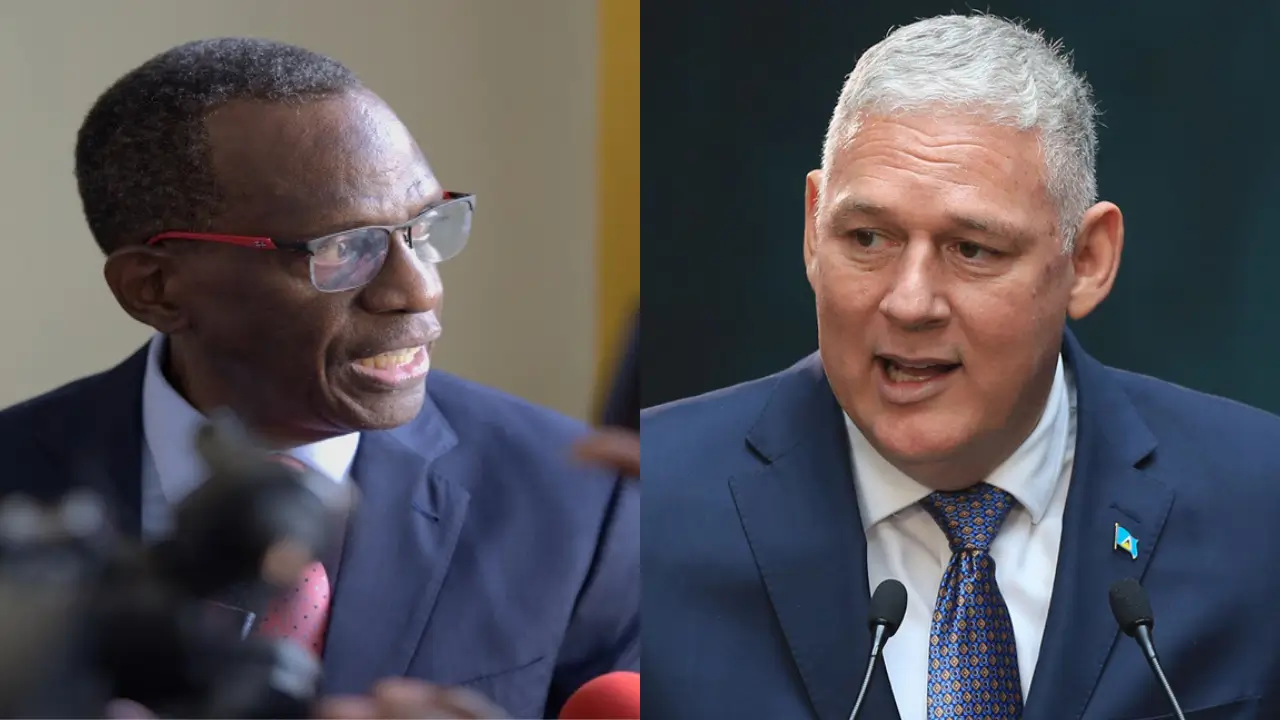
CASTRIES, St Lucia — The Pierre SSDF audit response has escalated the controversy surrounding the Saint Lucia Social Development Fund, with Prime Minister Philip J. Pierre circulating a blistering attack on Opposition Leader Allen Chastanet while leaving seven specific questions about the audit unanswered.
Pierre’s one-page letter, dated July 30, accuses Chastanet of writing with “venom and bad faith,” attacking public officers and seeking to destroy Saint Lucia so that he could “rule the ashes.” The response does not identify the audit firm, disclose the terms of reference or explain whether independent oversight has been secured.
The prime minister also copied the Director of Audit, the president of the Caribbean Development Bank, three diplomatic missions and representatives of civil society on his reply.
That decision placed Pierre’s language and omissions directly before the same institutions Chastanet had asked to scrutinize the process.
Pierre SSDF audit response targets Chastanet
Chastanet wrote to Pierre and Director of Finance Imran Williams on July 28, describing the correspondence as his fourth letter concerning the governance and financial management of the SSDF.
He said his earlier letters had not been acknowledged or answered by the Director of Finance.
The opposition leader asked whether an SSDF audit had begun, how it was commissioned, how the audit firm was selected and what terms of reference govern the review.
He also asked whether the Director of Audit had been invited to participate, whether the CDB or another independent institution had been engaged, and whether Williams would recuse himself from audit-related decisions.
Chastanet raised the recusal question because Williams serves as chairman of the Economic Fund and deputy chairman of the SSDF. He said the request was not an allegation of wrongdoing but was intended to protect the appearance and reality of independence.
Pierre did not answer the questions individually.
Instead, the prime minister described Chastanet’s letter as an attack on the accounting profession and suggested the opposition leader had questioned the integrity of chartered and certified auditors.
“I hope they remember,” Pierre wrote after saying Chastanet had insulted the entire professional fraternity.
However, Chastanet’s letter did not allege that auditors as a profession were dishonest.
It questioned who appointed the auditors, who determined the scope of the review and whether officials connected to the institutions under examination should control the process.
Those are governance questions, not allegations against the accounting profession.
Seven audit questions remain unanswered
Pierre stated that audits are commissioned by organizational management and that professional auditors are independent by their nature and governing standards.
That general explanation does not disclose who selected the SSDF auditor or whether the organization’s board, management or another authority controlled the appointment.
The letter does not reveal the name of the audit firm.
It does not disclose the terms of reference.
It does not say whether the Director of Audit will supervise or participate in the examination.
It does not state whether the CDB or another external institution has been asked to provide oversight.
It also does not address whether Williams will recuse himself from decisions involving the audit.
Pierre was entitled to reject Chastanet’s claims and challenge any assertion he considered inaccurate. However, calling the correspondence venomous does not establish which factual claim was incorrect.
Accusing the opposition leader of bad faith does not explain the audit’s mandate, reporting structure or safeguards against potential conflicts.
The anger in Pierre’s response may attract immediate political attention. The unanswered questions carry the greater public consequence.
Diplomatic circulation widens the controversy
Chastanet copied his letter to the Director of Audit, CDB President Daniel Best, the US ambassador in Bridgetown, the ambassadors of Taiwan and France, and civil society representatives.
Pierre copied those recipients on his response.
In doing so, the prime minister ensured that the institutions reviewing the correspondence would see both the questions and his decision not to answer them directly.
The circulation list may therefore have amplified the concerns Pierre appeared determined to dismiss.
The recipients can compare a two-page request containing seven defined questions with a one-page response dominated by political condemnation.
That contrast is now part of the written record.
Pierre’s statement that auditors are professionally independent also does not settle concerns about the structure surrounding the audit.
An auditor may exercise professional independence while questions remain about who appointed the firm, what records fall within its mandate, who receives the findings and whether those findings will be released publicly.
Chastanet specifically argued that neither the SSDF board, its members nor senior management should appoint the auditors or determine the terms of reference if they could become subjects of the examination.
Pierre’s response does not explain whether that proposed safeguard was accepted or rejected.
SSDF controversy remains unresolved
Chastanet said his July 28 correspondence was his fourth letter concerning SSDF governance and financial management. He claimed his earlier letters had not been acknowledged or answered by the Director of Finance.
The latest exchange follows Chastanet’s earlier demand that Pierre remove Richard Frederick from Cabinet pending the completion of ongoing investigations. In that July 13 letter, Chastanet argued that Frederick’s continued presence in government risked undermining public confidence and Saint Lucia’s international reputation.
Chastanet linked his latest concerns to publicly circulated allegations involving access to signed blank SSDF cheques and the alleged delivery of cheques by a government minister to two individuals. He also renewed questions about transfers from the Citizenship by Investment Programme through the Economic Fund to the SSDF.
Pierre said the controversy involved complaints from one individual that were being investigated by police. His letter did not identify the person or provide details about the scope or status of that investigation.
Neither letter establishes criminal wrongdoing by any person.
However, the existence of a police investigation does not answer the separate questions surrounding the independence, scope and oversight of the SSDF audit. A criminal investigation considers whether an offence may have occurred, while an audit examines financial controls, approvals, records and the handling of public funds.
Pierre’s reply does not provide a timeline for the audit, indicate when it will conclude or state whether its findings will be released publicly.
Police investigation does not replace audit disclosure
Pierre said the controversy involved complaints from one individual that were being investigated by police.
The letter does not identify the person or provide details about the scope or status of that investigation.
Neither of the two letters establishes criminal wrongdoing by any person.
However, a police investigation and a financial audit serve different purposes.
A criminal investigation considers whether an offence may have occurred. An audit examines financial controls, approvals, records, procedures and the handling of funds.
The existence of one process does not answer questions about the independence or scope of the other.
Chastanet linked his concerns to publicly circulated allegations involving signed blank SSDF cheques and the alleged delivery of cheques by a government minister to two individuals. He also renewed questions about transfers from the Citizenship by Investment Programme through the Economic Fund to the SSDF.
Pierre’s reply does not address those financial-transfer concerns.
It does not provide a timeline for the audit, indicate when it will conclude or say whether its findings will be made public.
The prime minister’s letter may have been intended to discredit the opposition leader’s intervention. Instead, by copying the same oversight bodies and diplomatic representatives, Pierre widened the audience for a response that attacked the messenger while leaving the central accountability questions unresolved.