












WASHINGTON, US — Democratic congressional leaders and campaign organizations filed a federal lawsuit Tuesday seeking to block the Trump administration’s voter purge demands and prevent it from directing states to withhold or refuse to count registered voters’ ballots, escalating a dispute over election authority two weeks before Election Day.
The lawsuit also asks the court to prohibit alleged threats of criminal prosecution against state and local election officials carrying out their lawful duties. Filed Oct. 20 in the U.S. District Court for the District of Columbia, the complaint seeks declarations that the challenged actions are unlawful and injunctions blocking their continuation.
The Justice Department defended its conduct, saying election integrity is a priority and its enforcement activities are grounded in law and being litigated in court. The case has been assigned to Chief Judge James Boasberg, The Associated Press reported.
The filing presents the plaintiffs’ allegations and legal arguments. It does not establish that the administration violated the law or itself impose restrictions on federal officials.
Lawsuit challenges voter purge demands and ballot restrictions
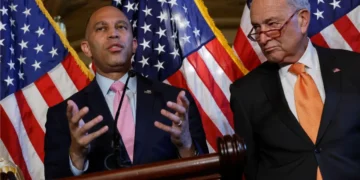
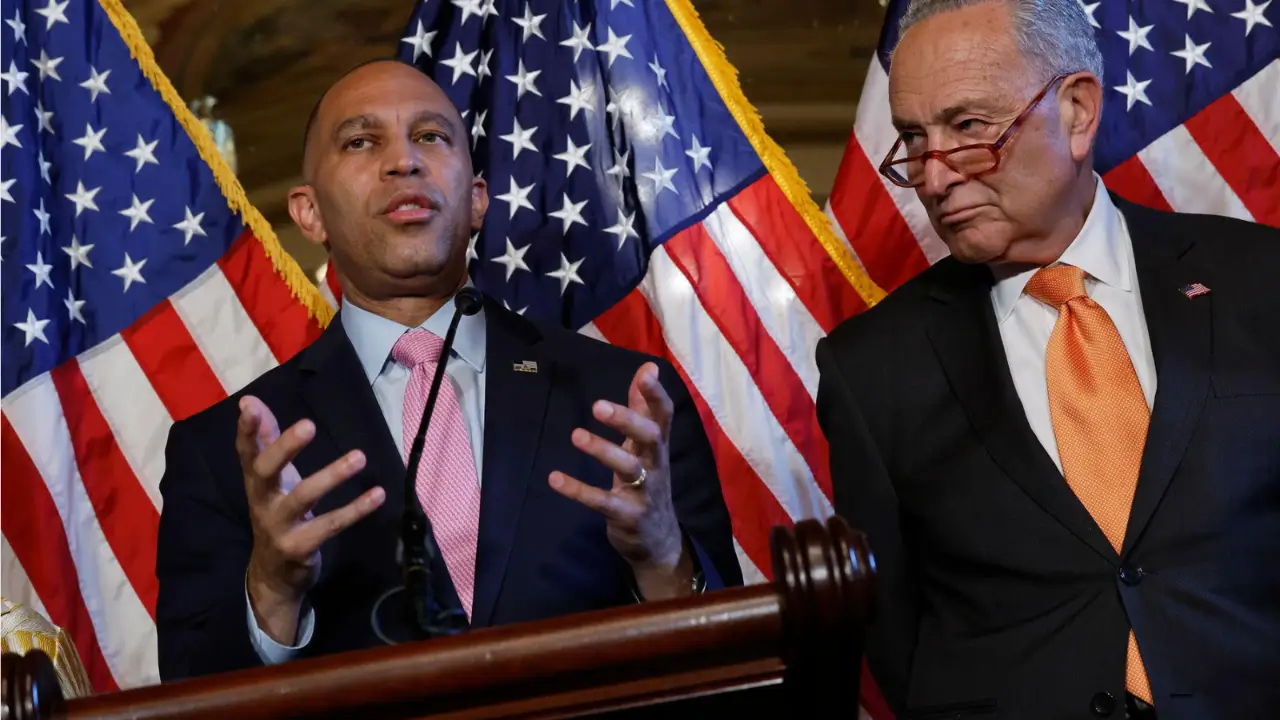
Senate Democratic Leader Chuck Schumer and House Democratic Leader Hakeem Jeffries brought the case alongside the Democratic Senatorial Campaign Committee, Democratic Congressional Campaign Committee, Democratic Governors Association and Nevada State Democratic Party.
California voter Erick Jose Jimenez, a naturalized U.S. citizen, is also a plaintiff. The defendants are President Donald Trump, the Justice Department, Attorney General Todd Blanche, the Department of Homeland Security, and Homeland Security Secretary Markwayne Mullin.
The plaintiffs challenge two related practices: federal pressure to change state voter registration lists and ballot procedures, and prosecution threats they allege are intended to force election officials to comply.
They argue that threatening officials who help registered voters receive and cast ballots can intimidate both election workers and voters, particularly naturalized citizens who fear being wrongly identified as noncitizens.
California dispute brings ballot access into focus
The legal challenge follows the Justice Department’s Oct. 15 lawsuit against California over more than 20,000 registered voters the federal government identified as likely noncitizens.
In its announcement, the department said Homeland Security investigators had compared publicly available voter registration records with federal immigration information. It described the analysis as preliminary and said its review remained ongoing.
The administration alleged that California was facilitating unlawful voting and sought court intervention concerning ballots associated with the identified voters.
Noncitizens are prohibited from voting in federal elections. However, the administration’s identification of the listed voters as likely noncitizens remains disputed, and inclusion on the list does not establish that someone voted illegally.
The federal demand preceded the lawsuit. In an Oct. 14 statement, California Secretary of State Shirley Weber said her office had been given 48 hours to obtain the list, investigate the names and act. She said the list had been delivered to Los Angeles County on a password-protected thumb drive rather than directly to her office.
Weber also said California had previously requested information about the federal government’s data sources and methodology without receiving the written explanation it sought.
In a subsequent written response, Weber said California requires voter registration applicants to attest to U.S. citizenship under penalty of perjury and maintains procedures for removing ineligible registrants.
She said the state would review evidence identifying ineligible voters and take appropriate action under federal and state law. However, she rejected withholding or segregating ballots solely because the administration believed the voters were likely noncitizens.
Prosecution warning intensifies confrontation
The dispute escalated Oct. 16 when acting Deputy Attorney General Trent McCotter warned California officials about potential criminal consequences for processing ballots from people identified by federal agencies as noncitizens.
According to AP, McCotter’s letter said officials who knowingly tabulated such ballots risked becoming accomplices to a federal crime.
Trump subsequently shared a report about the warning and wrote that officials would “go to jail for a long period of time.” Los Angeles County Registrar Dean Logan responded that the federal government’s disputed eligibility assertions should be resolved in court.
The Democratic plaintiffs cite the warnings as evidence of coercion. They also point to the administration’s earlier assertions about Nevada voters, alleging that federal claims narrowed substantially and remained unsupported after state officials checked the identified registrations.
Federal enforcement powers face legal test
The case raises a distinction between enforcing federal election laws and directing state election administration.
The Constitution’s Elections Clause gives state legislatures initial responsibility for the times, places, and manner of congressional elections, while allowing Congress to make or alter those rules. Federal election authority therefore includes congressional oversight of state procedures.
The dispute over executive authority follows earlier Republican resistance to parts of Trump’s legislative agenda, including calls for Congress to assert its constitutional oversight role.
The Democratic plaintiffs argue that the executive branch has exceeded the authority Congress provided. Their complaint invokes separation of powers and the constitutional principle that limits federal efforts to compel states to administer federal policies. Those arguments remain for the court to assess.
The lawsuit also relies on Section 11(b) of the Voting Rights Act. That provision prohibits intimidation, threats, and coercion against people voting or attempting to vote, as well as people urging or helping others to vote. Its protections extend beyond conduct inside a polling place.
California has separately raised the National Voter Registration Act’s restrictions on systematic voter removals during the 90 days before a federal election. Weber argued that treating everyone on the federal list as ineligible until proven otherwise would violate those protections and threaten qualified voters’ rights.
The administration maintains that its actions protect lawful voting. In announcing the California case, Blanche said the department would pursue voter fraud and hold offenders accountable, while Mullin said the government’s review was intended to ensure that only eligible citizens participate in federal elections.
The Democrats’ complaint asks the court to bar further federal directives concerning voter removals, ballot issuance and ballot counting, along with the challenged prosecution threats. Whether those restrictions will be imposed requires a court order as the Nov. 3 election approaches.