









Opinion | Caribbean Foreign Policy
NEW YORK, US — When Caribbean nations needed doctors, Cuba sent medical professionals. When young people from small island states needed opportunities to study medicine, Cuba offered scholarships. When health systems required assistance, Havana became a longstanding partner to governments across the region.
For decades, St Lucia, Antigua and Barbuda, and Dominica have benefited from Cuban cooperation, celebrating a relationship built on education, health care and diplomatic solidarity.
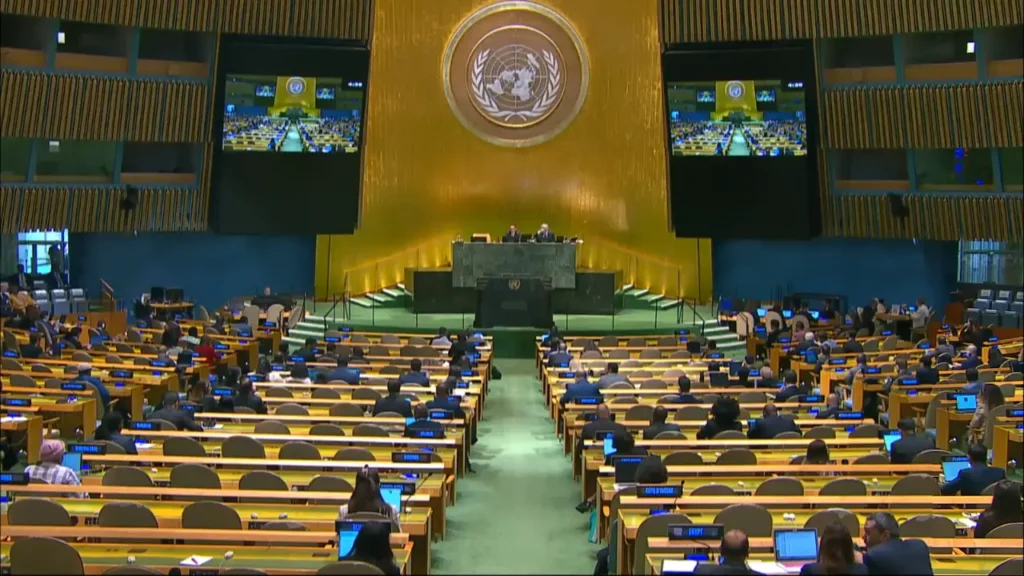
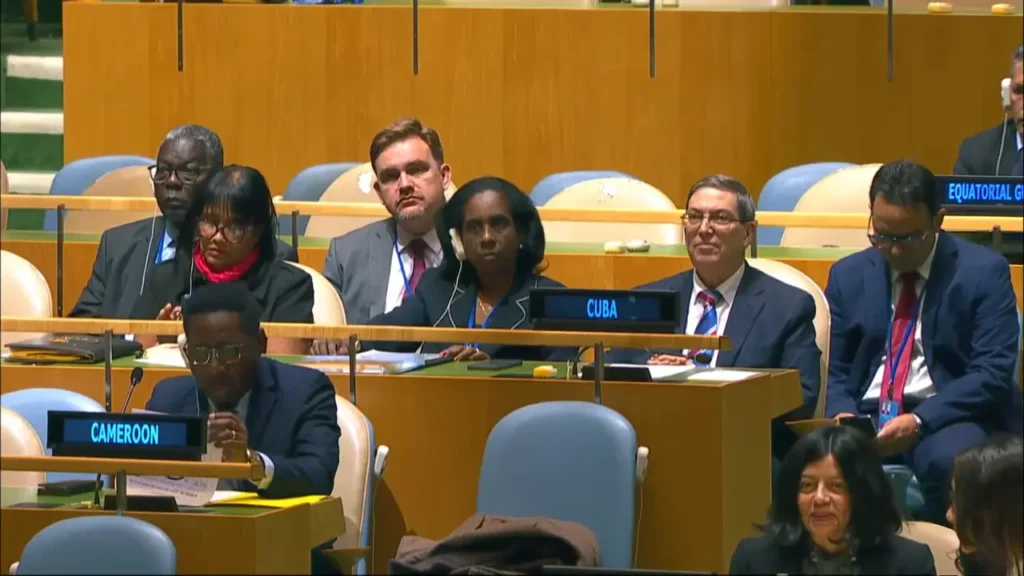
Yet on October 28, 2026, when the United Nations General Assembly held its annual Cuba embargo vote, all three countries were recorded as absent.
Not voting in favor. Not voting against. Not formally abstaining.
Absent.
Three governments whose countries have benefited from Cuban assistance were missing from the voting record on an issue they had historically supported.
Who needs enemies when you have friends like these?
It is a harsh question, perhaps, but one that deserves to be asked when friendship appears strongest during ceremonial visits, diplomatic speeches and expressions of gratitude, only to become difficult to identify when the political atmosphere grows uncomfortable.
According to the official United Nations General Assembly proceedings, the resolution calling for an end to the US embargo on Cuba passed by 130 votes to 17, with 25 abstentions.
Support fell sharply from 2025, when 165 countries voted in favor, seven opposed and 12 abstained.
The resolution is nonbinding, but the annual vote has long served as a measure of international opposition to Washington’s economic restrictions on Cuba.
In 2025, St Lucia, Antigua and Barbuda, and Dominica supported the resolution.
One year later, none recorded a vote.
That change in recorded participation demands an explanation.
Cuba’s Caribbean friends and decades of cooperation
The relationship between Cuba and the Eastern Caribbean has never been merely symbolic.
Cuban doctors, nurses and other health professionals have contributed to regional health services, while medical scholarships have provided educational opportunities to Caribbean nationals who might otherwise have struggled to afford such training.
Cuba has also maintained technical and diplomatic cooperation with small island developing states, many of which face persistent shortages of specialized personnel and limited public resources.
These partnerships have undoubtedly served Havana’s diplomatic interests. International cooperation is rarely divorced from foreign-policy objectives.
But that does not erase the tangible benefits Caribbean countries have received.
For families whose children obtained medical qualifications through Cuban scholarships, the relationship was more than diplomatic rhetoric.
For communities served by Cuban health professionals, cooperation had practical consequences.
For governments struggling to strengthen public services, Cuban assistance represented an alternative source of support.
None of this means Caribbean governments owe Cuba unconditional allegiance.
The Cuban government’s restrictions on political freedoms, treatment of dissent and economic policies remain legitimate subjects of international scrutiny.
But opposing the US embargo on Cuba does not require endorsing every action of the Cuban government.
Caribbean leaders have understood that distinction for decades.
The question is whether they still have the conviction to defend it when doing so may carry diplomatic consequences.
St Lucia foreign policy under the spotlight
Prime Minister Philip J. Pierre’s administration has previously expressed unequivocal support for ending the US embargo on Cuba.
In September 2025, St Lucia publicly urged the international community to support Cuba, with Foreign Affairs Minister Alva Baptiste advocating cooperation and engagement rather than isolation.
The government’s position was documented in an official September 30, 2025, statement published by the Office of the Prime Minister.
That was a clear diplomatic position.
It was not expressed privately or hidden in confidential correspondence. It was presented before the international community as part of St Lucia’s foreign-policy outlook.
In January 2026, Pierre acknowledged mounting challenges surrounding Cuban medical education, telling an international health conference that American pressure had disrupted the country’s longstanding arrangements for training doctors in Cuba.
The development was examined in an earlier report on how the Cuba medical training ban forced a St Lucia policy shift, raising questions about the country’s reliance on Cuban-trained medical professionals.
Against that background, St Lucia’s absence from the October 2026 vote is especially difficult to reconcile with its earlier declarations.
What changed?
Did the Philip J Pierre Pierre administration reconsider its position on the embargo?
Was St Lucia’s permanent mission instructed not to participate?
Was the absence caused by scheduling, procedural difficulties or circumstances unrelated to foreign policy?
Or did the government conclude that publicly supporting Cuba had become diplomatically inconvenient?
There is no verified evidence establishing which explanation, if any, is correct.
An absence does not automatically demonstrate a deliberate decision to avoid the vote. Nor does it prove that Washington threatened St Lucian officials.
But the lack of an established explanation does not make the matter insignificant.
A government that repeatedly proclaims solidarity with a longstanding partner should reasonably expect questions when it fails to register its position on an issue it previously supported.
St Lucia’s foreign policy belongs to its citizens, not merely to the officials responsible for conducting it.
The Philip J Pierre administration should explain whether its position has changed and why no vote was recorded.
Antigua and Dominica face the same uncomfortable questions
St Lucia was not alone.
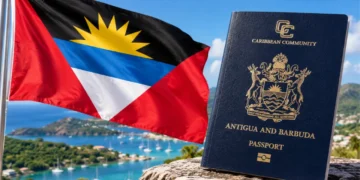
Antigua and Barbuda, under Prime Minister Gaston Browne, has maintained extensive relations with Cuba, including cooperation in education and health care.
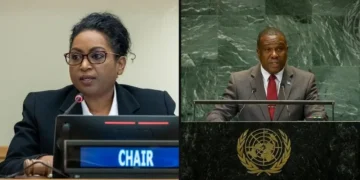
In September 2026, Antigua and Barbuda’s ambassador to the United Nations, Walton Webson, called for renewed diplomacy between Washington and Havana and warned against ordinary Cubans suffering because of political disagreements.
One month later, Antigua and Barbuda registered no vote on the embargo resolution.
The contrast is striking.
But the country’s relationship with Cuba had already entered difficult territory.
In December 2025, Antigua and Barbuda ended its longstanding Cuban medical program, allowing the remaining Cuban doctors and nurses to depart amid mounting American scrutiny of Cuban medical cooperation.
The decision, examined in earlier reporting on how Gaston Browne ended the Cuban medical program amid US pressure, raised questions about the consequences for health care services and the government’s changing relationship with Havana.
The circumstances do not establish that Washington dictated Antigua and Barbuda’s position on the October 2026 vote.
They do, however, provide relevant context for examining the government’s diplomatic choices.
Dominica, under Prime Minister Roosevelt Skerrit, has also maintained longstanding relations with Cuba, benefiting from educational, medical and other forms of cooperation.
Yet Dominica was similarly absent.
Three Eastern Caribbean governments.
Three missing votes.
Three sets of unanswered questions.
Their simultaneous absence does not establish that the governments coordinated their positions. There is no verified evidence of a collective decision to avoid the resolution.
Nevertheless, the coincidence is politically significant, especially given the diplomatic pressure surrounding the vote.
If the absences were accidental, the governments should explain the circumstances.
If they were deliberate, citizens deserve to know why.
And if their positions on Cuba have changed, their leaders should be prepared to defend those changes openly.
Diplomatic independence cannot be reduced to speeches about sovereignty while important decisions remain unexplained.
Did US pressure influence the Cuba embargo vote?
The October 28 vote occurred amid an intensified American diplomatic campaign against the resolution.
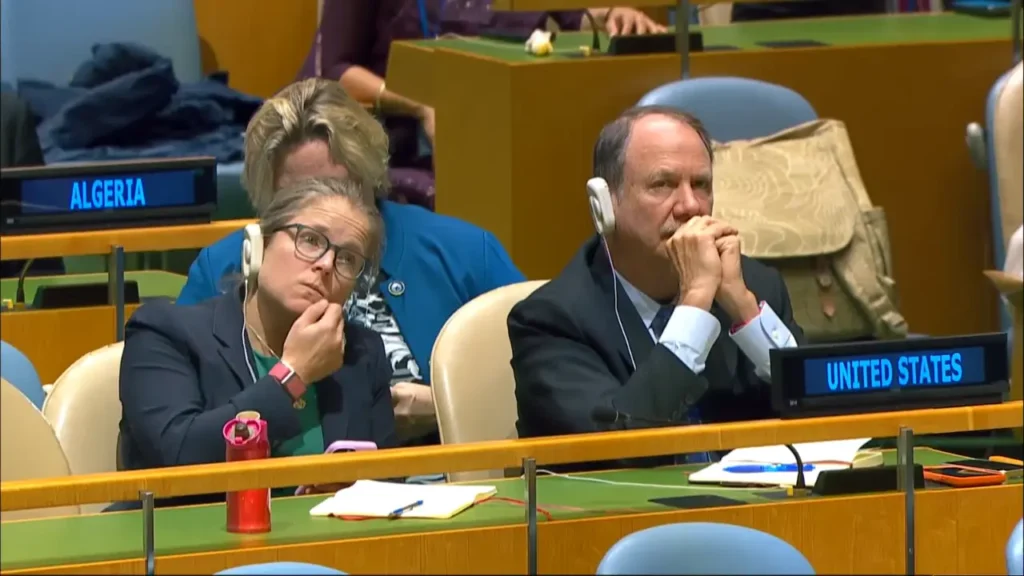
Washington has sought to build international opposition to the Cuban government, arguing that its restrictions on political freedoms and other policies warrant sustained pressure.
Cuba, meanwhile, has accused the United States of attempting to influence other governments through threats involving visas and economic consequences.
Those allegations do not establish that St Lucia, Antigua and Barbuda, or Dominica received threats or altered their conduct because of them.
Nevertheless, the broader diplomatic climate cannot simply be ignored.
According to the US Department of State’s official visa restrictions, Antigua and Barbuda and Dominica were among countries subjected to partial visa issuance suspensions beginning in January 2026.
The restrictions affected specified visitor, student, exchange and immigrant visa categories, subject to exceptions.
Both countries were also included in a US visa bond program requiring some applicants to provide financial guarantees.
St Lucia faced a different measure.
Its nationals were included in a broader January 2026 pause on immigrant visa issuance. However, the State Department confirmed in August that the pause was no longer in effect following a court order.
These distinctions matter.
The three governments were not subject to identical restrictions, and the existence of visa measures does not prove that any of them deliberately avoided the Cuba vote.
Still, the measures demonstrate the sensitivity of Caribbean relations with Washington.
Did concerns about maintaining favorable relations with the United States influence their participation in the UN vote?
No available evidence establishes that they did.
But asking the question is entirely legitimate.
Small Caribbean states operate in a world where larger powers exercise enormous economic and diplomatic influence.
Tourism, international banking, migration, investment, security cooperation and access to foreign markets can shape national decisions.
Responsible diplomacy requires governments to protect these interests.
Yet protecting national interests should not automatically mean abandoning previously declared principles without explanation.
If a government believes circumstances require a change in foreign policy, it should have the courage to say so.
There is nothing inherently dishonorable about reconsidering a diplomatic position.
What undermines public confidence is the appearance of inconsistency accompanied by silence.
Other Caribbean nations registered their positions
The voting record makes the absence of St Lucia, Antigua and Barbuda, and Dominica even more noteworthy.
Barbados, Grenada, Belize, the Bahamas, St Kitts and Nevis, St Vincent and the Grenadines, and Suriname supported the resolution.
Jamaica, Guyana and Haiti abstained.
Trinidad and Tobago voted against it, breaking with its previous support for the measure.
These decisions illustrate a Caribbean region increasingly divided over a question that once commanded broad regional agreement.
But they also demonstrate that governments had choices.
Countries voting in favor maintained their opposition to the embargo.
Those abstaining registered a different position.
Trinidad and Tobago openly opposed the resolution.
Whatever criticisms those decisions attract, the governments concerned placed their positions on the official record.
Their citizens can examine those positions, question their reasoning and demand accountability.
The three absent governments have left the public without the same clarity.
There is a difference between taking a controversial stand and failing to register a stand at all.
The former invites scrutiny.
The latter invites speculation.
And speculation flourishes when governments fail to provide explanations.
Caribbean solidarity cannot depend on convenience
The central issue is not whether St Lucia, Antigua and Barbuda, or Dominica should choose Cuba over the United States.
That would be an unnecessarily simplistic interpretation of Caribbean diplomacy.
Small states must maintain constructive relationships with multiple international partners, including countries whose governments disagree sharply with one another.
A nation can cooperate with Washington while opposing the US embargo on Cuba.
It can criticize restrictions on political freedoms in Havana while acknowledging the value of Cuban medical assistance.
It can defend its economic interests without surrendering the right to express independent positions at international institutions.
Indeed, numerous countries have demonstrated that these positions are not mutually exclusive.
The deeper question is whether Caribbean governments remain prepared to exercise that independence when political circumstances become difficult.
For decades, regional leaders have spoken passionately about sovereignty, noninterference, cooperation and the special responsibilities of small states.
Those principles are most meaningful when defending them requires conviction.
They become considerably less impressive when invoked only during convenient diplomatic moments.
Cuba’s historical assistance does not purchase permanent political obedience.
But friendship built over decades should at least command consistency, honesty and the courtesy of an explanation when a government appears to depart from its longstanding position.
That is not an unreasonable expectation.
It is a basic standard of diplomatic accountability.
When Cuba needed its friends, three votes were missing
The governments of St Lucia, Antigua and Barbuda, and Dominica may yet provide explanations that fully account for their absences.
Those explanations should be heard and assessed fairly.
Until then, the missing votes remain an uncomfortable episode in the history of Caribbean solidarity with Cuba.
The three governments were not being asked to impose sanctions on Washington, sever diplomatic relations or enter a direct confrontation with the United States.
They were being asked to register positions on a familiar, nonbinding resolution concerning an embargo their countries had previously opposed.
Other Caribbean governments did so, including some that chose to abstain or vote against the measure.
Yet St Lucia, Antigua and Barbuda, and Dominica recorded no vote.
The issue is therefore larger than one resolution or one diplomatic meeting.
It concerns the credibility of governments that speak confidently about solidarity while leaving unanswered questions when their positions are tested.
It concerns whether small states can maintain independent foreign policies amid pressure from larger powers.
And it concerns whether the citizens of those states are entitled to understand why their governments act differently from the principles they have publicly proclaimed.
Cuba was there when its Caribbean friends needed help.
When Cuba needed those friends to stand and be counted, three were missing from the voting record.
Who needs enemies when you have friends like these?