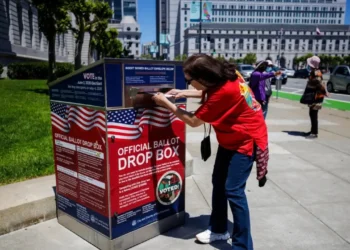
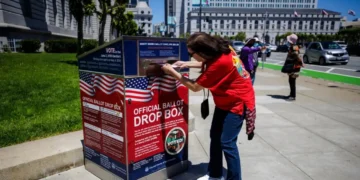









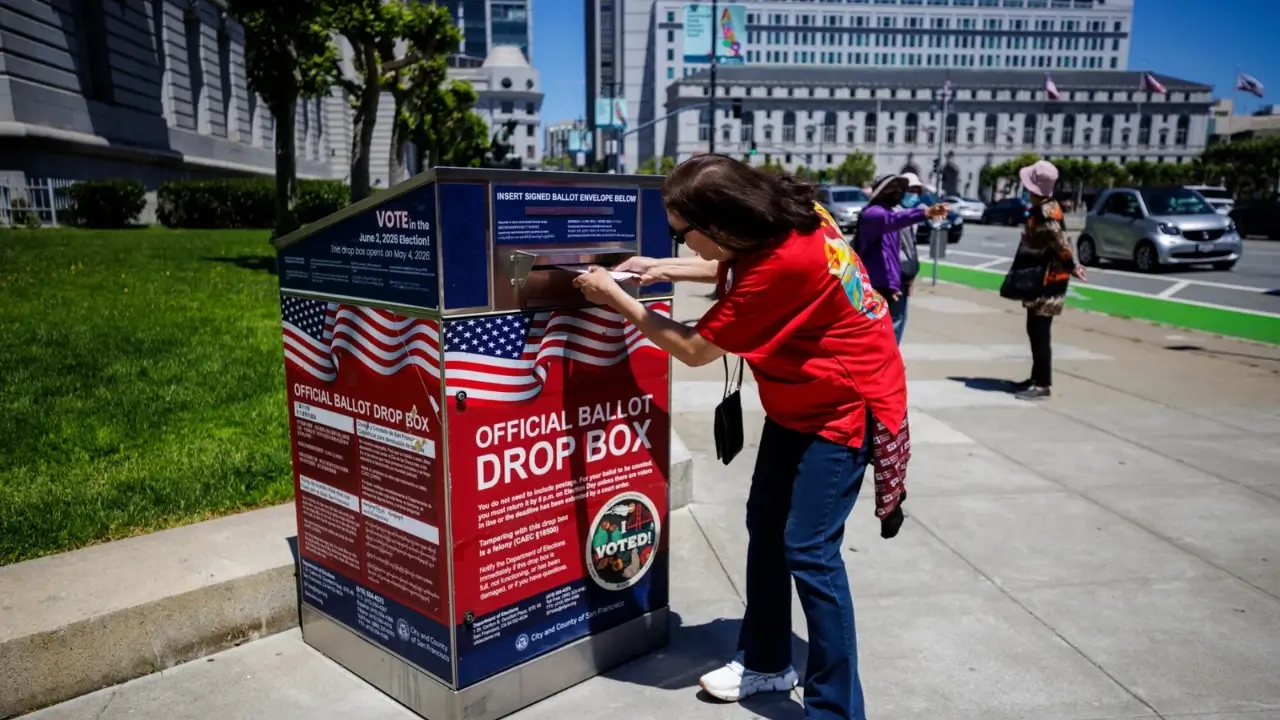
LOS ANGELES, US — A California ballot ruling has stalled the Trump administration’s emergency attempt to restrict the counting of mail-in ballots linked to approximately 20,000 registered voters, as a federal judge considers appointing an independent expert to examine the government’s evidence and the Justice Department presses a separate citizenship challenge in Washington state.
US District Judge David O. Carter questioned the reliability of the federal government’s voter list during a hearing Tuesday, October 27, and raised concerns that imposing new ballot restrictions just days before the November 3 midterm elections could prevent eligible American citizens from having their votes counted.
Carter said he expected to issue a ruling Wednesday, October 28, after hearing arguments from federal prosecutors, California officials and Los Angeles County representatives. He also indicated that further examination of the evidence might be necessary before the underlying dispute could be resolved.
The hearing followed a 2-1 decision Monday by the 9th US Circuit Court of Appeals dismissing the Justice Department’s emergency appeal because the district court had not yet ruled on its request.
Meanwhile, federal prosecutors have demanded that Washington state review 405 registered voters suspected of being noncitizens and separate any ballots they submit until their citizenship can be verified.
Together, the disputes have intensified scrutiny of the federal government’s election-enforcement campaign, particularly the accuracy of voter-registration data and the legal limits on changing voting procedures while an election is underway.
Federal judge questions evidence behind California voter allegations
The California case began October 15, when the Justice Department sued state and Los Angeles County election officials after identifying more than 20,000 registered voters it claimed were likely noncitizens.
According to the Justice Department’s official announcement, investigators working with the Department of Homeland Security examined voter-registration records and other information to identify individuals who might have registered or voted unlawfully.
The department sought an emergency court order requiring election officials to set aside mail-in ballots returned by individuals on the disputed list until their citizenship status could be established.
California officials challenged the allegations, arguing that the government had not produced sufficiently reliable evidence to justify the proposed restrictions.
During Tuesday’s hearing, Carter questioned the methods used to assemble the list and the practical consequences of implementing the government’s demands.
He expressed concern that the proposed restrictions could affect eligible voters whose records had been incorrectly classified.
The judge also questioned the need for immediate judicial intervention when authorities could investigate suspected unlawful voting and pursue criminal charges against individuals found to have violated federal law.
Carter indicated that he was considering appointing a special master, an independent expert who would review the competing evidence and examine whether the government had accurately identified ineligible voters.
Such an appointment could extend the examination beyond Election Day while allowing the court to consider what measures, if any, could be implemented before California certifies its election results.
The judge did not issue a final ruling on the Justice Department’s emergency request during Tuesday’s hearing.
Appeals Court’s California Ballot Ruling Limits DOJ Intervention
The October 26 appellate decision represented an initial procedural setback for the Justice Department.
A three-judge panel of the 9th Circuit rejected the government’s attempt to obtain emergency relief before the district court had ruled on the matter.
Judges Mark J. Bennett and Gabriel P. Sanchez supported dismissal, while Judge Patrick J. Bumatay dissented.
The majority concluded that the appeal was premature because the lower court had not been given sufficient opportunity to consider the government’s application.
Bennett and Sanchez also separately raised concerns about the legal basis for federal intervention and the potential consequences of restricting ballots during an active election.
Bumatay argued that federal courts should be able to act to prevent potentially unlawful votes from affecting election results.
The appellate decision did not determine the citizenship status of the voters identified by federal investigators or resolve the underlying lawsuit.
It also did not prevent the Justice Department from continuing to seek relief in district court.
California Attorney General Rob Bonta welcomed the ruling, maintaining that the federal government had attempted to bypass established judicial procedures and interfere with the state’s administration of elections.
In an October 26 statement, Bonta said California would continue defending its election procedures and the voting rights of eligible citizens.
Disputed voter records raise concerns over citizenship verification
The accuracy of the Justice Department’s list has become a central issue in the California case.
According to court filings described by the Associated Press and California officials, Los Angeles County reviewed a sample of 200 records and identified discrepancies involving inactive or canceled registrations, individuals with no voting history and people whose records indicated they were born in the United States.
County officials argued that those findings undermined the reliability of the broader federal allegations.
Federal investigators disputed that interpretation.
Nicolas Bartell, an official with US Citizenship and Immigration Services, said investigators had reviewed the same sample and concluded that only four individuals were likely citizens, while another person was deceased.
The conflicting findings underscore the unresolved dispute over the methods used to determine citizenship.
Federal investigators said they had cross-referenced voter-registration information with other records, including Social Security Administration data, Department of State information and a third-party data provider.
California officials have questioned whether those methods can reliably distinguish noncitizens from naturalized Americans and other eligible voters.
The distinction is significant because permanent residents and other noncitizens cannot vote in federal elections, but naturalized citizens have the same federal voting rights as citizens born in the United States.
An outdated immigration record or incomplete government database does not, by itself, establish that someone is currently ineligible to vote.
The Justice Department maintains that its findings warrant further verification, while California argues that unproven allegations cannot justify withholding ballots from eligible voters.
The number of people identified on the federal list also should not be interpreted as the number of illegal ballots cast or confirmed instances of voter fraud.
DOJ expands noncitizen voting investigation to Washington
As the California case proceeds, federal prosecutors have opened another dispute over voter eligibility in Washington state.
On October 26, the US Attorney’s Offices for Washington’s western and eastern districts announced that investigators had identified more than 400 people they believed were unlawfully registered to vote.
The department provided state election officials with a list of 405 individuals and requested that any mail-in ballots returned by those voters be separated until their citizenship status could be confirmed.
Federal authorities alleged that people on the list had collectively voted more than 1,500 times in previous elections.
Those figures remain government allegations, not judicial findings establishing that the identified individuals were ineligible when they voted.
The department said some people on the list were lawful permanent residents, commonly known as green-card holders.
Although lawful permanent residents may live and work in the United States, they cannot vote in federal elections unless they become naturalized citizens.
Federal prosecutors also acknowledged that some individuals identified through historical records might have subsequently obtained citizenship.
That possibility is central to the dispute because an individual’s immigration status at an earlier date does not necessarily establish their current voting eligibility.
In its official October 26 announcement, the Justice Department said it had previously warned Washington election officials about suspected noncitizen registrations and urged the state to take action.
The department has warned that it may seek emergency judicial intervention if Washington does not comply with its request.
Washington officials challenge timing of federal demand
Washington Secretary of State Steve Hobbs has questioned the reliability and timing of the Justice Department’s request.
According to Reuters, Hobbs said his office would follow established legal procedures while reviewing the allegations and protecting eligible voters from improper restrictions.
He also challenged the use of historical registration information, including a cited record dating to 1994.
Washington officials have warned that outdated records can create misleading impressions about a person’s current citizenship or voting eligibility.
The state has also raised concerns about federal demands being made shortly before Election Day, when ballots are already being received and election administrators are operating under established deadlines.
Federal prosecutors have given Washington until Wednesday, October 28, to address the disputed registrations.
The department argues that prompt verification is necessary to prevent unlawful ballots from being counted.
Hobbs, however, has maintained that election officials must follow due process rather than act solely on federal allegations.
In a statement issued by his office, Hobbs said Washington takes its responsibility to safeguard voter information seriously and would respond only to requests consistent with due process.
The disagreement places Washington in a position similar to California, although the legal circumstances differ.
California is defending an active federal lawsuit, while Washington has received a formal demand that could lead to litigation.
The Washington allegations have not been resolved through a court ruling.
Election disputes intensify ahead of 2026 midterm elections
The disputes come as Americans participate in early voting ahead of the November 3 congressional elections, which will determine control of the House of Representatives and Senate.
The federal government’s actions are also facing a separate legal challenge from Democratic congressional leaders. In an October 20 lawsuit, Senate Democratic Leader Chuck Schumer, House Democratic Leader Hakeem Jeffries and several Democratic campaign organizations sought to block what they described as unlawful federal pressure on state election officials.
The plaintiffs challenged voter-removal demands, ballot restrictions and alleged threats of criminal prosecution, as previously reported in Voter Purge Demands: Democrats Sue Trump Administration.
That lawsuit remains separate from the California litigation and the Washington request. Its allegations have not been adjudicated.
The legal questions extend beyond the individual voter records identified by federal investigators.
Under the US Constitution, states administer federal elections subject to applicable federal laws and congressional authority.
Federal statutes prohibit noncitizen voting in federal elections, and authorities can investigate and prosecute violations.
However, courts must also consider voting rights, procedural safeguards and whether requested remedies could improperly restrict eligible voters.
Research and election audits have generally found confirmed noncitizen voting to be rare. That broader finding does not eliminate the need to investigate credible allegations, but it does distinguish documented violations from unverified claims involving large voter lists.
The California and Washington disputes therefore involve two separate questions: whether investigators have identified people who are genuinely ineligible to vote and whether the federal government can require state officials to alter ballot-processing procedures before those allegations are conclusively established.
With millions of ballots already being returned nationwide, those questions could determine how election officials handle disputed registrations in the final days before voting concludes.
October 28 Deadlines Put California Ballot Ruling to New Test
Carter’s expected October 28 decision will determine the immediate direction of the California lawsuit, including whether the court imposes any temporary ballot restrictions or orders further examination of the federal government’s evidence.
His consideration of an independent special master could provide another opportunity to examine the accuracy of the disputed voter records before any final determination.
California officials currently remain able to process ballots under existing procedures following the appellate court’s refusal to grant emergency relief.
In Washington, state officials face the Justice Department’s October 28 deadline to respond to the request involving 405 registered voters.
Federal prosecutors have warned that they could seek emergency court intervention if the disputed ballots are not segregated.
Neither state’s allegations establish that all the individuals identified by investigators are noncitizens or that the claimed number of unlawful votes has been proven.
The next developments will depend on Carter’s decision in California and whether Washington’s response satisfies federal prosecutors or leads to a second legal confrontation before the November 3 elections.