












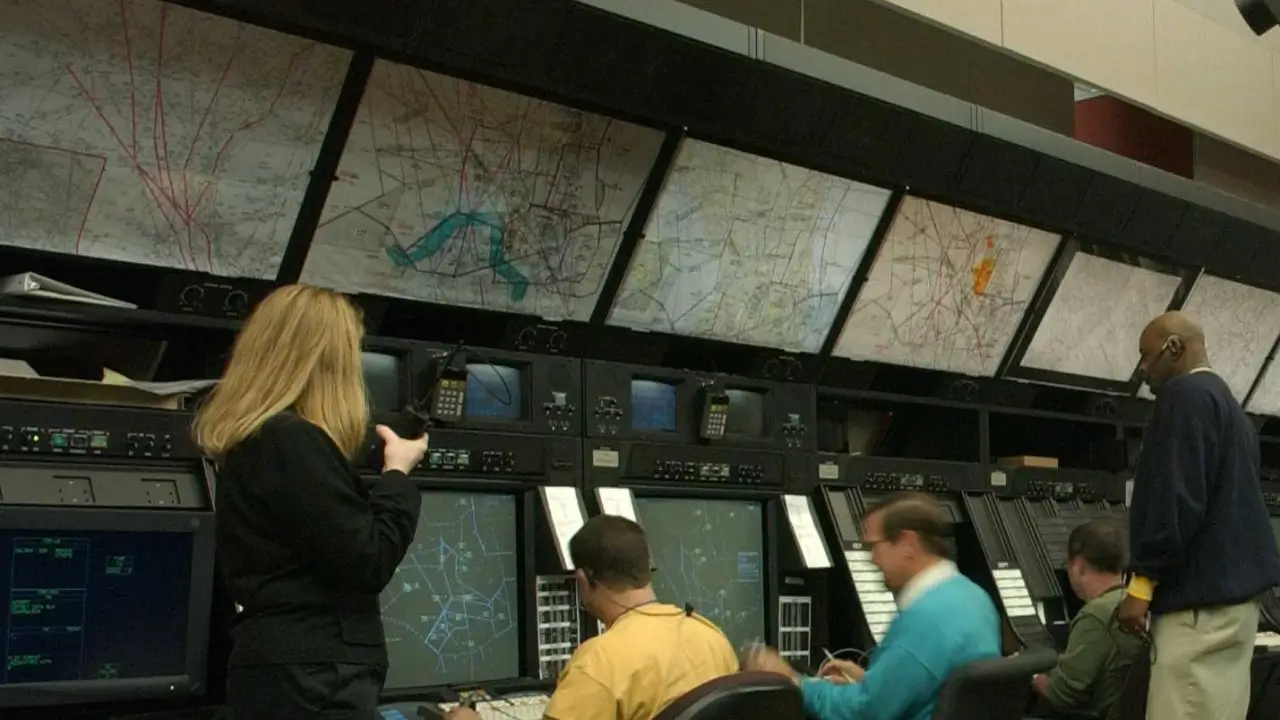
WASHINGTON, US — The Federal Aviation Administration says a surge of data destabilized equipment supporting aging air traffic systems on Nov. 13, disrupting aircraft communications and radar feeds at 17 of its 22 en route air traffic control centers. The disruption prompted a nationwide ground stop that ended that evening. The FAA and its network provider, L3Harris, are still investigating what triggered the surge.
In a preliminary account released Nov. 15, the FAA said the instability also spread to several facilities that guide aircraft into and out of airports. Some radio frequencies and radar feeds remained operational, allowing controllers to communicate with pilots and track aircraft. The agency said about 3,500 aircraft were in the air when it imposed the stop and all landed safely.
The technical problem began about 3:30 p.m. Eastern time. The FAA said air traffic resumed at 8:15 p.m., after it had taken time to confirm that the network was stable. Operators canceled about 12,462 flights that day, according to the agency, which said only some of those cancellations were directly attributable to the ground stop.
How aging air traffic systems became unstable
The FAA identified two possible sources of the excess network traffic: a radar site in Amarillo, Texas, and a radio communications site in El Dorado, Arkansas. L3Harris had installed a new router at the Arkansas site. The agency said the network stabilized after the company isolated both sites.
The FAA said the router installation was part of work that has been underway for years to move away from obsolete copper lines. The agency attributed the instability to older telecommunications equipment and said the evidence available at the time gave it no indication of a cyberattack. Its preliminary findings left open what started the surge of data.
Auditors flagged gaps in the FAA modernization program
Two months before the outage, the Government Accountability Office reported that the FAA lacked a comprehensive estimate of what its modernization program would cost over its lifetime. It also lacked a single schedule to coordinate the first phase. Auditors counted more than 11,000 individual project schedules and found that installations at some of the same sites were generally scheduled without coordinating the work to minimize disruption to controllers.
The condition of the equipment had drawn federal scrutiny before. In 2024, the GAO reported that the FAA had classified 51 of its 138 air traffic control systems as unsustainable and another 54 as potentially unsustainable. In September, auditors warned that setbacks in the modernization program could prolong the agency’s reliance on equipment prone to failure.
Congress appropriated $12.5 billion in July 2025 to support the overhaul. The FAA is using most of that money for the first phase, which it aims to complete by December 2028. That phase includes communications, surveillance and weather upgrades. As of May 2026, the FAA had reported replacing nearly half of about 5,170 aging copper lines with fiber-optic cables.
The second phase would develop automated systems to track aircraft and help manage traffic flow. The FAA estimated it would need about $10.2 billion for that phase, excluding facilities, and had yet to set start or completion dates when the GAO issued its September report.
The Department of Transportation partially agreed with the GAO’s recommendations for a full cost estimate and a coordinated first-phase schedule. Both recommendations remain open. The FAA and L3Harris are continuing to investigate the source of the Nov. 13 surge.