















HIROSHIMA, Japan — The Hiroshima atomic bombing anniversary renewed urgent calls for nuclear disarmament Thursday as the city marked 81 years since its destruction amid growing international reliance on nuclear weapons for security.
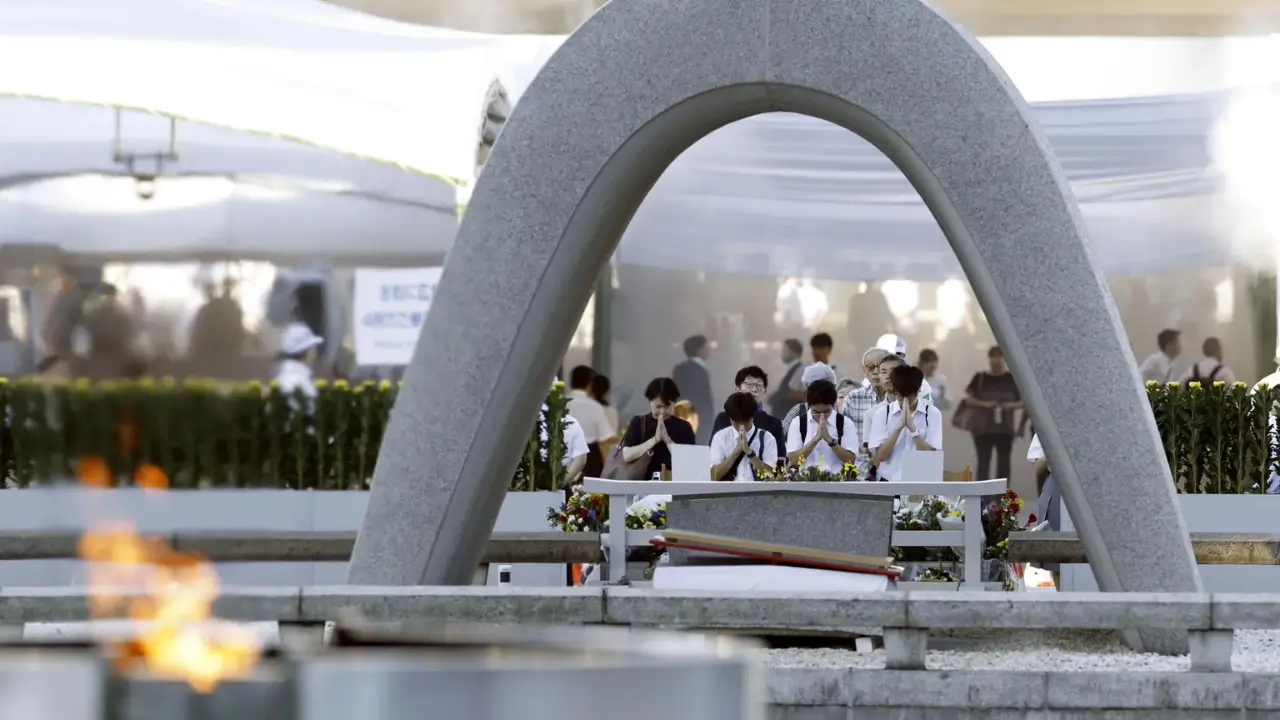
About 50,000 people, including representatives from roughly 120 countries and regions, gathered at Hiroshima Peace Memorial Park to remember those killed by the Aug. 6, 1945, US atomic bombing.
A peace bell sounded at 8:15 a.m., the moment the bomb exploded above the city, followed by a minute of silence for the victims. The annual ceremony also included floral tributes, the release of doves and the reading of Hiroshima’s peace declaration.
Nuclear deterrence faces renewed scrutiny on Hiroshima atomic bombing anniversary
Hiroshima Mayor Kazumi Matsui used the commemoration to challenge governments that continue to defend nuclear weapons as necessary deterrents against attack.
Matsui warned that downplaying the human consequences of nuclear weapons while accepting force as a means of pursuing national interests could fuel cycles of retaliation and lead to another catastrophe like Hiroshima or Nagasaki.
He said the continued acceptance of nuclear deterrence was pushing the prospect of a world without nuclear weapons further out of reach.
The mayor urged political leaders to learn from the destruction of the two Japanese cities and take concrete steps toward disarmament rather than relying on nuclear arsenals to preserve security.
His message came as wars, regional rivalries and worsening geopolitical tensions have strengthened arguments in several countries for retaining or expanding nuclear capabilities, including renewed international concern over the Iran nuclear threat.
The development has widened the gap between governments that publicly support nuclear disarmament and security policies that continue to depend on the threat of nuclear retaliation.
Japan faces questions over nuclear policy
Japanese Prime Minister Sanae Takaichi attended the Hiroshima ceremony for the first time since taking office.
Takaichi said Japan would pursue what she described as a realistic path toward preventing the use of nuclear weapons through existing United Nations nonproliferation frameworks.
Her government, however, is facing scrutiny over whether Japan could reconsider parts of its three non-nuclear principles as it reviews its national security and defense policies.
The principles commit Japan to not possessing, producing or permitting nuclear weapons to enter the country.
Questions have centered particularly on the third principle, which prohibits nuclear weapons from being introduced into Japanese territory.
Takaichi said Japan has maintained the principles but did not provide an unequivocal commitment that all three would remain unchanged as the government completes its security review, according to The Associated Press.
The uncertainty has concerned atomic bomb survivors and disarmament advocates who believe Japan’s history gives it a special responsibility to oppose nuclear weapons.
Japan does not possess nuclear weapons but remains protected by the US nuclear umbrella. Its government has also declined calls from survivors to sign the Treaty on the Prohibition of Nuclear Weapons.
That position highlights a central tension in Japanese security policy: preserving the lessons of Hiroshima while depending on US nuclear deterrence for national defense.
Survivor numbers continue to decline
The US atomic bombing destroyed much of Hiroshima and killed an estimated 140,000 people by the end of 1945.
Three days later, the United States dropped a second atomic bomb on Nagasaki, killing an estimated 70,000 people. Japan announced its surrender on Aug. 15, bringing World War II to an end.
Those who survived the attacks are known in Japan as hibakusha.
Their testimonies have documented severe burns, radiation sickness, family separation, discrimination and long-term health complications linked to exposure.
The number of officially recognized survivors has fallen to 91,105, about one-quarter of the original total, while their average age has risen above 86, according to AP.
Their declining numbers have intensified concerns that firsthand memories of the bombings could fade as the world moves further from the events of 1945.
Many of the youngest surviving hibakusha were infants or small children at the time of the attacks and have limited personal memories of the explosions.
Preservation efforts increasingly depend on recorded testimony, museums, education programs and relatives who continue sharing the survivors’ experiences.
Hiroshima keeps warning the world
The city’s official ceremony began at 8 a.m. and included the addition of the names of recently deceased victims to a memorial register.
Hiroshima prepared approximately 7,000 seats for the ceremony at Peace Memorial Park, according to the Hiroshima city government.
The gathering brought together survivors, bereaved families, residents, diplomats and visitors under heightened security.
Eight decades after the attack, Hiroshima has been rebuilt into a modern city. The preserved Atomic Bomb Dome and surrounding memorials remain visible evidence of the destruction caused by the world’s first wartime use of a nuclear weapon.
Thursday’s commemoration reinforced Hiroshima’s warning that remembrance alone will not prevent another nuclear disaster unless governments translate their stated support for peace into policies that reduce the risk of nuclear conflict.
The continuing debate over Japan’s non-nuclear principles and the wider global reliance on deterrence mean the central message of the 81st anniversary remains unresolved.