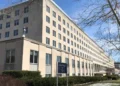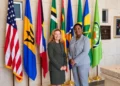







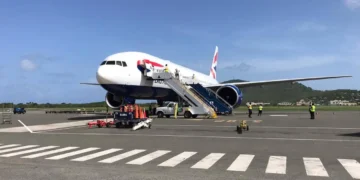



WASHINGTON, US — The US Embassy in Grenada faces closure under a US State Department plan that would eliminate America’s only embassy among five diplomatic posts targeted worldwide, raising questions about Washington’s future engagement with St. George’s during a period of geopolitical friction.
The proposed closure follows sensitive talks over a US request to install radar equipment in Grenada, Washington’s imposition of visa bonds on Grenadian travelers and Prime Minister Dickon Mitchell’s cultivation of close ties with Nicolás Maduro and Cuba.
However, neither the United States nor Grenada has linked those developments to the planned closure. The State Department reportedly presented the decision as part of a broader effort to reduce costs and restructure America’s overseas diplomatic network.
US Embassy in Grenada among five targeted posts
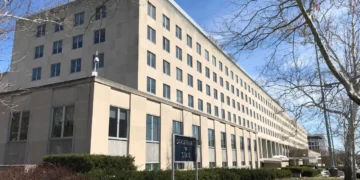
The US State Department notified congressional committees late last week that it planned to close its posts in St. George’s, Grenada; Nagoya, Japan; Medan, Indonesia; Douala, Cameroon; and Winnipeg, Canada, according to people familiar with the confidential notice.
The facilities in Nagoya, Medan and Winnipeg are consulates, while the Douala operation is an embassy branch office. The mission in St. George’s is the only embassy on the list.
The proposed closures were first reported by Reuters, which said the move represents a rare collective reduction in the United States’ global diplomatic presence.
The US State Department has not publicly confirmed a closure date or explained how services currently available through the embassy in Grenada would be reassigned.
In a response to the report, the department said it was focused on maintaining an overseas diplomatic network that was efficient and effective. It also said it would follow the required congressional notification procedures, but stopped short of directly confirming the five closures.
That leaves several questions unresolved, including the number of employees affected, whether Congress could delay the plan and whether the United States would retain a smaller diplomatic presence in Grenada.
Closure could reduce direct US access in Grenada
The embassy gives Washington a permanent presence in Grenada, allowing US officials to maintain direct contact with the government, assist American citizens and support bilateral initiatives without relying entirely on personnel traveling from another country.
Visa processing for Grenadian applicants is generally handled through the US Embassy in Bridgetown, Barbados. The ambassador based in Barbados is also accredited to Grenada, St Lucia, Antigua and Barbuda, Dominica, St Kitts and Nevis, and St Vincent and the Grenadines.
The St. George’s embassy nevertheless provides limited services for American citizens, including emergency assistance and appointments for certain passport and notarial matters.
If the post closes, routine visa arrangements for Grenadian nationals may remain largely unchanged because those services are already handled regionally. American citizens in Grenada, however, could lose direct access to locally provided assistance and become more dependent on support coordinated from Barbados.
The US State Department has not explained whether personnel would continue operating in Grenada under a reduced arrangement.
Grenada established diplomatic relations with the United States in 1975. The embassy in St. George’s was formally established in February 1984, several months after the US-led military intervention that followed the collapse of Grenada’s revolutionary government.
Closing the facility would end more than four decades of continuous US embassy operations on the island.
Maduro ties deepen geopolitical questions
The proposed closure comes after Mitchell’s government cultivated increasingly close relations with Maduro’s administration while Washington intensified pressure on the Venezuelan leader.
Mitchell traveled to Caracas in April 2025 for direct talks with Maduro during his first official visit to Venezuela since becoming prime minister. The two governments outlined a two-year cooperation roadmap covering energy, agriculture, education, trade and other areas.
The visit demonstrated a relationship extending beyond routine diplomatic contact. Mitchell and Maduro publicly emphasized solidarity between their countries and committed their governments to expanding bilateral cooperation.
Those ties drew greater attention as Washington increased military and surveillance activity around Venezuela and sought support from Caribbean governments.
Grenada’s location in the southern Caribbean gives the island strategic importance. It sits approximately 100 miles north of Venezuela and occupies a position near regional air and maritime routes.
The proposed embassy closure therefore comes at a sensitive moment for relations among Washington, St. George’s and Caracas.
Still, there is no verified evidence that Mitchell’s relationship with Maduro influenced the State Department’s decision. The Grenada embassy appears on a five-post closure list that also includes diplomatic facilities in Asia, Africa and North America.
Any claim that the Grenada decision represents direct retaliation would therefore go beyond the available evidence.
Radar talks add to questions over US relations
The timing may nevertheless prompt closer examination of an earlier US request to install temporary radar equipment and position associated technical personnel at Maurice Bishop International Airport.
Grenada confirmed in October 2025 that it had received the request as Washington expanded regional surveillance operations near Venezuela. Mitchell’s government said it was conducting technical and legal assessments before reaching a decision.
The proposal became politically and historically sensitive because Maurice Bishop International Airport was at the center of regional tensions before the 1983 US intervention.
Mitchell told Parliament in November 2025 that his government had not yet approved the request because technical and safety questions remained under review.
The Grenada government did not formally reject the proposal while it was active. Mitchell later said in February 2026 that it was no longer under consideration after US correspondence indicated that the equipment was no longer required. A similar radar system had been installed in Tobago.
That sequence means it would be inaccurate to report that Grenada explicitly refused the United States’ request. The proposal instead ended without the Mitchell government granting permission for the installation.
Neither government has said the radar discussions damaged bilateral relations or contributed to the reported embassy decision.
Grenada maintains public support for Cuba
Mitchell’s government has also maintained close and highly visible relations with Cuba despite increasing US pressure on Caribbean countries over Cuban overseas medical programs.
Grenada and Cuba cooperate in health care, education and technical development. Cuban medical professionals have worked in Grenada for decades, while Grenadian students have received scholarships to study in Cuba.
In April 2026, Mitchell publicly reaffirmed that relationship during an event commemorating 47 years of diplomatic ties between the countries. He said Grenada intended to remain a friend of Cuba and its people.
His position contrasted with Washington’s campaign against Cuba’s international medical arrangements, which US officials describe as exploitative labor programs. Cuba and several participating Caribbean governments reject that characterization.
Mitchell has defended the contribution of Cuban medical workers to Grenada and the wider Caribbean.
Again, no US official has connected Grenada’s position on Cuba to the embassy proposal. The relationship forms part of the broader geopolitical setting, but it cannot be presented as the documented cause of the closure.
Visa bond creates another barrier for Grenadians
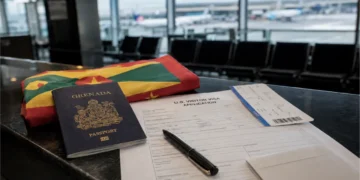
The proposed closure follows the United States’ decision to make the Grenada US visa bond requirement permanent, exposing some Grenadian visitor visa applicants to refundable payments of up to US$20,000.
Under the rule, consular officers may require otherwise eligible B-1, B-2 or combined B-1/B-2 visa applicants to post bonds of US$10,000, US$15,000 or US$20,000. Not every Grenadian applicant will be required to pay a bond.
The State Department says the visa bond policy is based on visa-overstay rates and applies to dozens of countries. Grenada is therefore not being subjected to the requirement alone.
Taken together, however, the visa bond and proposed embassy closure represent two significant US policy developments affecting Grenada within four months.
The first potentially raises the cost of travel for some Grenadian applicants. The second could reduce America’s physical diplomatic presence on the island.
There is no official evidence establishing that either measure was imposed because of Grenada’s foreign-policy relationships.
Closure could create room for competing influence
The proposed withdrawal could carry wider strategic implications because China maintains an embassy in St. George’s and continues expanding its diplomatic and development engagement across the Caribbean.
Beijing has supported infrastructure, scholarships, technical cooperation and government projects throughout the region. A reduced US presence could give Chinese diplomats greater day-to-day access in a country where Washington would no longer maintain a full embassy.
Critics of diplomatic cuts have warned that closing smaller posts could weaken US influence and create openings for China and other international competitors.
Supporters of the restructuring argue that regional embassies, modern communications and improved travel links allow the United States to conduct diplomacy without maintaining a full facility in every country.
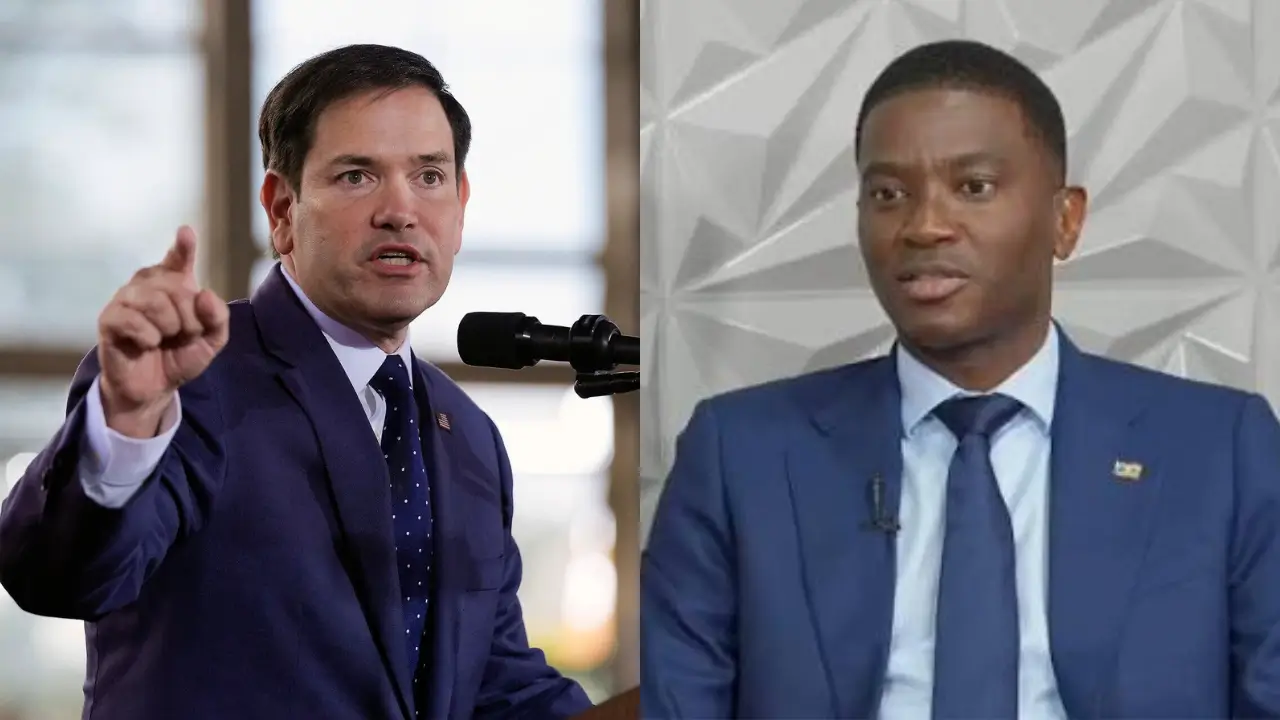
Secretary of State Marco Rubio has defended the Trump administration’s broader State Department overhaul as an effort to reduce bureaucracy and align personnel and resources with US foreign-policy priorities.
The White House Office of Management and Budget had reportedly supported a substantially larger reduction involving as many as 30 diplomatic posts. The final list presented to lawmakers was limited to five.
For Grenada, the full impact will remain uncertain until the State Department confirms whether the closure will proceed, establishes a timetable and explains how diplomatic and American citizen services will be maintained.
Until then, the US Embassy in St. George’s remains operational. But its uncertain future, coming amid the radar discussions, Washington’s visa bond policy and Mitchell’s documented ties with Maduro and Cuba, will likely intensify scrutiny of the relationship between the two countries.