








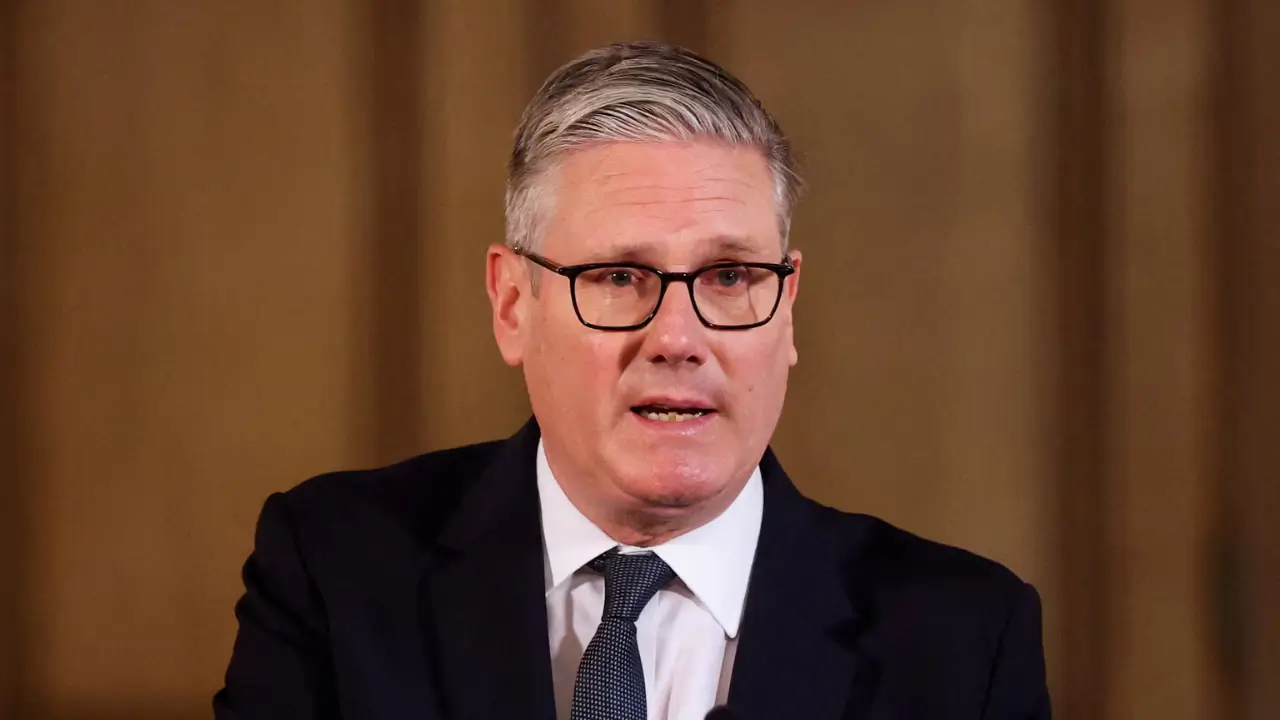
LONDON — Keir Starmer announced Monday that he would resign as leader of the Labour Party and as Prime Minister of the United Kingdom, bringing a swift and humiliating end to a premiership that had begun less than two years earlier with one of the largest electoral mandates in modern British political history.
Speaking outside 10 Downing Street, Starmer said he had informed King Charles III of his decision and that he would remain in the role as caretaker until a new Labour leader was selected. His wife, Victoria, stood at his side as he concluded his remarks, and the two embraced before returning inside as the crowd applauded.
“The question my party is asking now is whether I am best placed to lead us into the next general election,” Starmer told reporters. “I have heard the answer of my parliamentary party to that question, and I accept that answer with good grace.”
The Collapse That Left Keir Starmer With No Path Forward
The trigger for Monday’s resignation was years of accumulated damage concentrated into a single catastrophic night. Labour lost 1,498 councillors and control of 38 councils in May’s local elections, a result that sent shockwaves through the parliamentary party and broke whatever remaining loyalty existed among wavering MPs. Reform UK, led by Nigel Farage, gained more than 1,400 seats in England alone, completing a seismic transfer of working-class support away from the party that had once considered those communities its unshakeable foundation.
The territorial damage ran deeper than seat counts. Welsh Labour suffered a massive defeat that ended 100 years of Labour control of Wales, and all three regions of the United Kingdom outside England are now governed by nationalist, pro-independence parties. For a Prime Minister who had campaigned on national unity and economic renewal, the symbolism was devastating.
Starmer struggled to deliver promised economic growth, repair tattered public services, and ease the cost of living, with his task compounded by the Iran war, which disrupted global oil supplies and added external pressure his government could not absorb. His net approval rating fell to an average of negative 46 percent by November 2025, and by the end of that year, opinion polls were rating him as one of Britain’s most unpopular prime ministers, drawing comparisons to Liz Truss.
Several ministers resigned in the weeks before Monday’s announcement, with the top two defense officials departing on June 11 and accusing Starmer of failing to invest sufficiently in the country’s Defense Investment Plan. He was also damaged by his appointment of Peter Mandelson, a figure described by critics as a scandal-tarnished associate of convicted sex offender Jeffrey Epstein, as British Ambassador to Washington.
Burnham’s Makerfield Win Sealed the Outcome
The moment that made Starmer’s position mathematically unsustainable came on June 18, when Andy Burnham, the former Mayor of Greater Manchester, won the Makerfield by-election and secured his return to Parliament. Burnham took 55 percent of the vote, finishing more than 9,200 votes ahead of Reform UK’s candidate, a margin that significantly exceeded pre-election polling projections. The result demonstrated that Burnham could hold and rebuild Labour support in exactly the northern English communities where the party had been hemorrhaging votes to Reform, a claim no other potential successor could credibly make.
The by-election in Makerfield was itself engineered specifically to give Burnham a route back into Parliament. Sitting Labour MP Josh Simons resigned his seat to trigger the vacancy, a maneuver without precedent since the 1965 Leyton by-election. Once Burnham won and was sworn in as a Member of Parliament on Monday morning, Starmer’s remaining support within cabinet collapsed within hours.
Burnham confirmed his candidacy shortly after Starmer’s announcement, stating that the transition must be conducted in an orderly and responsible way. Former Health Secretary Wes Streeting, who had resigned from cabinet in May and had previously indicated he would stand in any contest, ruled himself out and endorsed Burnham instead.
What Comes Next for Britain
Labour’s National Executive Committee will begin accepting leadership nominations on July 9. Starmer said a new leader would be in place by September 1 at the latest, ensuring the transition is completed before Parliament returns from its summer recess. The Eurasia Group predicted Burnham could formally take office as early as July 18 or 19, five days before a scheduled United Kingdom-European Union summit.
International reaction divided sharply along geopolitical lines. European Commission President Ursula von der Leyen praised Starmer’s record on Ukraine and European security, saying continental and Ukrainian security were stronger because of his leadership. U.S. President Donald Trump, by contrast, claimed Starmer had failed on immigration and energy, and called on Britain to expand North Sea oil drilling.
Before leaving the podium, Starmer cited increased defense spending, higher wages, improved workers’ rights, and lifting a million children out of poverty as the achievements of his tenure, and said he would give his successor full and unequivocal support. Whether Burnham can consolidate a fractured Labour base, contain Reform’s continued rise, and rebuild public trust in a party that has now cycled through its sixth Prime Minister in a decade will define British politics for years to come.