









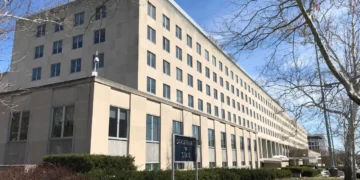






WASHINGTON, D.C. — The Health Care Fraud Takedown has resulted in criminal charges against 455 defendants accused of participating in alleged schemes involving more than $6.5 billion in false claims, marking what the U.S. Department of Justice described as the largest coordinated health care fraud enforcement action in the nation’s history.
The nationwide operation targeted doctors, nurses, pharmacists, executives, marketers and organized criminal networks allegedly responsible for defrauding Medicare, Medicaid, private insurers and other federal health care programs. According to the Department of Justice, the defendants include 90 licensed medical professionals, while investigators seized more than $182 million in cash, luxury vehicles, jewelry and other assets believed to represent proceeds of the alleged crimes.
Officials said the investigation illustrates a significant shift in how authorities combat Health Care Fraud, combining advanced data analytics, financial intelligence, artificial intelligence and international law enforcement partnerships to detect suspicious billing patterns before taxpayer funds are paid out.
For millions of Americans who depend on Medicare and Medicaid, the alleged schemes carried consequences beyond financial losses. Federal officials said fraudulent billing can drain resources from public health programs, increase costs to taxpayers and expose vulnerable patients to medically unnecessary treatments that place their health at risk.
How the Health Care Fraud Takedown uncovered $6.5 billion in alleged fraud
The Justice Department said this year’s Health Care Fraud Takedown involved investigations across 56 federal districts and 45 states and territories, representing the broadest coordinated enforcement effort of its kind.
The operation also included participation from all 50 Medicaid Fraud Control Units, making it the largest state and federal partnership ever assembled for a nationwide health care fraud investigation.
Authorities said the effort extended far beyond criminal indictments.
The Centers for Medicare and Medicaid Services suspended 1,079 providers suspected of fraudulent activity while revoking billing privileges for another 1,403 providers. The Department of Health and Human Services also excluded more than 1,400 providers from participating in federal programs, reached dozens of civil settlements and pursued additional administrative enforcement actions aimed at preventing future fraud.
Acting Attorney General Todd Blanche described the operation as the largest whole-of-government effort ever undertaken to combat Health Care Fraud, while Assistant Attorney General Colin M. McDonald said investigators are aggressively expanding efforts to identify increasingly sophisticated criminal organizations exploiting public health programs.
Health and Human Services Secretary Robert F. Kennedy Jr. said the cases underscore the government’s commitment to protecting patients, preserving taxpayer dollars and restoring confidence in federal health care programs.
Medicare fraud investigation centers on wound allografts
Among the largest investigations announced were several alleged Medicare fraud schemes involving wound allografts, specialized tissue products intended to promote healing in chronic wounds.
Federal prosecutors charged 11 defendants, including company executives and medical professionals, accusing them of participating in illegal kickback arrangements that allegedly generated billions of dollars in fraudulent Medicare claims.
According to court filings, providers billed Medicare more than $4 billion for wound allografts between late 2021 and mid-2024, resulting in more than $2 billion in Medicare payments.
Investigators allege marketers and providers received substantial kickbacks for prescribing medically unnecessary treatments, particularly to hospice patients. Prosecutors contend that treatments were frequently applied without medical necessity, sometimes to superficial wounds or areas significantly larger than the actual injury.
Authorities further allege that one executive received more than $24 million from the scheme, using the proceeds to purchase multimillion-dollar homes, luxury vehicles, expensive watches and other high-value assets.
In another major case, prosecutors charged a Texas nurse practitioner in connection with an alleged $906 million Medicare fraud scheme involving medically unnecessary wound treatments.
According to investigators, fraud proceeds financed luxury real estate, high-end vehicles, jewelry and construction of a beach resort in the Philippines. Federal agents seized more than $30 million from bank accounts, a Ferrari valued at nearly $600,000, multiple luxury vehicles, an $865,000 Bulgari necklace, and additional luxury jewelry.
Officials credited advanced data analytics with identifying abnormal billing trends that ultimately led investigators to several of the largest fraud operations announced during the takedown.
Medicaid fraud reaches record enforcement levels
The Justice Department also announced the largest Medicaid fraud enforcement action in department history.
Of the 455 defendants charged nationwide, 295 were accused of participating in alleged Medicaid fraud schemes involving more than $518 million in false claims.
One of the largest cases involves eight defendants accused of orchestrating a $38 million Medicaid fraud operation through adult day care centers in New York.
According to prosecutors, facilities licensed to accommodate only about 30 people allegedly submitted claims stating that hundreds of beneficiaries received services each day, despite physical limitations that investigators say made those claims impossible.
Federal prosecutors also charged the co-owner of a Virginia mental health company accused of offering hotel stays and other incentives to homeless individuals in exchange for using their Medicaid identification numbers to bill for services that investigators allege were never provided.
In Arizona, authorities charged another defendant accused of submitting $44 million in fraudulent claims for behavioral health services while allegedly targeting Native Americans seeking treatment for substance abuse.
Officials said the cases reflect growing concern that organized criminal groups have increasingly shifted their focus toward Medicaid because of the size and complexity of the program.
International arrests extend the Health Care Fraud crackdown
Federal officials said the investigation also demonstrated unprecedented international cooperation.
Authorities announced the capture and return of several fugitives accused of participating in major health care fraud schemes, including one defendant apprehended in Kyrenia in connection with an alleged $3.7 billion durable medical equipment fraud investigation.
Two additional defendants tied to a previously charged $10.6 billion fraud operation were extradited from Estonia to the United States.
The FBI also confirmed the arrest of one of its Most Wanted Fraudsters in the Philippines in connection with an alleged $1.2 billion telemedicine fraud scheme.
Officials said the international arrests send a message that individuals accused of Health Care Fraud cannot evade prosecution simply by fleeing overseas.
Patient harm remains central to the investigation
Although the alleged financial losses exceeded $6.5 billion, officials emphasized that patient harm remains one of the most troubling aspects of the investigation.
Several prosecutions allege that patients were subjected to medically unnecessary treatments, improper diagnoses and dangerous prescriptions driven by financial incentives rather than legitimate medical need.
The Justice Department also announced the largest Medicaid fraud enforcement action in department history. The latest crackdown follows other recent federal actions targeting abuse of public health programs, including visa sanctions imposed on individuals accused of participating in Medicaid fraud schemes.
According to investigators, some providers allegedly continued prescribing opioids despite repeated overdoses among patients, while others operated systems that allowed controlled substances to be prescribed with little or no meaningful patient interaction.
Federal officials said such conduct illustrates why Health Care Fraud is not solely a financial crime. They contend it can undermine confidence in the health care system, place vulnerable patients at unnecessary risk and divert resources away from people who genuinely need care.
Since its creation in 2007, the Justice Department’s Health Care Fraud Unit and Health Care Fraud Strike Force have charged more than 6,200 defendants accused of billing federal health care programs and private insurers more than $45 billion. The unit has become the department’s primary vehicle for investigating complex health care fraud schemes involving Medicare, Medicaid, private insurers, and transnational criminal organizations.
Officials said the 2026 Health Care Fraud Takedown represents a new phase in federal enforcement, combining criminal prosecutions, provider suspensions, asset seizures, advanced data analytics and international cooperation to prevent fraud before taxpayer dollars are lost while protecting patients who depend on America’s public health care programs.