














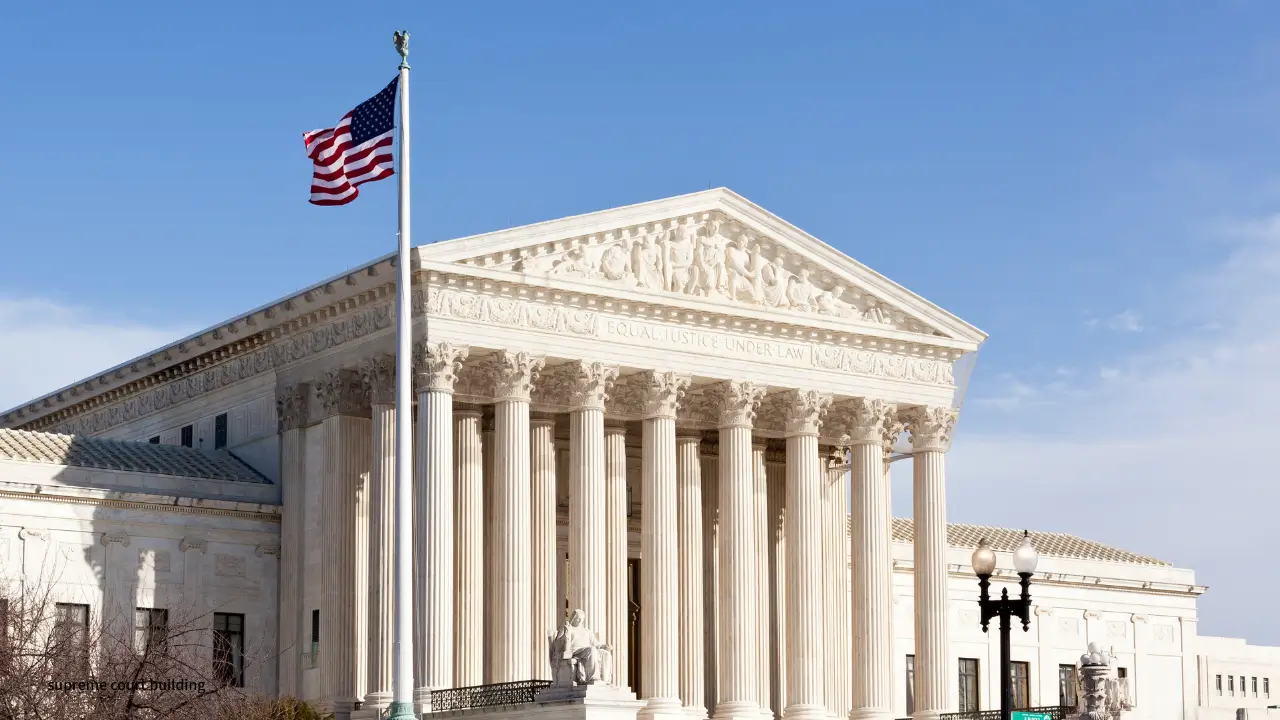
WASHINGTON — The Supreme Court immigration ruling handed down Tuesday gives federal border officers the authority to place lawful permanent residents on immigration parole based on suspicion of a crime alone, without a criminal conviction, in a 6–3 decision that significantly expands the government’s enforcement reach over green card holders and reshapes the legal footing of one of the most protected categories of non-citizen residents in the United States.
The decision arrives at a charged moment in American immigration policy. The Trump administration has pursued one of the most aggressive enforcement agendas in recent memory, and Tuesday’s ruling provides a legal foundation for border officials to act against returning permanent residents before any court has weighed in on their culpability.
The Case Behind the Supreme Court Immigration Ruling
The ruling resolves a legal dispute originating in Blanche v. Lau, a case that began with a 2012 border encounter involving Muk Choi Lau, a lawful permanent resident who was placed on immigration parole upon returning from a trip to China after he was suspected of involvement in a counterfeiting operation. Lau later pleaded guilty to selling counterfeit clothing in New Jersey. He challenged the parole decision, arguing the immigration officer had exceeded their authority and that the move had given the Department of Homeland Security a procedurally easier path to remove him from the country.
At the heart of his challenge was the question of what evidentiary standard border officers must meet before invoking parole against a returning green card holder. Lau contended that the government should be required to establish by clear and convincing evidence that he had committed a crime involving moral turpitude. The court’s conservative majority rejected that position entirely.
Court Rejects Evidentiary Burden Argument
Writing for the six-justice conservative bloc, Justice Clarence Thomas held in the majority opinion that border officers bear no obligation to meet a heightened evidentiary standard before placing a returning permanent resident on immigration parole. The decision confirms that suspicion, not proof, is sufficient to trigger the mechanism against green card holders seeking re-entry.
Justice Ketanji Brown Jackson, joined by her two liberal colleagues, dissented sharply. She argued that placing Lau on parole before any conviction amounted to condemning him to a state of unresolved legal uncertainty before any court had determined guilt. She warned that the majority had handed the executive branch sweeping and largely unchecked authority, describing the outcome as providing the government a massive blank check over the legal status of millions of permanent residents.
The dissent raises a concern with implications well beyond the facts of Blanche v. Lau. Green card holders number in the millions across the United States, and many travel internationally for family, business, and personal reasons. Under Tuesday’s ruling, any such individual returning to the country while under suspicion of a qualifying crime faces the prospect of being placed on immigration parole, with the legal and practical consequences that status carries, before a court has made any determination of guilt.
Legal Advocates Warn of Broader Consequences
Civil liberties organizations immediately flagged the ruling’s wider implications. The Alliance for Justice warned that the decision could open an expanded channel for revoking green cards from long-standing permanent residents, treating lawful status as provisional rather than settled. Conservative groups took the opposite view, with Advancing American Freedom, founded by former Vice President Mike Pence, welcoming the outcome as a necessary check on those who misuse the privilege of lawful permanent residence.
The ruling arrives as the court works through a cluster of immigration-related disputes bearing directly on the Trump administration’s enforcement agenda, which has consistently urged courts to adopt a broad reading of executive immigration power. Separately, before the justices are challenges involving birthright citizenship, a restrictive asylum policy, and the Temporary Protected Status program that shields migrants from nations experiencing armed conflict or natural disaster.
What the Ruling Means for Permanent Residents
Tuesday’s decision does not apply to immigrants residing unlawfully in the United States. Its reach is confined to lawful permanent residents, the category of long-term legal immigrants who hold green cards and are generally considered the group closest to citizenship in terms of legal standing. The ruling confirms that this proximity does not insulate them from pre-conviction enforcement action at the border.
For green card holders who travel abroad, the practical implication is significant. A returning permanent resident who is under criminal suspicion, even without a charge or conviction, may now be placed on immigration parole upon re-entry, a status that can complicate their ability to remain in the country and accelerate the path to removal proceedings. A separate USCIS policy shift announced last month has also tightened green card access for visa holders already living inside the United States, compounding pressure on legal immigrants navigating an increasingly restrictive system.
The Trump administration had argued before the court that mere suspicion of a crime provided a constitutionally sound basis to impose parole on a returning green card holder, and urged the justices to adopt an expansive view of executive authority in immigration matters. With Tuesday’s ruling, the court’s conservative majority agreed. Details were first reported by The Associated Press.