










CASTRIES, St Lucia — The Arsenal deal binding the Saint Lucia Tourism Authority to the Premier League club for five years carries a reported total cost of approximately £20 million in public funds, according to sources with knowledge of the agreement, a figure the minister responsible has publicly declined to confirm, deny, or contextualize in any form.
Tourism Minister Ernest Hilaire, when pressed by media on the financial terms of the contract, stated he was “unwilling to put a figure on the investment.” He offered no alternative figure, no expenditure breakdown, and no timeline for any public disclosure. To date, neither the Government of Saint Lucia nor the SLTA has published the contract, released a financial summary, disclosed performance benchmarks, or outlined how taxpayers will be able to measure whether the investment delivers value.
What Hilaire Said and What He Left Out
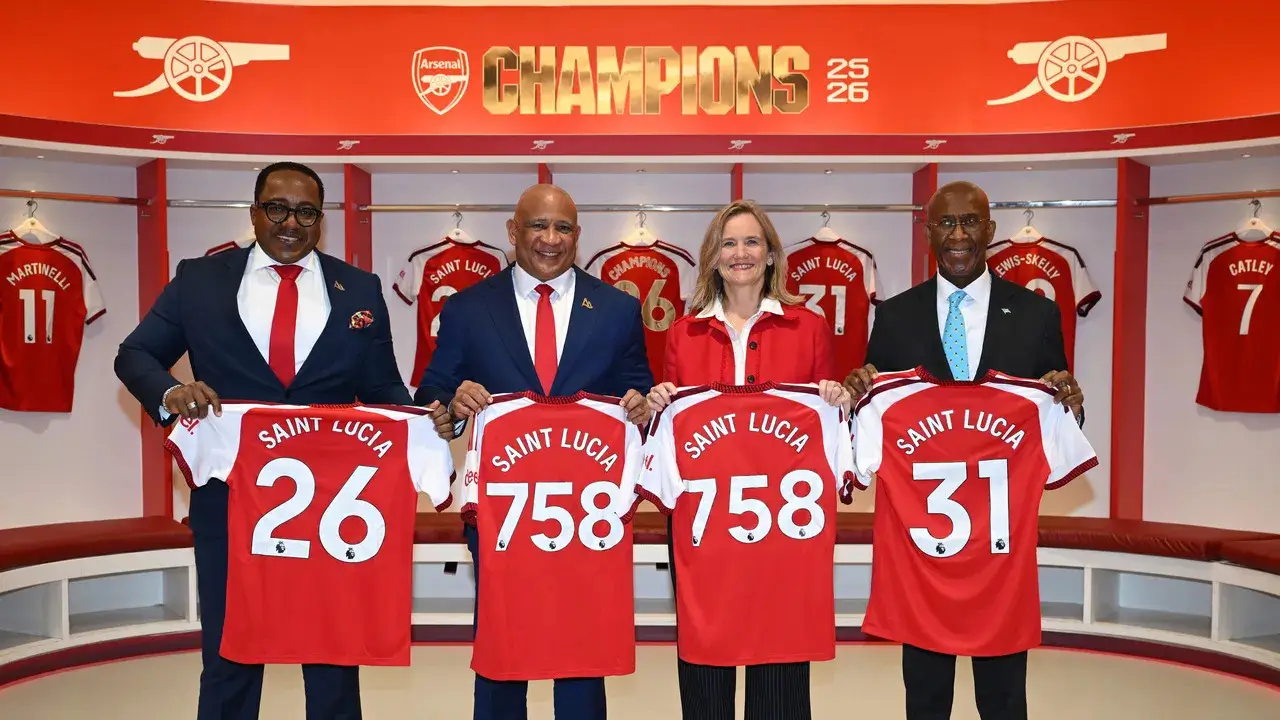
When the partnership was announced, Hilaire was enthusiastic. “We are entering an exciting term as Arsenal’s Official Destination Partner, aligning with a club that has a loyal, global supporter base,” he said. “As Premier League and Champions Cup champions, Arsenal begins the new season with momentum, while Saint Lucia continues to record strong visitor arrivals. This partnership is grounded in shared values of social responsibility, resilience and sustainability, reflected in both Arsenal’s work with its supporters and community, and our commitment to our people.”
That statement contains no cost. No contract term. No return-on-investment commitment. No performance benchmarks. No disclosure of what “strong visitor arrivals” means when set against IMF data showing stayover arrivals fell 3.2 percent in 2025, underperforming every regional peer.
Arsenal Chief Commercial Officer Juliet Slot framed the deal from her club’s perspective with equal confidence: “We want every Gooner, whether they’re in Islington or Saint Lucia, whether they’ve been supporting us for fifty years or five, to feel and see themselves in our club. This is an exciting partnership that gives us this opportunity and will help fuel our ambitions of growth and success.”
Arsenal’s ambitions of growth and success are not in question. The club knows exactly what it is getting from this deal. The question is whether Saint Lucia does.
The Arsenal Deal Numbers the Government Won’t Confirm
If the £20 million figure reported by sources is accurate, the SLTA has committed roughly £4 million of public money per year, every year, through the 2030/31 football season. That is public expenditure drawn from a national treasury serving a population of approximately 180,500 people, among the smallest in the Western Hemisphere.
Under the terms announced publicly, Saint Lucia will receive brand placement at Emirates Stadium across Premier League, Women’s Super League, and domestic cup fixtures. The island’s “Let Her Inspire You” destination marketing campaign will be carried by both Arsenal’s men’s and women’s first teams, extending across the club’s digital platforms and supporter engagement channels. An Academy Hub to develop local football talent is also included.
The SLTA frames this as the latest milestone in a proven sports tourism strategy, citing prior partnerships with the New York Yankees, Toronto Raptors, Toronto Maple Leafs, and Brooklyn Nets as precedent. What it has not cited, for the Arsenal deal or for any of those prior arrangements, is what they cost, what visitor arrival targets they were tied to, and what they actually delivered against those targets.
No details have been disclosed regarding how success will be measured, whether the agreement contains performance review provisions, or what protections exist should the partnership fail to generate the anticipated returns. Questions are also emerging over what specific visitor arrival targets, revenue projections, or economic benchmarks were used to justify the expenditure in the first place. None of that information has been released publicly.
Public Spending Priorities in Focus
The timing of the agreement is drawing its own scrutiny. Saint Lucia’s stayover arrivals fell 3.2 percent in 2025, according to IMF data, during a period when much of the Caribbean tourism sector was continuing to recover and expand. The deal was not signed after a breakout year that might have justified aggressive international marketing expenditure. It was signed during a period of measurable decline, with no public explanation of how £4 million annually to a Premier League club addresses the conditions driving that decline.
Supporters of the partnership argue that exposure through one of the world’s most recognizable football brands could generate significant long-term returns, particularly within the United Kingdom, already one of Saint Lucia’s key tourism markets. Without publicly available cost-benefit projections, however, the public has no independent basis on which to assess that claim.
Meanwhile, Saint Lucians are navigating documented pressures on multiple fronts. Public hospitals operate under resource constraints that have been raised repeatedly. Road infrastructure requires sustained capital investment. The cost of living has tightened household budgets at every income level. These are not abstract priorities. They are daily realities for the population whose tax revenues fund the SLTA’s operations.
Against that backdrop, the minister tasked with accounting for this expenditure has told the public that the price is not something he is prepared to share. That position is not a communications strategy. It is a refusal of public accountability.
The £20 million figure has not been confirmed by the Government of Saint Lucia or the SLTA. Hilaire’s refusal to disclose does not constitute a denial. Unitedpac has submitted a request for the full financial terms of the agreement and will publish them upon receipt.