













CASTRIES, St Lucia — The Philip J. Pierre election threat has intensified political scrutiny as the prime minister faces unanswered questions over the SSDF audit and mounting pressure surrounding his government’s handling of the Richard Frederick controversy.
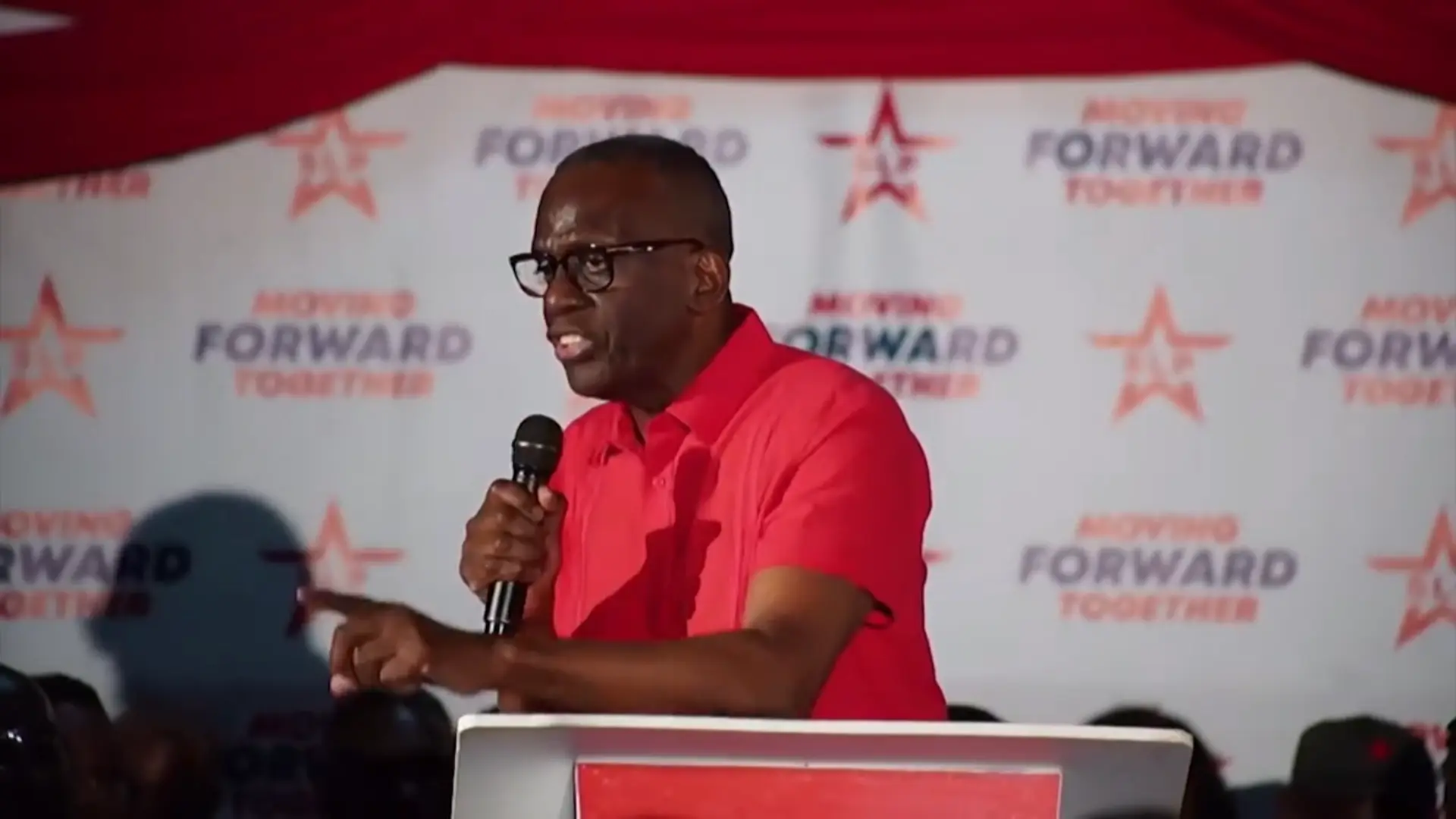
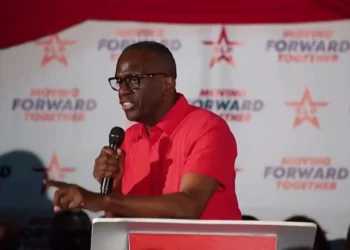
Philip J. Pierre delivered the warning Thursday night at a Saint Lucia Labour Party meeting, days after Opposition Leader Allen Chastanet pressed him to explain how an SSDF audit was commissioned, who would supervise it and whether the process would be independent.
“If they get me vex and I decide I don’t want any opposition, I will call an election sooner than later,” Pierre told supporters.
The timing transformed what could have been a routine anniversary address into a revealing display of political anger from a prime minister being asked to account for the handling of public funds and his government’s response to a widening scandal.
Accountability pressure builds around Philip J. Pierre election threat
Pierre’s remarks came amid sustained public and political pressure over allegations involving Frederick and the reported handling of cheques connected to the SSDF.
Frederick has been placed on leave while police investigate allegations of misconduct. Pierre has said he will not comment on the substance of the matter while the investigation remains active.
But questions surrounding the SSDF extend beyond the police investigation.
In a July 28 letter, Chastanet asked whether an audit had formally begun, how the auditing firm was chosen, what terms of reference would govern its work and whether the Director of Audit or the Caribbean Development Bank had been invited to provide independent oversight.
He also questioned whether officials holding positions within both the SSDF and the Economic Fund should recuse themselves from decisions affecting the review.
Pierre responded two days later by accusing Chastanet of writing with “venom and bad faith.” His reply confirmed that he had been informed an audit was underway but did not answer several of the opposition leader’s specific questions about its independence, selection process and supervision.
The exchange intensified the SSDF audit dispute and added to pressure on the government to explain how the review is being conducted and whether it can command public confidence.
Instead of using Thursday’s meeting to provide those answers, Pierre turned his attention to the people demanding them.
He accused the opposition of trying to “destroy this country” by writing to foreign agencies, banks and grant-funding organisations about concerns involving his administration.
The prime minister did not establish that Chastanet’s correspondence had caused any institution to withhold assistance or take action against St Lucia.
Anger replaces answers on SSDF controversy
Pierre’s language suggested that he viewed demands for external scrutiny not simply as political criticism, but as an attack on his government’s survival.
“If they get me vex,” he repeated, framing the timing of a national election as something that could be determined by his personal anger toward the opposition.
He then went further.
“Let me say for the last time, if they get me vex I will call an election sooner than later, and there will be nobody in Parliament,” Pierre said.
The comments raised questions about whether the prime minister was responding to the substance of the concerns or attempting to intimidate the political figures pursuing them.
An opposition leader has a constitutional and democratic responsibility to scrutinise government spending, question public institutions and demand transparency from ministers. Writing to oversight bodies, donor institutions or diplomatic partners does not, by itself, establish an effort to destroy the country.
Chastanet’s letter specifically raised issues involving public funds, institutional conflicts and the credibility of an SSDF audit. It said the request for recusals was not an allegation of guilt, but an attempt to ensure that the process was independent and capable of restoring public confidence.
Pierre’s response offered condemnation of Chastanet’s motives but limited clarity on the safeguards surrounding the review.
His election threat continued that pattern.
Rather than announcing stronger oversight, publishing the audit’s terms of reference or explaining who selected the auditors, the prime minister warned that further pressure could result in an election intended to remove the UWP’s final parliamentary seat.
Pierre targets St Lucia’s remaining opposition
The SLP already holds an overwhelming majority following the December 1, 2025 general election.
The party secured 14 constituency seats, while two independent candidates retained their constituencies and the UWP won one. Pierre returned to office with enough parliamentary support to govern without relying on opposition votes.
After that victory, Pierre said there was a place for the opposition in Parliament and called for the country to move forward together.
His latest declaration was markedly different.
By threatening an election aimed at leaving “nobody” from the opposition in Parliament, Pierre presented political scrutiny as something to be eradicated rather than answered.
The contradiction is especially significant because the government is not facing a parliamentary threat to its legislative programme. Its majority is secure.
The pressure confronting Pierre is instead a demand for accountability.
That pressure has come from the opposition, members of the public, civil society voices and people seeking clarity about the relationship between the SSDF, government officials and the allegations surrounding Frederick.
An early election would not answer those questions.
It would not explain who commissioned the SSDF audit, who approved its terms, whether the process is genuinely independent or when its findings will be released.
It would only ask voters to decide whether the government should receive another mandate while those matters remain unresolved.
Government faces wider questions over leadership
Pierre acknowledged during the meeting that his administration was operating under difficult conditions and facing external pressures.
However, many of the questions now confronting his government are domestic and relate directly to its own decisions.
The opposition has challenged the administration over crime, the cost of living, fiscal management and the performance of Cabinet ministers. The SSDF controversy has added a sharper institutional question: whether a government agency responsible for assisting vulnerable people was properly managed and protected from political misuse.
Public pressure has also included calls for Richard Frederick’s removal, adding another layer of scrutiny to Pierre’s handling of the controversy.
Allegations concerning Frederick remain subject to investigation and should not be treated as proven findings. But the absence of a final police determination does not prevent the government from explaining how public funds were controlled or how an audit will be conducted.
Pierre’s refusal to address those questions directly has allowed the political controversy to deepen.
His angry election warning may rally Saint Lucia Labour Party supporters, but it also risks reinforcing the impression that the prime minister regards scrutiny as hostility and accountability as an attempt to bring down his administration.
St Lucia’s election date is constitutionally within the prime minister’s control, subject to the formal dissolution of Parliament. The outcome, however, would remain in the hands of voters.
Pierre may have the authority to call an election sooner than expected. He does not have the authority to guarantee that any party or candidate will be removed from Parliament.
The more immediate test is whether his government will provide clear answers about the SSDF audit and the safeguards protecting public resources.
Until it does, threats against the opposition are unlikely to end the pressure. They may instead deepen public concern about how the Pierre administration responds when it is asked to account.














Just imagine a St. Lucian SLP hack known to be a defender of left leaning Kenny Anthony and corrupt Phillip J Pierre left the island less than 8 years ago, and now a “ questionable” US citizen is embracing Donald J Trump, the most racist President in American history known to inflict harm on people of color?
Rohan St. Marthe has completely lost his identity to now embraces the MAGA Republican party, running as a Candidate for Vermont State Senate. The people of Vermont were smart enough to see through this phony imposter on August 11 elections and voted for a more honest and viable candidate.
This is a perfect example the SLP are a bunch of deceptive hypocrites and will do almost anything to achieve political office.