












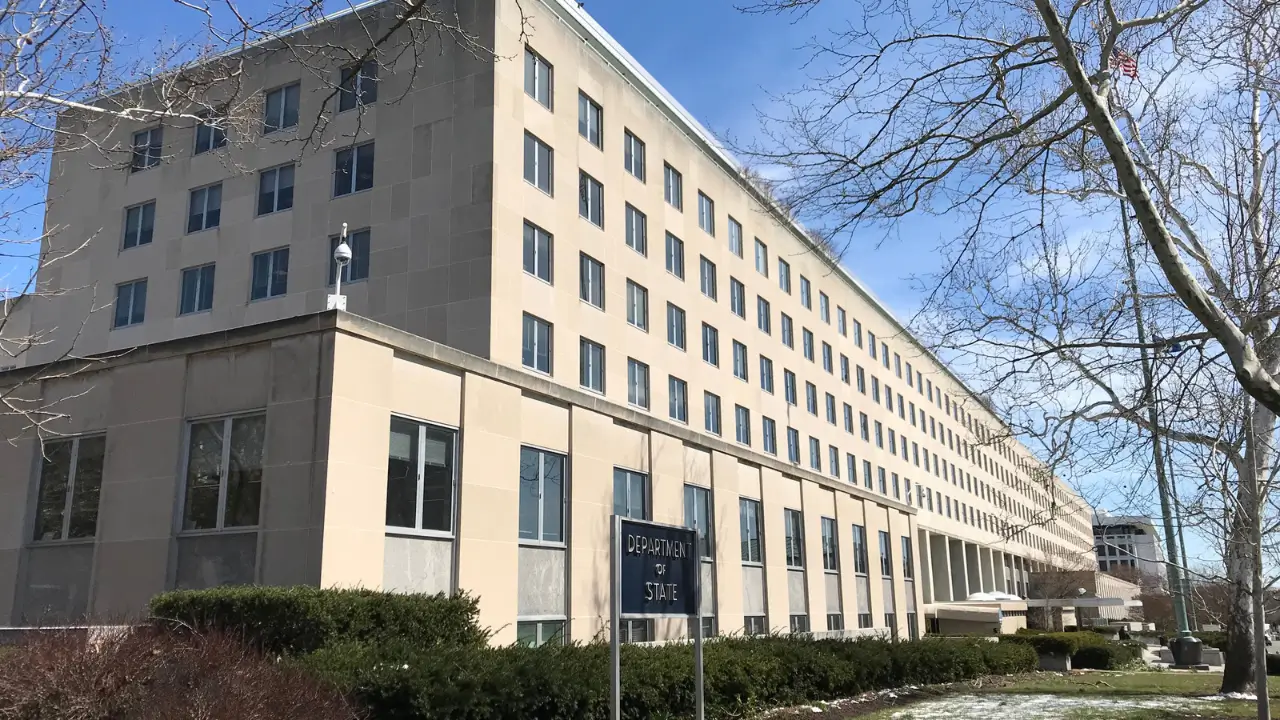
WASHINGTON, US — The US travel advisory system places 11 African countries under its highest Level 4 warning, urging Americans to avoid travel because of threats ranging from terrorism and kidnapping to armed conflict, civil unrest and serious health risks.
The countries are Burkina Faso, the Central African Republic, Chad, the Democratic Republic of the Congo, Libya, Mali, Niger, Somalia, South Sudan, Sudan and Uganda.
The warnings, outlined in an October 19, 2026, report by Business Insider Africa and reflected in the US State Department’s travel advisory database, underscore the security challenges confronting several parts of the continent.
Although the report has renewed attention on the restrictions, the designations do not represent 11 newly announced travel warnings. Several countries have remained under Level 4 advisories for extended periods, while individual warnings have been revised as security and public health conditions changed.
For American travelers, the designation carries significant implications. The State Department warns that potentially life-threatening conditions may exist and that US diplomatic missions may have limited capacity to provide emergency assistance.
What the Level 4 US travel advisory means
The US State Department operates a four-tier travel advisory system designed to help American citizens assess security conditions before traveling internationally.
Level 1 advises travelers to exercise normal precautions, while Level 2 recommends increased caution. Level 3 urges Americans to reconsider travel because of serious risks.
Level 4, the highest classification, carries the strongest warning: Do Not Travel.
The designation is generally reserved for destinations where threats to personal safety are considered particularly severe. These can include active warfare, terrorism, kidnapping, violent crime, political instability and public health emergencies.
A Level 4 advisory does not automatically prohibit American citizens from entering a country. Instead, it represents the US government’s strongest recommendation against travel.
The warnings also do not necessarily indicate that every region within a designated country faces identical conditions. The specific threats and their severity vary considerably by destination.
Which 11 African countries face the highest warning?
The countries identified in the October 2026 assessment face different combinations of security and humanitarian challenges.
In West Africa, Burkina Faso, Mali and Niger continue to confront threats associated with extremist violence, kidnapping and political instability. Armed groups operating across parts of the Sahel have created dangerous conditions for residents and foreign visitors.
Chad and the Central African Republic face overlapping risks involving armed violence, criminal activity, political unrest and limited access to essential services.
In the Democratic Republic of the Congo, continuing insecurity in conflict-affected areas presents serious dangers, including violence, kidnapping and disruption of transportation and healthcare.
Libya remains affected by political fragmentation, armed groups and security instability that can complicate movement and emergency assistance.
Somalia’s warning reflects persistent terrorist threats, including attacks associated with militant organizations, alongside kidnapping, crime and other security concerns.
Sudan faces particularly severe conditions because of the continuing war, which has disrupted civilian life, healthcare services and transportation infrastructure.
Neighboring South Sudan also remains affected by insecurity, violent crime, political tensions and limited access to essential services.
Uganda’s Level 4 designation reflects a different combination of concerns, including crime, terrorism, civil unrest and public health risks.
The State Department’s June 4, 2026, Uganda advisory retained the highest warning level, following an earlier elevation from Level 3 in May amid concerns linked to an Ebola outbreak in neighboring Democratic Republic of the Congo.
Several countries covered by the Level 4 warnings have also faced separate US immigration restrictions. Libya, Somalia, Sudan and Chad were among the nations identified in an earlier Trump travel ban affecting 19 nations. Unlike those immigration restrictions, which regulate entry into the United States, Level 4 advisories warn American citizens against traveling to designated destinations.
Together, the advisories demonstrate why travel risks cannot be assessed through a single explanation. Conditions in countries affected by civil war differ substantially from those where health emergencies, terrorism or violent crime are the principal concerns.
Armed conflict and terrorism remain major travel threats
Security conditions across parts of the Sahel, Central Africa and the Horn of Africa have contributed to prolonged international travel warnings.
In countries affected by insurgencies, attacks may threaten transportation routes, public gathering places, government facilities and other locations frequented by civilians.
Kidnapping presents another serious concern, particularly where armed organizations and criminal networks operate beyond the effective reach of state security forces.
Travelers may also encounter roadblocks, sudden restrictions on movement, disrupted communications and limited access to reliable transportation.
In active conflict zones, the risks extend beyond direct violence. Damage to infrastructure, interruptions in fuel supplies and the closure of airports or major roads can leave foreign nationals unable to depart safely.
These conditions can also undermine the ability of diplomatic missions to respond when citizens require assistance.
Health emergencies and limited medical services add to risks
Beyond terrorism and armed conflict, healthcare limitations are another significant concern in several countries covered by the US travel advisory.
In areas experiencing prolonged instability, hospitals may face shortages of medicines, medical equipment and qualified personnel. Damaged infrastructure and restricted transportation can make emergency treatment difficult to obtain.
Public health emergencies can further complicate travel, particularly where disease outbreaks occur alongside existing security challenges.
Uganda illustrates how changing health conditions can influence an advisory. The State Department’s decision to raise its warning level in May 2026 was linked to concerns about an Ebola outbreak in neighboring Democratic Republic of the Congo.
The subsequent June update maintained Uganda’s Level 4 classification, highlighting the importance of reviewing individual country advisories rather than relying solely on regional security assessments.
For travelers requiring specialized medical treatment, the availability of emergency evacuation services can be especially important.
Limited US embassy assistance raises concerns for travelers
One of the most consequential aspects of a Level 4 travel advisory is the possibility that American citizens may be unable to obtain timely assistance during an emergency.
In countries affected by conflict or severe instability, US diplomatic operations may be restricted, embassy staffing may be reduced, and officials may be unable to travel safely outside designated areas.
Such limitations can complicate efforts to assist Americans who are injured, detained, kidnapped or stranded by sudden security developments.
The State Department encourages citizens to establish emergency plans before traveling to high-risk destinations and to avoid assuming that government-assisted evacuation will be available.
Travelers who disregard the warnings may face additional difficulties obtaining insurance coverage, arranging medical evacuation or securing transportation if conditions deteriorate.
What travelers should know before visiting high-risk countries
Americans considering international travel are encouraged to consult the US State Department’s official travel advisory database for the latest country-specific warnings.
The department also recommends enrolling in the Smart Traveler Enrollment Program, which provides security alerts and helps US diplomatic officials contact citizens during emergencies.
Travelers should review entry requirements, identify available medical facilities, establish reliable communication arrangements and assess whether their insurance covers destinations subject to government travel warnings.
Importantly, the US advisory system applies specifically to American citizens. Other governments maintain their own travel guidance, which may differ in classification or geographic scope.
The Level 4 designation also should not be interpreted as a blanket assessment of Africa. The continent comprises numerous countries with widely differing political, economic, security and public health conditions.
As security threats and humanitarian emergencies continue to evolve, the State Department may revise individual advisories without changing their overall warning levels.
For travelers planning visits to any of the 11 countries, the latest country-specific guidance remains the most important reference before departure.