
















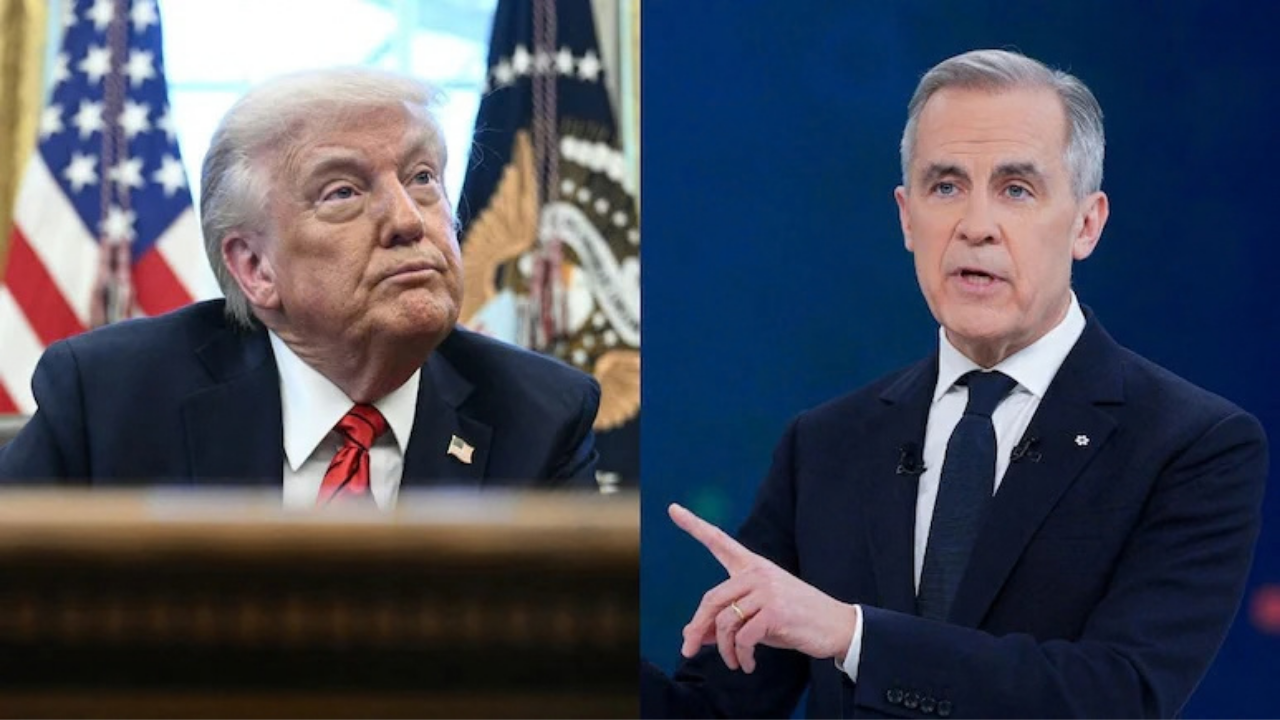
WASHINGTON, US — President Donald Trump called Canada “one of the worst countries in the entire world” while discussing the U.S.-Canada trade war, accusing Ottawa of unfair treatment as new American import restrictions intensified the dispute between the neighboring countries.
Donald Trump made the remarks in the Oval Office on Sept. 28 when asked whether a trade agreement remained possible ahead of restrictions on selected Canadian imports. He accused Canada of taking advantage of the United States and predicted that Canadian officials would return seeking an agreement and offering concessions.
The following day, U.S. bans on specified Canadian alcoholic beverages, dairy-related products and motorcycles took effect, replacing steep tariffs on selected goods with outright restrictions on their entry into the American market.
Canadian Prime Minister Mark Carney said Sept. 29 that Canada remained ready to negotiate in good faith. Canada-U.S. Trade Minister Dominic LeBlanc separately rejected Donald Trump’s expectation of an apology, saying Ottawa was defending Canadian workers, businesses and the economy, The Canadian Press reported.
Trump predicts concessions from Canada
Trump’s remarks came during a White House announcement about a proposed steel plant in Iowa. Responding to a trade question, he contrasted negotiations with Canada with what he described as successful dealings with China.
He said Canada imposed agricultural tariffs of 400% or more and claimed that 95% of its business was conducted with the United States. He did not identify the products, tariff conditions or statistical measure behind those figures.
Trump predicted Canada would return within three or four weeks offering to remove its tariffs and apologize. Canadian officials had not announced any such commitment.
Washington had already signaled little urgency to compromise. U.S. Trade Representative Jamieson Greer told CNBC on Sept. 25 that the administration was comfortable maintaining its position, Reuters reported. He said substantial trade in energy, agricultural products and other goods continued despite the confrontation.
Import bans deepen the U.S.-Canada trade war
The White House announced the restrictions Sept. 8 under Section 338 of the Tariff Act of 1930, saying they responded to Canadian practices it considered discriminatory against American commerce.
Its explanation of the trade measures said selected Canadian products previously subject to additional 50% duties would instead be excluded from the U.S. market beginning Sept. 29.
The bans cover specified product classifications, not every Canadian product in the affected industries. Other changes to the lists of goods subject to additional tariffs took effect Sept. 15, including the removal of products such as rock salt and cement and the addition of others.
The White House said the Section 338 tariffs apply to covered goods regardless of their eligibility under the United States-Mexico-Canada Agreement, or USMCA, and are additional to applicable Section 232 duties.
Canada’s Finance Department said the United States imposed 50% tariffs Aug. 22 on Canadian goods worth approximately 27.6 billion Canadian dollars. Ottawa responded with countertariffs covering the same value of American imports, effective Sept. 8.
Those Canadian duties range from 15% to 50%, depending on the product, and target sectors including steel, dairy, appliances, agricultural equipment, pulp and paper, and electronics. Canada described the measures as matching the U.S. tariffs dollar for dollar.
Official figures provide context for Trump’s claims
Statistics Canada’s annual merchandise trade figures show that the United States received 71.7% of Canadian goods exports in 2025, down from 75.9% in 2024. The United States supplied 58.8% of Canada’s merchandise imports in 2025.
Those figures measure international trade in goods rather than every form of Canadian economic activity. They establish the American market’s importance to Canada while providing a different picture from Trump’s broad 95% characterization.
Canadian merchandise exports to countries other than the United States rose 17.2% in 2025, according to the same report. The increase provides context for Ottawa’s effort to develop alternative export markets.
Trump’s agricultural tariff claim also requires qualification. Canada’s dairy import system distinguishes between shipments admitted within negotiated quotas and those exceeding them.
Higher duties can apply above those limits, while USMCA provides additional duty-free access through specified dairy quotas. A high tariff associated with an over-quota shipment therefore does not describe the treatment of all American agricultural exports.
In its proclamation on dairy-related restrictions, the White House specifically challenged Canada’s allocation of tariff-rate quotas for American cheese, alleging that those arrangements disadvantaged U.S. commerce. That allegation formed part of the administration’s stated justification for the measures.
Exporters face disrupted shipments
The bans cover an estimated $967 million in annual Canadian shipments, based on 2025 figures analyzed by Jacob Jensen, director of trade policy at the American Action Forum. Alcoholic beverages account for approximately 87% of that amount, The Canadian Press reported.
The effects vary by producer. The Associated Press reported that Wolfhead Distillery in Amherstburg, Ontario, had stopped shipping whiskey to Michigan and placed prospective exports on hold.
BRP said its Canadian-made Can-Am Spyder and Canyon motorcycles would be excluded from the American market, although it expected the effects mainly next year because most production and shipments for the current season were complete.
Replacing lost American customers with Canadian buyers presents its own difficulties. Brewers, distillers and winemakers told Reuters that provincial regulations and government-controlled alcohol retail systems complicated efforts to expand domestic sales.
Those barriers could make it harder for smaller producers to recover revenue lost in the United States, even as Canadian officials encourage greater economic resilience at home.
The uncertainty follows earlier concerns about the wider economic consequences of Trump’s tariff policies. In April 2025, JPMorgan raised its forecast for a global recession following another round of tariff announcements. That forecast concerned the economic outlook for 2025.
Dispute extends to government purchasing
The confrontation has also spread beyond tariffs and import bans.
A Sept. 16 presidential memorandum directed American officials to identify and take steps toward removing Canadian-origin goods from federal civil procurement systems. The White House attributed the decision to Canadian purchasing policies it said disadvantaged American suppliers.
The administration also said the United States had declined to renew USMCA in its current form, arguing that the agreement did not sufficiently benefit American manufacturers, farmers, workers and other businesses.
Officials remain in contact without detailed negotiations
Carney said Sept. 29 that Canada had no intention of escalating the trade dispute, while leaving its options open. He said Ottawa’s decisions would not be dictated by the American political calendar.
LeBlanc said detailed trade negotiations were not taking place, although officials from both countries remained in contact. He maintained that Canada would continue supporting and protecting its workers and businesses.
Washington has additionally threatened higher tariffs on Canadian automobiles, parts and steel from January, Reuters reported. Those prospective measures would extend the confrontation into sectors central to North American manufacturing, with no publicly announced timetable for a new trade agreement.