
















WASHINGTON — TSA Gold+, a new public-private airport security screening program, launched nationally this month as the Trump administration moves to reduce federal staffing at U.S. security checkpoints and hand those operations to private contractors.
The program is an expansion of the existing Screening Partnership Program (SPP), under which private companies hold TSA contracts and operate security lanes using the same federally mandated procedures. Under TSA Gold+, those companies gain additional authority to tailor operations for local efficiency, adopt new technologies faster, and draw on private capital for infrastructure upgrades. The model is designed so airports do not need to depend on congressional appropriations to keep screeners paid.
The launch follows months of pressure on the TSA’s funding model. During testimony before the House Appropriations Committee in April, TSA Deputy Administrator Ha Nguyen McNeill said the agency’s workforce and operations could not remain dependent on predictable congressional funding. The comment was a pointed reference to the partial government shutdown earlier this year, which left tens of thousands of TSA workers without paychecks.
Which Airports Are Joining TSA Gold+
A TSA spokesperson confirmed the program’s launch, describing it as an opportunity for airports to opt into a public-private screening model tailored to their individual needs, with the stated goal of ensuring continuity and operational stability even during federal government shutdowns.
Twenty airports currently participate in the broader SPP framework, including San Francisco International and Kansas City International among the largest. The TSA has not yet released a list of airports formally enrolled in TSA Gold+. Most SPP participants to date have been regional airports and those serving high-volume tourist destinations, a category that includes several Caribbean-gateway hubs through which St. Lucian and regional travelers frequently transit.
Airports interested in adopting the Gold+ model must apply directly to the TSA, and approval depends on the agency’s review of a contractor’s staffing plan, training protocols, and security procedures. The agency has said it will continue to set uniform screening standards regardless of which company operates a given checkpoint, a safeguard intended to prevent inconsistent enforcement across participating airports.
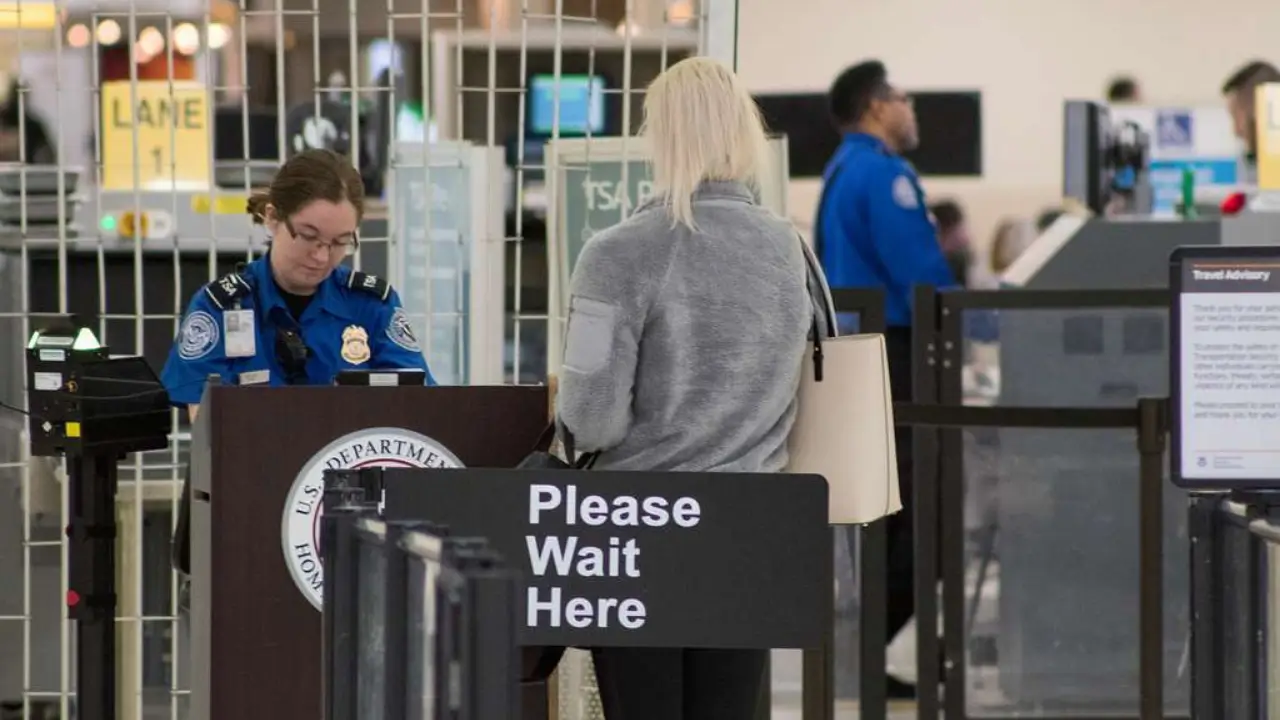
Initially, TSA Gold+ checkpoints are expected to look and function identically to standard federal screening lanes. The most visible change will be screener uniforms. Over time, the TSA says private operators will be empowered to deploy new technologies more rapidly and implement custom screening solutions, with the agency retaining oversight to ensure consistent security standards across all participating airports.
How TSA Gold+ Differs From TSA PreCheck
TSA Gold+ is frequently being confused with TSA PreCheck, but the two programs serve entirely different functions. Gold+ is an operational staffing model. It determines who runs the checkpoint, not who moves through it faster. TSA PreCheck, by contrast, is a passenger enrollment program that allows vetted travelers to use expedited lanes, typically clearing security in under 10 minutes. A five-year PreCheck membership costs $85 or less and remains unaffected by the Gold+ rollout.
The TSA says private operators under the Gold+ framework will bring efficiency gains, infrastructure investment, and uninterrupted employee pay regardless of federal budget cycles. Critics of airport privatization have previously raised questions about accountability and oversight, including whether streamlined operations could introduce inconsistencies in security standards from one airport to another. The agency maintains that its continued oversight role is designed to address those concerns and preserve uniform screening requirements nationwide.
Lawmakers who have pushed back on the broader privatization trend argue that security screening is a core federal function that should not be subject to the financial incentives of private contractors. Supporters counter that the existing Screening Partnership Program has operated for years without major security lapses, and that TSA Gold+ simply formalizes a model already in limited use.
For now, Caribbean travelers transiting U.S. airports should expect no immediate change at the checkpoint. The longer-term impact will depend on which airports formally join the Gold+ program and how aggressively private operators move to differentiate their operations from the federal model.