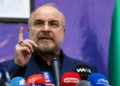














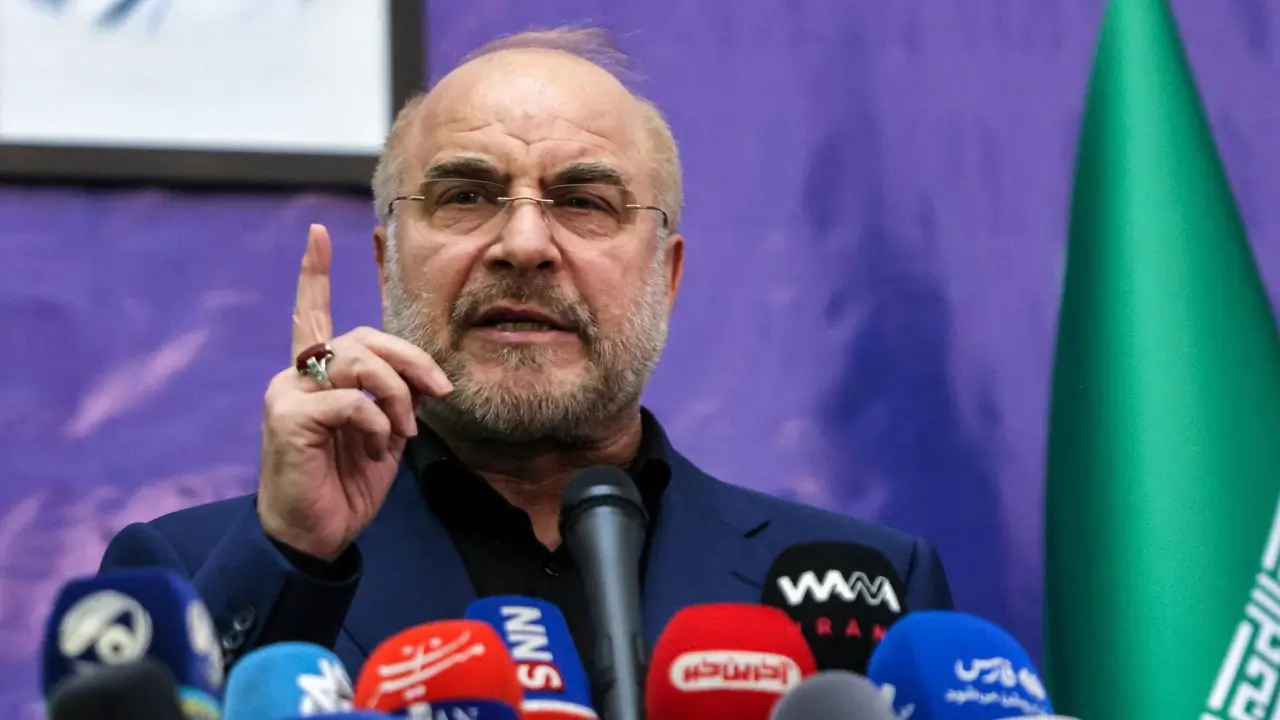
NEW YORK, US — The “Straits Taylor Rule,” posted by Iranian Parliament Speaker Mohammad Bagher Ghalibaf hours before the Federal Reserve’s first interest-rate increase since 2023, added the Strait of Hormuz and Bab el-Mandeb to a widely known monetary-policy equation in an argument that Washington cannot raise rates away an energy supply shock.
The Fed later raised its target range by 25 basis points to 3.75% to 4%, saying inflation remained elevated while uncertainty was heightened partly by geopolitical developments. The Federal Open Market Committee approved the decision unanimously.
Straits Taylor Rule Turns Chokepoints Into Variables
The Taylor Rule, developed by economist John B. Taylor, is a benchmark used to assess how interest rates might respond to inflation and economic activity. It is not a formula the Federal Reserve mechanically follows when setting rates.
Ghalibaf took that framework and added disruption at two strategic waterways.
His version read:
i = r∗ + π∗ + 1.5(π − π∗) + 0.5(y − y∗) + α(SOH − SOH∗) + β(BEM − BEM∗), α, β > 0
The conventional part of the formula refers to the policy interest rate, neutral real interest rate, inflation, the inflation target and the gap between actual and potential economic output.
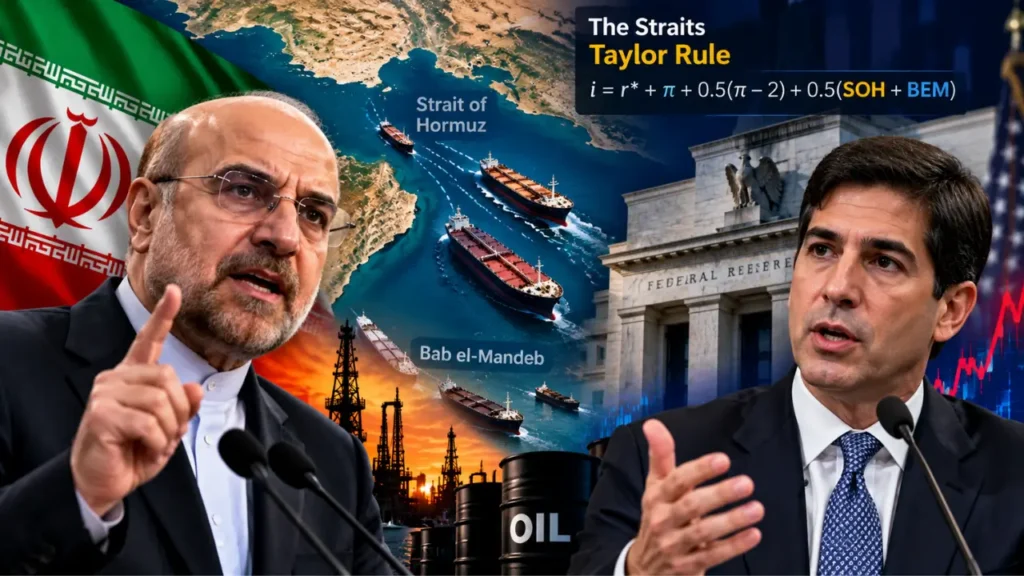
Ghalibaf then added SOH, representing the Strait of Hormuz, and BEM, representing Bab el-Mandeb. By assigning positive coefficients to the additional variables, his construction portrays greater disruption at the waterways as adding pressure to the inflation problem confronting policymakers.
Neither term is part of the conventional Taylor Rule. Ghalibaf inserted them to make a geopolitical argument through the language of monetary economics.
His point was that higher interest rates can restrain economic demand but cannot physically restore disrupted oil supplies or shipping routes.
“You can’t 25bp a chokepoint,” Ghalibaf wrote.
A basis point is one-hundredth of a percentage point, making a 25-basis-point move equivalent to a quarter-percentage-point change in interest rates.
Ghalibaf went further, arguing that r∗, normally representing the neutral real interest rate, was carrying what he described as a Strait of Hormuz risk premium, before declaring: “We set it.”
That amounted to Tehran’s claim of geopolitical leverage, not evidence that Iran determines U.S. interest rates.
The timing sharpened the message. Ghalibaf posted the equation hours before the Fed announced its quarter-point increase later Sept. 16.
Hormuz Disruption Adds Pressure to Global Energy Markets
The economics behind the provocation are rooted in the importance of the Strait of Hormuz to global energy flows.
The U.S. Energy Information Administration said disruptions to crude oil and petroleum product flows through Hormuz contributed to higher and more volatile oil prices during the second quarter of 2026. Brent crude reached $118 a barrel on April 29 as reduced access to Middle Eastern crude tightened supply conditions.
That is the transmission mechanism behind Ghalibaf’s argument.
When oil flows through a major chokepoint are disrupted, supplies can tighten while shipping and insurance costs rise. Higher energy costs can then spread through transportation, manufacturing and consumer prices.
The Federal Reserve can respond to those inflationary consequences by adjusting interest rates. It cannot directly create additional oil supplies or physically reopen a shipping route.
Ghalibaf’s claim that Iran “sets” the Hormuz risk premium should therefore be understood as Tehran’s assertion of leverage rather than proof that Iran controls U.S. monetary policy.
The Fed said its Sept. 16 decision reflected a much broader economic picture. Economic activity was expanding at a solid pace, domestic spending remained resilient, capital investment was robust and inflation remained elevated. It also said uncertainty remained elevated partly because of geopolitical developments.
Washington has also disputed Iran’s broader assertions about control of the Strait of Hormuz.
U.S. Central Command spokesman Capt. Tim Hawkins told Al Jazeera that Iran does not control the waterway and said U.S. forces had assisted commercial vessels carrying more than 900 million barrels of crude oil through the strait since early May. CENTCOM said traffic continued to flow while U.S. forces enforced a blockade on Iranian maritime trade.
The competing positions underscore the strategic contest surrounding Hormuz. Tehran is portraying its ability to disrupt conditions around the waterway as economic leverage, while Washington maintains that Iran does not control maritime access.
What is less disputed is the economic significance of disruption itself.
Oil markets have already shown that reduced flows through Hormuz can increase volatility and prices, potentially feeding broader inflation pressures that affect businesses, households, investors and central banks well beyond the Persian Gulf.
‘Stay Unanchored’ Targets Fed Inflation Language
Ghalibaf ended his post with another reference drawn from central-bank economics.
“Stay unanchored!” he wrote.
The phrase refers to inflation expectations, an important consideration for monetary policymakers.
When longer-term expectations remain anchored, households, businesses and financial markets broadly continue to believe inflation will eventually return toward a central bank’s target despite temporary price shocks.
If those expectations begin rising persistently, controlling inflation can become more difficult because expectations can influence wage demands, business pricing and consumer behavior.
Ghalibaf’s signoff therefore extended his argument beyond the immediate price of oil.
His message suggested that prolonged disruption to major energy routes could matter not only because of higher energy costs, but because sustained price pressure could complicate expectations about future inflation.
The Fed’s Sept. 16 move was its first rate increase since 2023, lifting the federal funds target range to 3.75% to 4%.
But the decision cannot be reduced to Iran, Hormuz or oil prices.
Federal Reserve policymakers consider a broad range of economic conditions when setting monetary policy. Ghalibaf’s equation instead dramatizes a genuine limitation facing central banks: monetary policy can respond to the inflationary consequences of a supply shock without eliminating the physical disruption that caused it.
The Federal Reserve can change the price of money.
It cannot produce another barrel of oil or reopen a strategic waterway.
By inserting Hormuz and Bab el-Mandeb into the Taylor Rule and signing off with “Stay unanchored!”, Ghalibaf turned the technical language of monetary policy into geopolitical messaging aimed at Washington, energy markets and central bankers watching how disruption at strategic shipping routes can move through oil prices, inflation and interest-rate decisions.